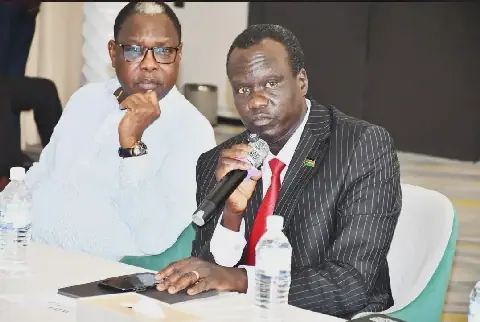
The President of Burkina Faso's parliament, Ousmane Bougouma, presided over a plenary session on November 9, 2026, in Ouagadougou, where two laws were adopted to strengthen environmental governance. The laws relate to carbon initiatives and the ratification of the Convention on marine biodiversity in international waters. These legislative texts aim to enhance the country's legal framework for environmental protection and climate governance.
The first law concerns the ratification of the Convention on the conservation and sustainable use of marine biological diversity in areas beyond national jurisdiction. This convention, signed in 2023, aims to preserve marine resources for present and future generations. According to Foreign Minister Karamoko Jean Marie Traoré, the convention is relevant to Burkina Faso, despite being a landlocked country, as it concerns the management and preservation of a common global heritage.
The ratification will enable Burkina Faso to participate fully in debates and governance mechanisms related to international waters. Minister Traoré emphasized that the country's involvement will allow it to contribute to discussions on the conservation of marine ecosystems, which affect global temperature, wind, and rainfall patterns. This, in turn, impacts Burkina Faso's climate and economy. The convention will also facilitate cooperation with other countries and research opportunities.
The second law focuses on carbon initiatives, which have been operating in Burkina Faso since 2014. The law aims to regulate these initiatives, which previously developed without sufficient state oversight. The new legislation establishes state ownership of carbon credits and initiatives, and creates a national registry to monitor and control projects.
Minister Amadou Dicko, delegated to the Minister of Agriculture, stated that project promoters have six months to comply with the new regulations. The law is expected to increase transparency in carbon credit management, ensuring a better distribution of benefits among the state, populations, and private actors.
The government estimates that the carbon initiatives can mobilize approximately 300 billion F CFA per year, with possibilities for expansion. These initiatives include reforestation projects and biodigesters, which help reduce deforestation and greenhouse gas emissions. The new law is also expected to create green jobs and generate revenue for the national budget.
The adoption of these laws demonstrates Burkina Faso's commitment to environmental protection and climate governance. The country's parliament approved the texts with 71 votes. The laws will come into effect once promulgated by the President, marking a significant step forward in the country's efforts to address environmental challenges and promote sustainable development.
Key points
- The laws aim to enhance environmental protection and climate governance in Burkina Faso.
- The country has ratified the Convention on marine biodiversity in international waters.
- The new laws are expected to generate revenue and create green jobs.