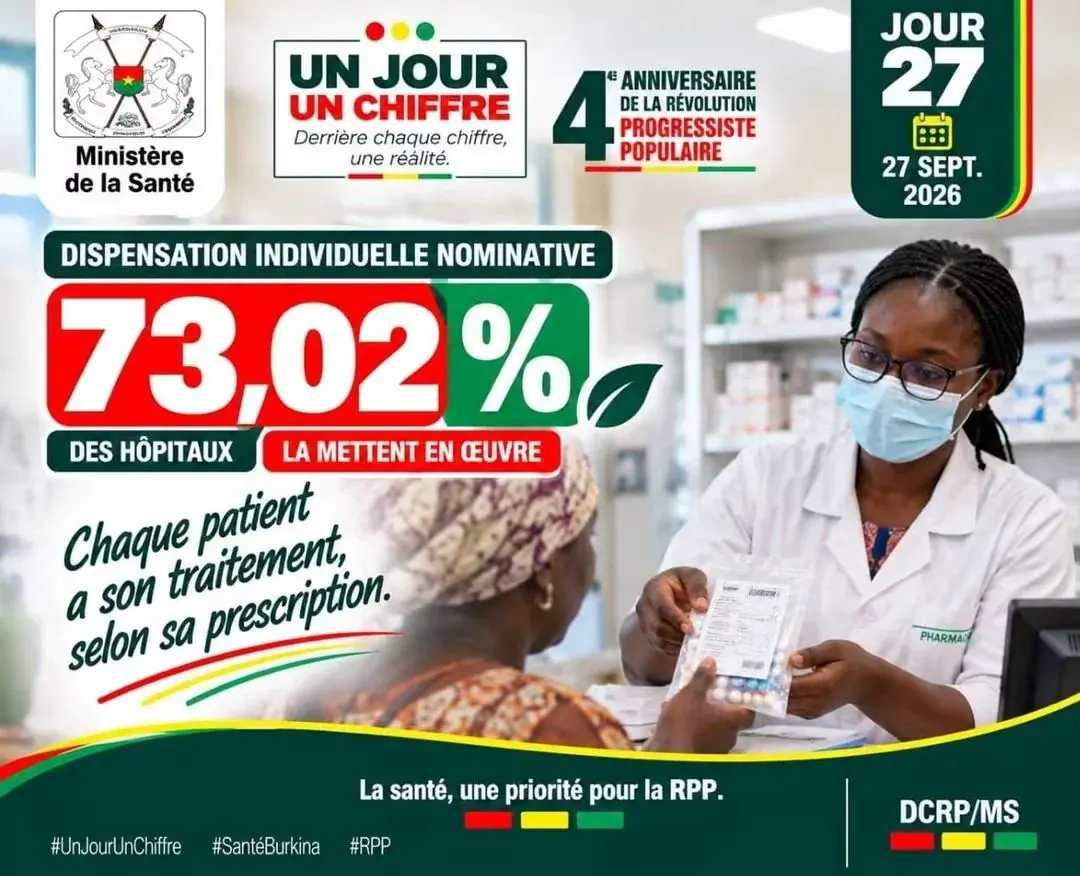
The Ministry of Health in Burkina Faso has reported significant progress in implementing individualized medication dispensing, also known as dispensation individuelle nominative (DIN), in the country's hospital establishments. As of 2026, 73.02% of university hospital centers (CHU), regional hospital centers (CHR), and medical centers with surgical units (CMA) have adopted this system. This approach involves preparing and delivering medications individually to each patient based on their medical prescription.
The DIN system aims to strengthen the security of the medication circuit within healthcare establishments. By ensuring that each treatment is identified and intended for a specific patient, the system improves the correspondence between the prescription, the medication dispensed, and the patient beneficiary. This organization is crucial in reducing medication errors and enhancing patient care.
In addition to improving patient safety, the DIN system offers benefits in terms of resource management. By dispensing medications according to each patient's actual needs, the system helps limit unused quantities and reduces losses associated with medications. This approach is part of the broader efforts to enhance hospital pharmacy services and improve medication management.
The implementation of DIN has been ongoing since 2022, with several hospital establishments already adopting the system. The Ministry of Health has been instrumental in promoting this approach as part of its strategy to strengthen healthcare services. According to Annick HIEN, reporting for Mousso News, the progress made so far is significant.
The implementation of DIN in 73.02% of hospital establishments is a notable achievement for Burkina Faso's healthcare sector. This progress reflects the country's commitment to improving healthcare services and patient safety. The system is expected to continue expanding to more hospitals and healthcare facilities.
The benefits of DIN are multifaceted, ranging from improved patient safety to enhanced resource management. By minimizing medication errors and reducing waste, the system contributes to more efficient healthcare delivery. As Burkina Faso continues to roll out DIN, it is likely to have a positive impact on the overall quality of healthcare services.
Moving forward, the Ministry of Health is expected to continue its efforts to achieve full implementation of DIN across all hospital establishments in Burkina Faso. With 73.02% of establishments already on board, the goal of nationwide implementation appears within reach. The success of DIN in Burkina Faso could serve as a model for other countries in the region.
Key points
- The implementation of individualized medication dispensing in 73.02% of Burkina Faso's hospital establishments enhances patient safety and resource management.
- The DIN system improves the correspondence between prescriptions, dispensed medications, and patients.
- The Ministry of Health aims to achieve full implementation of DIN across all hospital establishments in Burkina Faso.