The Burkinabé government, led by Minister of State for Agriculture, Water, Animal and Fisheries Resources, Commandant Ismaël SOMBIÉ, recently hosted a high-level panel discussion on "From farm to market: producing and consuming Burkinabé to strengthen our sovereignty." The event took place on October 6, 2026, at the Ouagadougou International Craft Fair (SIAO) and was attended by Prime Minister Rimtalba Jean Emmanuel OUEDRAOGO and several government members. The discussion focused on the country's progress in achieving food sovereignty.
Prior to the launch of the "2023-2025 Agro-Pastoral and Fisheries Offensive," Burkina Faso faced a paradox. Despite having significant agricultural, hydraulic, and pastoral potential, the country struggled with food insecurity, with 19.2% of the population undernourished and spending 148.5 billion FCFA on rice and wheat imports. The government's objective was clear: transform the country's resources into production, revenue, employment, and food sovereignty. The Agro-Pastoral and Fisheries Offensive aimed to achieve this goal.
The results of the 2023-2025 Agro-Pastoral and Fisheries Offensive show significant progress in national production. Cereal production increased from 4.66 million tons to 7.14 million tons in 2025, a 53% increase, covering 124% of national cereal needs. Rice production exceeded 1 million tons for the first time, with 1,008,737 tons produced in 2025. Maize production reached 2,686,531 tons, and poultry production stood at 18.26 million heads. These achievements were supported by substantial investments in water, infrastructure, mechanization, inputs, and animal health.
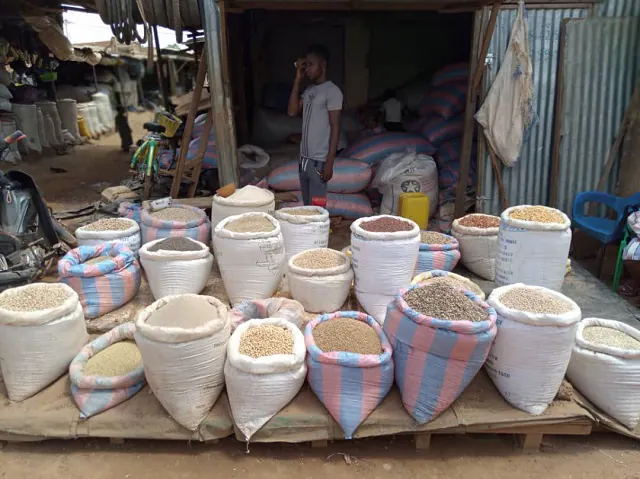
The government has also focused on ensuring market access for producers. The collection of cereals from farms has been strengthened through the transformation of the SONAGESS into a purchasing center. Over 350,000 tons of cereals were purchased from producers during the 2025-2026 campaign, and food sovereignty stocks now exceed 380,000 tons. This policy guarantees producers with a market, strengthens national stocks, and regulates markets during periods of scarcity.
The next step is to increase the transformation of national production and create more value in Burkina Faso. The government is developing storage and processing infrastructure, including 418 storage facilities, 11 cold rooms, a fish freezing unit, 63 processing units, and 398 rice parboiling kits. The goal is to build a complete value chain: produce, collect, store, process, and consume Burkinabé products.
The second phase of the Agro-Pastoral and Fisheries Offensive, covering 2026-2028, aims to consolidate gains and accelerate progress. With a total cost of 839.99 billion FCFA, of which 85.7% has already been secured, this phase targets 20 sectors and aims to sustainably cover at least 120% of national cereal needs. The strategy focuses on water management, with five new strategic dams, 200 dams to be rehabilitated or dredged, and 100,000 hectares of lowlands and 50,000 hectares of irrigated perimeters to be developed.
The government emphasizes that food sovereignty is a collective responsibility. It requires producers to increase production, improved collection and transformation, and consumers to choose Burkinabé products. By consolidating this economic and patriotic solidarity chain, Burkina Faso aims to make national production a sustainable source of income for producers, raw materials for industries, employment for youth, and food sovereignty for the nation.
Key points
- The Burkinabé government has made significant progress in achieving food sovereignty through increased production and improved collection and transformation.
- The second phase of the Agro-Pastoral and Fisheries Offensive aims to consolidate gains and accelerate progress, with a focus on water management and production diversification.
- The government emphasizes the importance of collective responsibility in achieving food sovereignty, from producers to consumers.