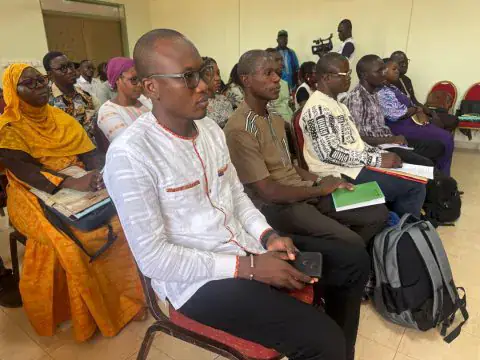
The Burkinabé Society of Ophthalmology (SBO) has initiated a training session on strabismus care, which began on October 30, 2026, at the Bogodogo University Hospital Center in Ouagadougou. This session, funded by the NGO Light for the World, brings together 40 participants, including ophthalmologists and fourth-year medical students specializing in ophthalmology. The training aims to enhance the participants' knowledge and skills in diagnosing and treating strabismus, a visual disorder characterized by misaligned eyes.
Strabismus can lead to amblyopia, also known as "lazy eye," if left untreated, particularly in children. This condition can result in decreased visual acuity. The first years of a child's life, especially until the age of 6 or 7, are crucial for visual development. During this period, certain visual anomalies can appear, and if not detected and treated promptly, they can impact the child's sensory, motor, and cognitive development, as well as their academic performance.
The training session, which will run until November 3, 2026, will cover topics such as strabismus diagnosis, necessary examinations for evaluation, and various treatment options. The program also includes rehabilitation of strabismic amblyopia, a complication that can have a lasting impact on vision. The training will be led by a pediatric ophthalmology specialist, enabling participants to better identify anomalies, choose suitable treatments, and improve patient follow-up.
According to Dr. Toé Roland, Secretary General of the Burkinabé Society of Ophthalmology, this training addresses a real need in healthcare facilities. He emphasized that enhancing the skills of ophthalmologists is one of the society's core missions. The training will allow practitioners to deepen their knowledge of strabismus and dispel certain misconceptions about its treatment. Dr. Roland also highlighted the issue of underreporting of cases, which hinders a full understanding of the problem's scope.
Dr. Toé Roland further explained that strabismus can be treated with corrective glasses or surgery, depending on the nature and severity of the disorder. He stressed that numerous healthcare professionals lack the necessary skills for early strabismus screening, making this training an opportunity to enhance their capacities and improve patient care. The partnership with Light for the World will enable the society to reach more specialists through continuous training.
Étienne Bagré, Country Director of Light for the World in Burkina Faso, stated that this training is part of the "1, 2, 3, Je vois!" program, a decade-long initiative launched in 2021. The program aims to improve children's access to quality eye care, promote early detection of visual disorders, and enhance healthcare professionals' skills. Bagré emphasized the importance of detecting visual anomalies at a young age, as early intervention increases the chances of effective treatment and limits the consequences of visual disorders on a child's education and development.
Light for the World, an international NGO, has been working in Burkina Faso since 2004. The organization operates in six priority African countries, focusing on improving eye care, inclusive education, and promoting the rights of people with disabilities. The choice of strabismus as a training topic reflects the organization's commitment to equipping healthcare professionals to address this condition, which can have significant consequences if neglected.
Key points
- The Burkinabé Society of Ophthalmology has launched a training session on strabismus care, funded by Light for the World, to improve eye care in Burkina Faso.
- The training aims to enhance the participants' knowledge and skills in diagnosing and treating strabismus, a visual disorder characterized by misaligned eyes.
- The program is part of the "1, 2, 3, Je vois!" initiative, which seeks to improve children's access to quality eye care and promote early detection of visual disorders.