On October 30 and 31, 2014, thousands of Burkinabè took to the streets to protest against a proposed constitutional amendment that would have allowed President Blaise Compaoré to seek re-election. The demonstrations quickly turned into a full-blown insurrection, with the National Assembly being stormed and several public buildings set on fire. The regime, which had been in power for 27 years, ultimately collapsed.
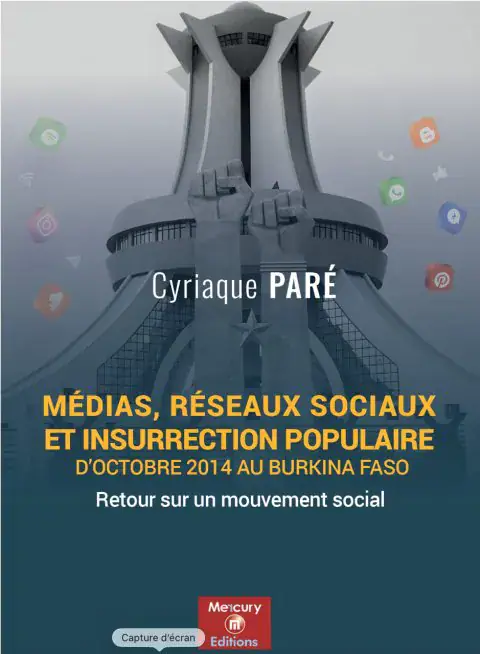
A new book by Cyriaque Paré, "Médias, réseaux sociaux et l’insurrection populaire d’octobre 2014 au Burkina Faso. Retour sur un mouvement social," examines the events leading up to and during the insurrection, as well as its aftermath. The book features testimonies from key figures, including politicians, civil society leaders, journalists, and ordinary citizens who played a crucial role in the uprising.
Among those highlighted in the book is Lassina Sawadogo, who became an iconic figure after a photograph of him confronting military personnel near the Radiodiffusion Télévision du Burkina (RTB) was widely shared on social media. Another notable figure is Romuald Ouédraogo, a young student at the time, whose t-shirt with the slogan "Tirez… Ma patrie ou Ma mort" (Shoot... My country or My death) encapsulated the spirit of the youth-led protest.
The book also explores the role of media in shaping public opinion during the insurrection. Ousmane Paré, a journalist with Radio Oméga, provided critical coverage and analysis of the events as they unfolded. Meanwhile, politicians like Simon Compaoré, then mayor of Ouagadougou, demonstrated their ability to mobilize support for the protest movement.
Ten years on, many of those involved in the insurrection express mixed feelings about its legacy. Zéphirin Diabré, then leader of the opposition, admits to feeling a sense of "unfinished business" and "disappointment" with the outcome. Abdoulaye Diallo, a civil society actor, shares similar sentiments, questioning the preparedness of the forces of change to accompany the emergence of a new political system.
Aziz Sana, who sat on the National Transitional Council after the insurrection, is more scathing in his assessment, describing the aftermath as a "winding path backward." Journalist and writer Sayouba Traoré sums up his disillusionment as "cruel disappointment." Despite these sentiments, others see the insurrection as a crucial moment in Burkina Faso's history, one that offers valuable lessons for future social movements.
As Burkina Faso continues to navigate its complex political landscape, the reflections on the 2014 popular insurrection serve as a reminder of the power of citizen mobilization and the importance of critically examining the outcomes of such movements. The book by Cyriaque Paré provides a valuable contribution to this ongoing conversation, offering insights into the complexities and challenges of social change.
Key points
- The 2014 popular insurrection in Burkina Faso was a pivotal moment in the country's history, marked by widespread citizen mobilization and the eventual ousting of President Blaise Compaoré.
- Ten years on, many involved in the insurrection express mixed feelings about its legacy, citing disappointment and a sense of unfinished business.
- The event continues to offer valuable lessons for future social movements in Burkina Faso and beyond.