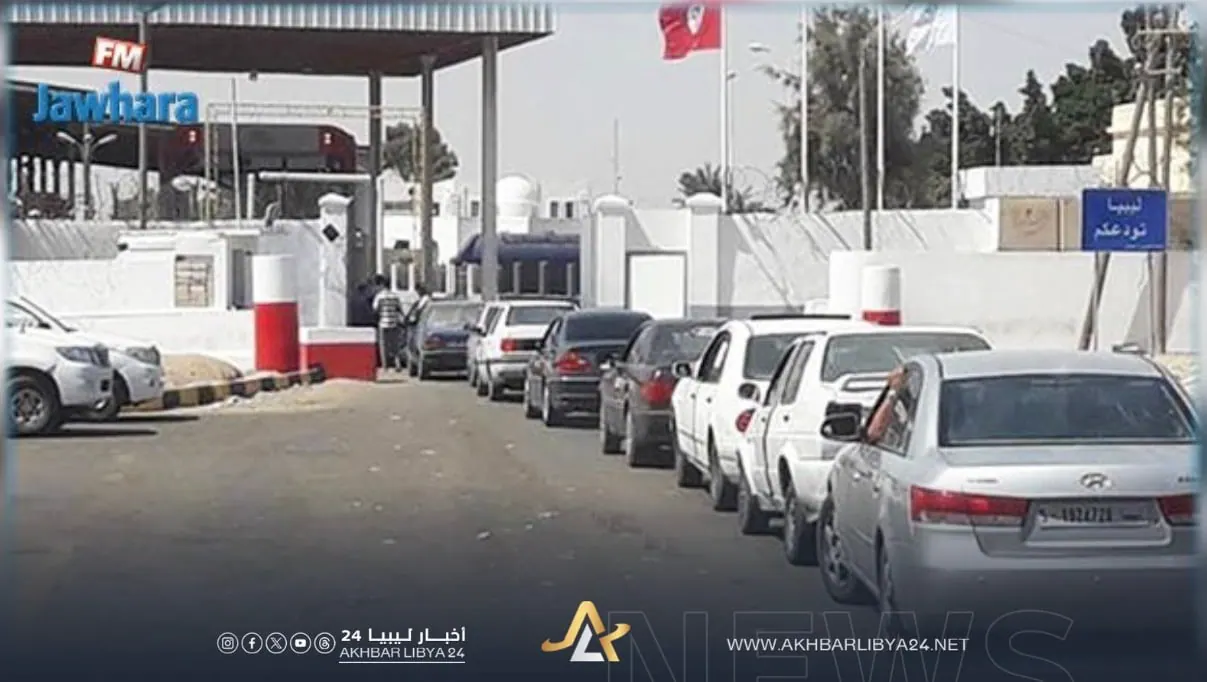
The Ras Jedir border crossing, a vital link between Libya and Tunisia, has been plagued by congestion and delays for months. The backlog has significant economic implications, with thousands of travelers and tons of goods stuck in limbo. Despite high-level contacts between Libyan and Tunisian officials, the situation remains dire. The crossing is a crucial artery for trade and commerce between the two nations, and its continued disruption is being felt across the region.
In recent months, there have been efforts to address the crisis, including a phone call between Tunisian President Kais Saied and Libyan Presidential Council head Mohamed al-Menfi. The two leaders discussed ways to remove obstacles to the free flow of people and goods across the border. Tunisian Foreign Minister Mohamed Ali al-Nafti also met with his Libyan counterpart, Taher Ba'our, to explore solutions to the crisis. These diplomatic efforts highlight the importance of the Ras Jedir crossing to both countries.
The economic stakes are high, with trade between Libya and Tunisia valued at approximately 2.89 billion Tunisian dinars ($1.03 billion) in 2025. Libya ranks as Tunisia's tenth-largest trading partner and second-largest Arab partner. The two countries have seen steady growth in trade, with a 13.8% annual increase from 2016 to 2025. However, the congestion at Ras Jedir threatens to disrupt this progress and undermine economic cooperation between the nations.
The crossing's daily traffic has dwindled to around half its previous levels, with only 2,500 to 3,000 passengers and 500 to 600 vehicles passing through per day. This decline has significant economic implications, with experts warning of losses for transporters, traders, and travelers. The congestion also has a ripple effect on local businesses and services that rely on the smooth functioning of the crossing.
Experts point to outdated inspection procedures as a major contributor to the backlog. They recommend the use of modern scanning technology to speed up inspections and reduce reliance on traditional, time-consuming methods. Expanding crossing lanes and designating separate paths for different types of traffic could also help alleviate congestion. Such changes could help mitigate the economic impact of the delays and improve the overall efficiency of the crossing.
The Ras Jedir crossing is also a lifeline for the southeastern Tunisian region and western Libya, with around 80% of trade and travel passing through the border. Experts describe the crossing as a vital economic artery, with thousands of families relying on it for their livelihoods. However, the crossing's instability has led to a thriving parallel economy, with estimates suggesting that around 600 million euros ($670 million) in trade is conducted outside the formal economy each year.
To address the crisis, experts propose developing the crossing into a modern logistical hub, with integrated facilities for trade, transport, and storage. Such a project could help shift more of the parallel economy into the formal sector, increasing revenue for both countries and reducing the allure of smuggling and other illicit activities. By investing in the crossing's infrastructure and streamlining procedures, Libya and Tunisia can unlock the full potential of their trade relationship and create new economic opportunities for their citizens.