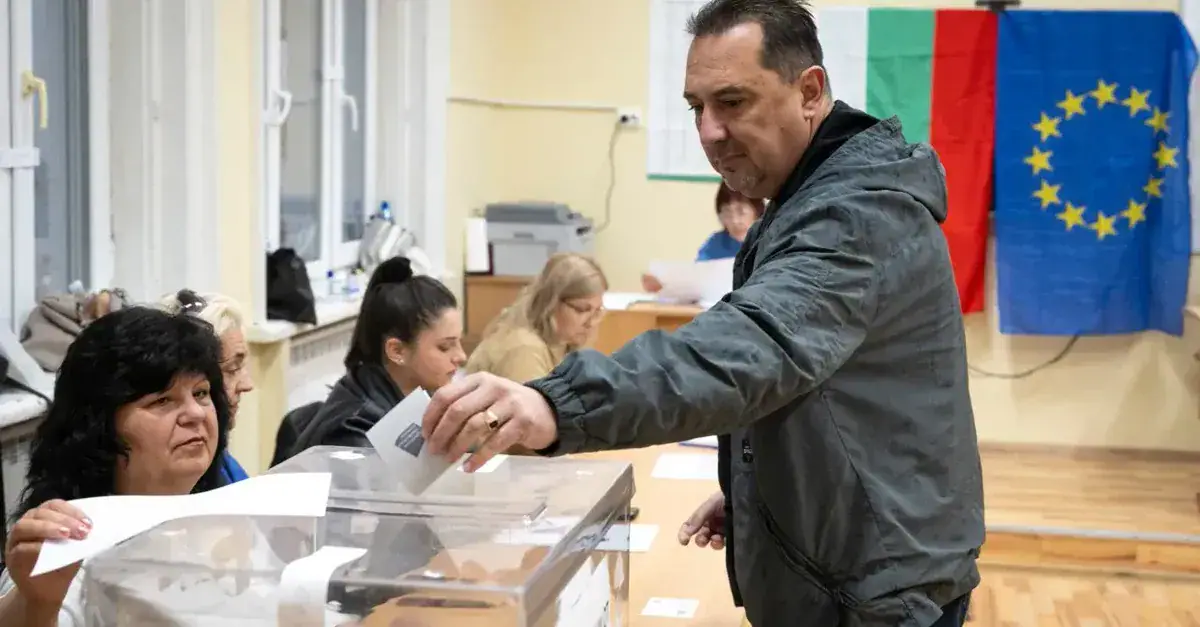
Bulgarians went to the polls on Sunday to elect a president, with the competition between the two main candidates failing to produce a clear winner in the first round last week. The current President, Iliana Yotova, 61, led the first round with 40.5% of the vote, ahead of former interim Prime Minister Andrej Georgiev, 50, who secured 24.5%. However, neither candidate crossed the 50% threshold, necessitating a runoff election.
The first round of the election, which featured 27 candidates, saw the lowest-ever turnout, with only 34.5% of eligible voters casting their ballots. Yotova, who has been serving as acting president since January, would become the first female president of Bulgaria if she wins the runoff. Georgiev, who leads a caretaker government, has the support of pro-Western reformist parties and has expressed his support for Ukraine.
The presidential election takes place against a backdrop of heightened tensions, following a series of drone attacks on commercial ships off Bulgaria's Black Sea coast last month. The incidents sparked international condemnation and raised concerns about the potential escalation of the conflict in Ukraine. The outcome of the election may have implications for Bulgaria's relations with its neighbors and the international community.
Opinion polls will be conducted at polling stations as voters exit, with the results expected to be announced on Monday after the ballots have been counted. The winner of the election will hold a largely ceremonial role, with most executive powers resting with the prime minister. However, the president also holds significant influence over the country's foreign policy and national security.
Yotova's campaign has focused on her experience as a public servant and her commitment to Bulgaria's European integration. Georgiev, on the other hand, has emphasized his plans to boost the country's economy and improve living standards. Both candidates have made efforts to appeal to a broad range of voters, with some analysts suggesting that the outcome of the election may depend on turnout and voter mobilization.
Several prominent politicians, including former Prime Minister Boyko Borisov, have expressed their support for Georgiev. Borisov, who leads the GERB party, has stated that Georgiev's victory would be in the best interests of the country. Yotova, meanwhile, has maintained a low profile in recent weeks, focusing on consolidating support from her base and appealing to undecided voters.
The election outcome may have significant implications for Bulgaria's relations with Russia and the European Union. Yotova has been criticized by some for her perceived ties to the Kremlin, while Georgiev has expressed his support for Ukraine and European integration. The winner of the election will need to navigate these complex relationships and balance competing interests to effectively represent Bulgaria on the international stage.
Key points
- The runoff election pits incumbent President Iliana Yotova against former interim Prime Minister Andrej Georgiev.
- The election takes place against a backdrop of heightened tensions following drone attacks on commercial ships off Bulgaria's Black Sea coast.
- The winner of the election will hold a largely ceremonial role, with significant influence over foreign policy and national security.