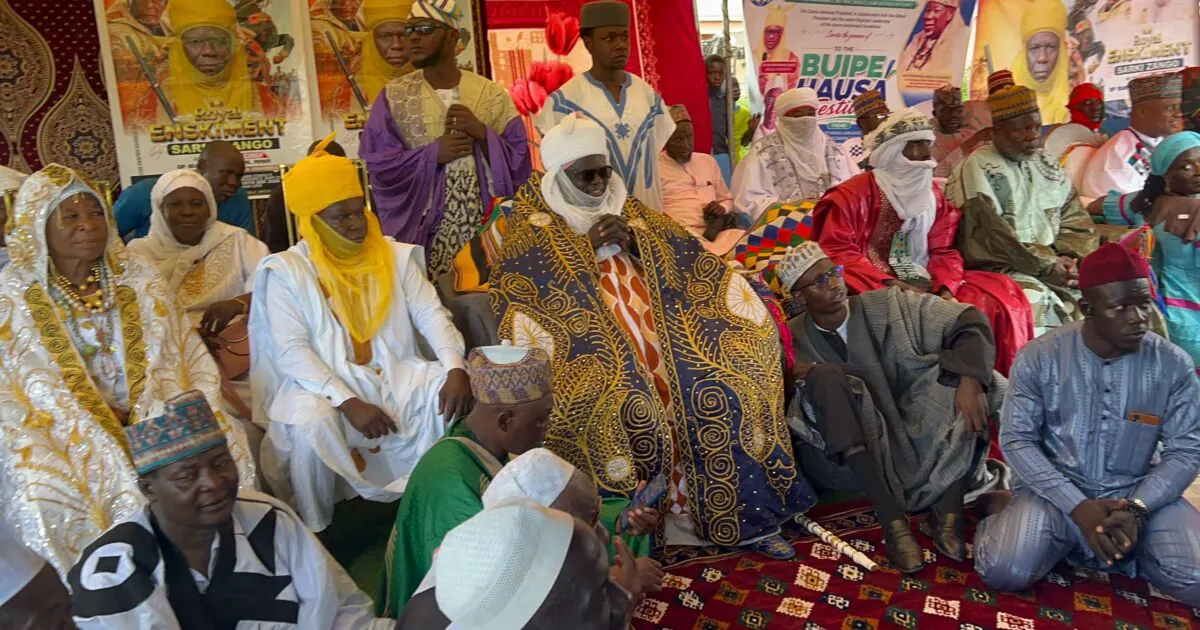
The ancient town of Buipe in Ghana's Savannah Region recently hosted the annual Hausa Festival, a vibrant celebration of language, tradition, and economic heritage. The event drew chiefs, community leaders, and diaspora members from across Ghana and beyond. The festival showcased horsemanship, traditional attire, and kalangu drumming, highlighting the rich cultural heritage of the Hausa people.
Alhaji Ahmed Tijani Abubakari Ali, National President of the Hadinkan Hausa da Hausawa, known as Tafida, delivered a frank address at the festival, touching on security, citizenship, and the future of Zongo youth. He emphasized the need for vigilance, cautioning Zongo communities to be careful about welcoming strangers, particularly those arriving from neighboring countries without proper vetting.
Tafida also addressed the struggles Hausa people face in obtaining Ghanaian passports despite generations of citizenship. He described this as a "quiet injustice" and emphasized that a passport is a right, not a favor. His words resonated with many in the crowd, including families who have lived in Ghana for generations yet still face bureaucratic hurdles that question their belonging.
The Zongo Chief of Buipe, Sarki Abdullahi Mohammed, raised concerns about drug abuse among Zongo youth, describing it as a community emergency. He called on parents to reclaim their role as first teachers, on chiefs to enforce accountability, and on the community to build alternatives, such as skills training, education, and economic opportunities, to pull young people away from addiction.
General Secretary Suhail Abdul Mumin delivered a keynote address that reframed the Hausa narrative, highlighting their role as economic architects. He argued that historic Zongo settlements were Ghana's earliest Special Economic Zones, with Hausa trading networks linking the Sahel to the coast and pioneering livestock supply chains, textile trade, and leather craftsmanship.
Suhail Abdul Mumin also highlighted the strategic value of the Hausa language in contemporary trade, serving as a transaction language that bridges ethnic lines in markets across Ghana. With over 150 million speakers across West and Central Africa, he argued that Hausa is Ghana's organic diplomatic and commercial bridgehead into the largest markets in Africa, an untapped asset for economic diplomacy under the African Continental Free Trade Area (AfCFTA).
As the festival drew to a close, Tafida reminded his people of their strength, emphasizing that they are not beggars at Ghana's table but builders who have contributed significantly to the country's development. He called on the Hausa people to build themselves and work towards a brighter future. The festival served as a platform for cultural celebration, community dialogue, and economic empowerment, organized by the Hadinkan Hausa da Hausawa, a worldwide organization dedicated to promoting Hausa language, culture, and socio-economic development.
Key points
- The Buipe Hausa Festival highlighted the need for vigilance, unity, and youth reform in Zongo communities.