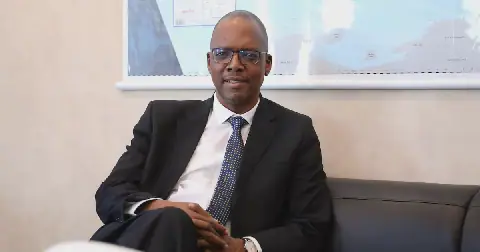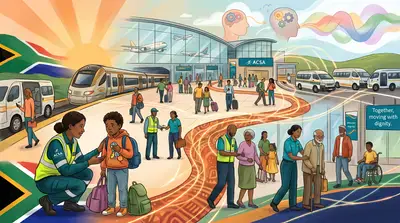
As South Africa reflects on Transport Month, the focus is on the infrastructure, institutions, and people that keep the country moving. This month-long observance coincides with Mental Health Awareness Month, which challenges citizens to think more deeply about the struggles and differences of those around them. According to Irvin Phenyana, the true test of infrastructure is not only whether it moves people efficiently but also whether it moves them with dignity.
Phenyana, in an article titled "Moving People, Caring for People: The Journey to an Inclusive South Africa," emphasizes that transport is about movement, but genuine progress is about ensuring everyone can make the journey. At Airports Company South Africa (ACSA), the business is often described in terms of aircraft, terminals, runways, and passenger numbers. However, behind every statistic is a human being with a story, destination, hope, and sometimes, a challenge that is not visible.
For people living with ADHD, dyslexia, dyspraxia, and other forms of neurodivergence, navigating spaces like airports can be demanding. Public transport areas, such as airports, bring many overwhelming experiences together in one place. The question for leaders is not simply how efficiently people are moving through airports but also how they are experiencing them. Ubuntu, a concept that emphasizes interconnectedness, must become practical and visible in the way institutions are designed and people are treated.
ACSA's approach to accessibility must include people whose disabilities or challenges may not be immediately apparent. This means asking whether signage is clear enough, digital platforms are accessible enough, processes are simple enough, and staff are equipped to respond to passengers with patience and compassion. Not every solution requires concrete and steel; sometimes, the most important piece of infrastructure is a human being who cares.
The same principle should guide how organizations think about the workplace. For too long, conditions such as ADHD, dyslexia, and dyspraxia have been discussed primarily in terms of what people cannot do. The conversation needs to change, recognizing that difference is not deficiency. Neurodivergent people can bring creativity, imagination, innovation, intense focus, and unconventional approaches to problem-solving.
Building a more compassionate society will not solve all of South Africa's challenges overnight, but compassion determines how people encounter one another while working to solve them. Mental health, neurodiversity, and disability are not someone else's issues; they are questions about the kind of society South Africa chooses to become. As the country concludes Transport Month, it is essential to celebrate infrastructure connecting South Africa to itself and the world.
A world-class airport should not only be measured by the quality of its runway or the efficiency of its terminal but also by how it treats vulnerable passengers. The goal is to build a society where strength does not mean ignoring vulnerability but protecting it, and where compassion is not mistaken for weakness. Ultimately, South Africa must build a society that moves at the speed of progress while caring for one another along the way.
Key points
- The true test of infrastructure is not only whether it moves people efficiently but also whether it moves them with dignity.
- Ubuntu must become practical and visible in the way institutions are designed and people are treated.
- Compassion determines how people encounter one another while working to solve societal challenges.