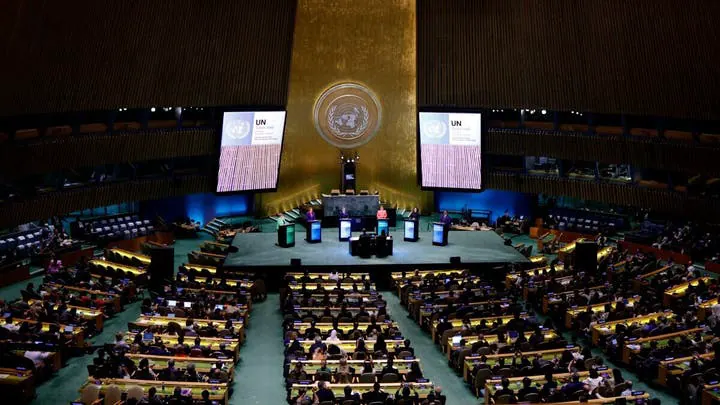
The European Union expressed regret on Saturday over the US denial of visas to Palestinian officials for the second consecutive year, calling on Washington to review its decision. The denial affects officials who were set to attend the UN General Assembly in New York. EU spokesperson Anwar El Anani stated that the EU urges the US to reconsider its decision in light of its agreements with the UN and its commitments as a host state.
The US State Department announced on Wednesday that it would extend procedures blocking visas for Palestinian Authority officials and members of the Palestine Liberation Organization ahead of the UN General Assembly. This move comes before the participation of state and government leaders in the high-level week of the 81st session of the General Assembly, which began on September 8 and continues until September 28.
In August 2025, the US announced the denial or cancellation of visas for around 80 Palestinian officials, including Mahmoud Abbas, citing national security concerns. The US accused the Palestinian leadership of not adhering to previous commitments and "undermining peace opportunities." The decision sparked international criticism, particularly as the General Assembly prepared to discuss international moves toward a two-state solution and recognition of a Palestinian state.
The US denial of a visa to a Palestinian leader to participate in UN meetings dates back to 1988, when it refused to grant entry to the late Palestinian leader Yasser Arafat. The General Assembly subsequently held its meetings in Geneva, where Arafat delivered his speech. This historical context highlights the ongoing tensions between the US and Palestinian leadership.
The UN General Assembly's 81st session has seen significant participation from world leaders, with many expected to address the assembly in person. However, the US visa denials have cast a shadow over the event, with many criticizing the move as restrictive and contrary to the principles of international diplomacy. The EU's call for a review of the decision reflects a broader international concern.
The Palestinian leadership has faced significant challenges in recent years, including criticism from the US over its stance on peace negotiations. The denial of visas to Palestinian officials has been seen as a further complication in the already strained relations between the US and Palestine. The international community continues to watch developments closely.
The situation highlights the complexities of international diplomacy, particularly in the context of the Israeli-Palestinian conflict. The EU's urging of the US to reconsider its decision reflects a broader desire for increased cooperation and dialogue between nations. The outcome of this situation remains to be seen, with many stakeholders watching closely.
Key points
- The EU has expressed regret over the US denial of visas to Palestinian officials.
- The US cited national security concerns for denying visas to around 80 Palestinian officials.
- The situation highlights the complexities of international diplomacy in the context of the Israeli-Palestinian conflict.