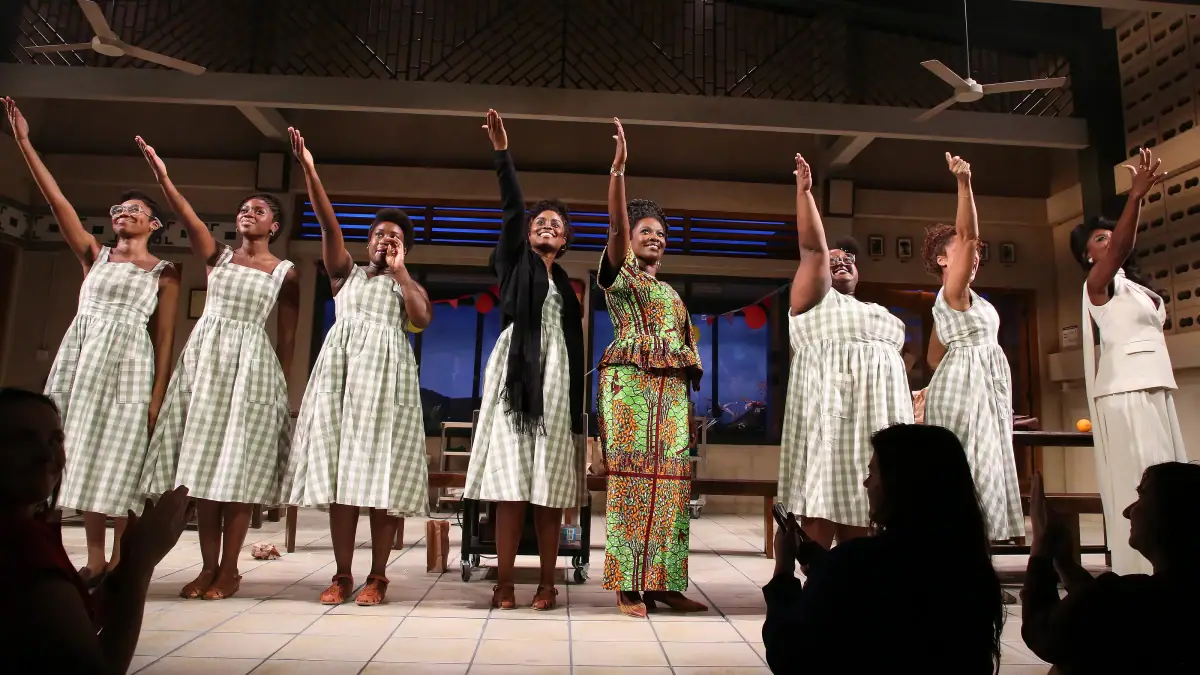
The play 'School Girls; Or, The African Mean Girls Play', written by Tony Award-nominated playwright Jocelyn Bioh, is set at a boarding school in Ghana in 1986. It follows Paulina, the school's queen bee, and her crew as they frequently belittle and bully their peers over their looks. The play is ending its Broadway run and will be available for livestream broadcasts on The League of Live Stream Theater's website.
The story revolves around Paulina's plans to win the Miss Ghana pageant, which are disrupted by a new transfer student, Ericka from Ohio. Ericka exposes Paulina's toxic behavior and sparks a clash between the school's headmistress and the pageant director over beauty standards. The play explores themes of girlhood and impossible societal beauty standards with humor and humanity.
Although the play's title references the 2004 film 'Mean Girls', Bioh says she wasn't actively thinking about the movie when writing 'School Girls'. Instead, she reflected on the themes of girlhood and beauty standards, describing the play as a portrayal of "feral teenage girls". The play tackles the issue of colorism head-on, a topic Bioh knew she wanted to write about after her own journey to own her beauty as a dark-skinned woman.
The cast of 'School Girls' displays a vast array of talent, including Denée Benton as Paulina and Jasmine Amy Rogers as Ericka. The all-Black female cast showcases diversity in physical appearance, allowing audiences to see facets of themselves in the characters. Bioh says that the play's message has resonated with people from different backgrounds, underscoring that colorism is a global issue.
Bioh hopes that audiences will walk away from the play with a deep sense of empathy for the young girls and adult women portrayed. She aims to shift people's ideas about beauty standards and implicit bias. The play's message has had a lasting impact on audiences, with one audience member, Jenna Fischer, still thinking about the play days after seeing it.
'School Girls' premiered Off-Broadway nearly 10 years ago and has since made its way to Broadway. Bioh says it's been a moving experience to see how the show's message continues to stay with audiences long after they leave the theater. The play is a reflection of Bioh's own experiences and her desire to create a work that could shorten the journey for others who may feel the same way she did about her own beauty.
The play's exploration of colorism and beauty standards serves as a commentary on the global issue of implicit bias. Bioh says that she doesn't have a solution, but hopes that the play can entertain and impact audiences, shifting their perspectives as they move through the world. For those who experience 'School Girls', Bioh hopes they will have a good time and leave with a newfound sense of empathy.
Key points
- The play 'School Girls' explores themes of girlhood and societal beauty standards in a Ghanaian boarding school setting.
- The play tackles the issue of colorism head-on, a topic playwright Jocelyn Bioh knew she wanted to write about after her own journey to own her beauty as a dark-skinned woman.
- The play's message has resonated with people from different backgrounds, underscoring that colorism is a global issue.