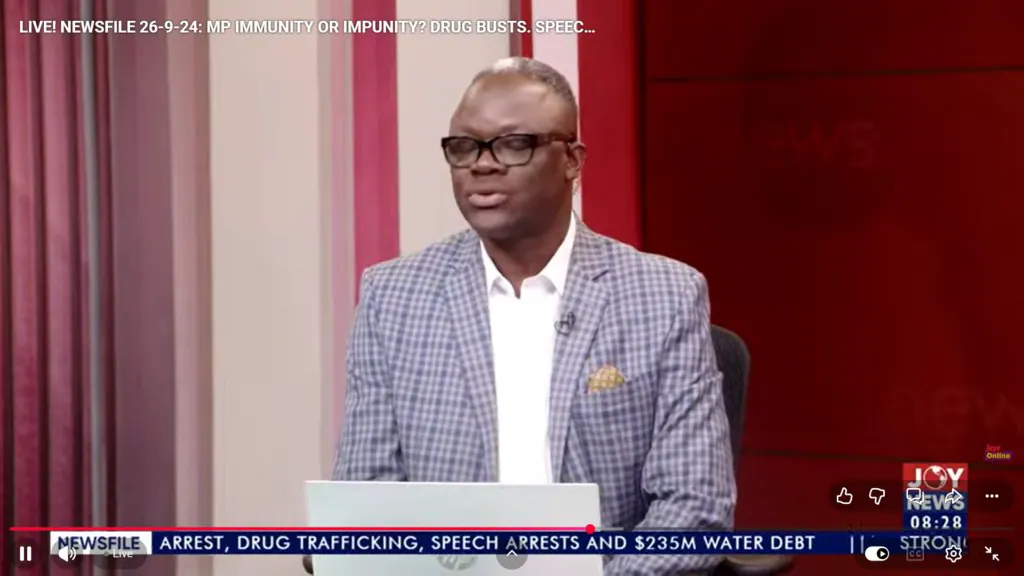
Ghanaian citizens are being reminded of their constitutional right to demand identification from individuals claiming to have the power to arrest them. According to broadcaster and lawyer Samson Lardy Anyenini, this right is especially important when dealing with plain-clothed officials. In his weekly column, Samson's Take, Anyenini urged citizens to ask for proper identification, the name of the institution represented, and the reason for the intended arrest before complying.
Anyenini's advice is grounded in Article 14 of the 1992 Constitution and Section 10 of the Criminal and Other Offences Procedure Act. These laws outline the conditions under which a person's liberty may be restricted and what constitutes a lawful arrest. The courts have distinguished between lawful arrests carried out by genuine officers and unlawful abductions. Citizens who suspect they are dealing with the latter are entitled to resist.
In situations where there is genuine doubt about a person's identity, Anyenini advises citizens to ask to accompany the individual to the nearest police station rather than an unknown location. He also recommends alerting family members or trusted persons, having someone accompany them where possible, and calling a lawyer. However, Anyenini emphasizes that this advice is not a license to obstruct genuine law enforcement officers carrying out a lawful arrest.
The guidance comes weeks after a botched attempt by the Economic and Organised Crime Office (EOCO) to arrest New Patriotic Party MP Nana Agyei Baffour Awuah. This incident has sparked public debate, including claims of selective outrage from the Ghana Bar Association and allegations of a wider cocaine scandal. The controversy highlights the importance of verifying identity and process in arrest situations.
For ordinary Ghanaians, the practical takeaway is that anyone approached by someone claiming arrest powers is entitled to ask for identification and clarification before complying. This right is a protection against impersonation and unlawful abduction, not a means to defy legitimate police or security operations. The advice does not require new legislation or directives from security agencies.
The column has sparked discussion about the need for clear guidelines on identification procedures during arrests. While no official clarification has been issued, the Ghana Police Service and EOCO may consider providing guidance in response to public concerns. The incident involving Nana Agyei Baffour Awuah has also raised questions about the handling of intelligence and the role of various agencies in investigating crimes.
Ultimately, Anyenini's advice aims to empower Ghanaians to exercise their constitutional rights when interacting with law enforcement officials. By verifying identity and process, citizens can protect themselves against unlawful actions and ensure that their rights are respected. The discussion is ongoing, with many awaiting official responses from relevant agencies and further guidance on this critical issue.
Key points
- Ghanaians have a constitutional right to demand identification from individuals claiming arrest powers.
- Citizens should verify the identity and process of plain-clothed officials claiming to have arrest powers.
- The guidance aims to prevent impersonation and unlawful abduction, not to obstruct legitimate law enforcement operations.