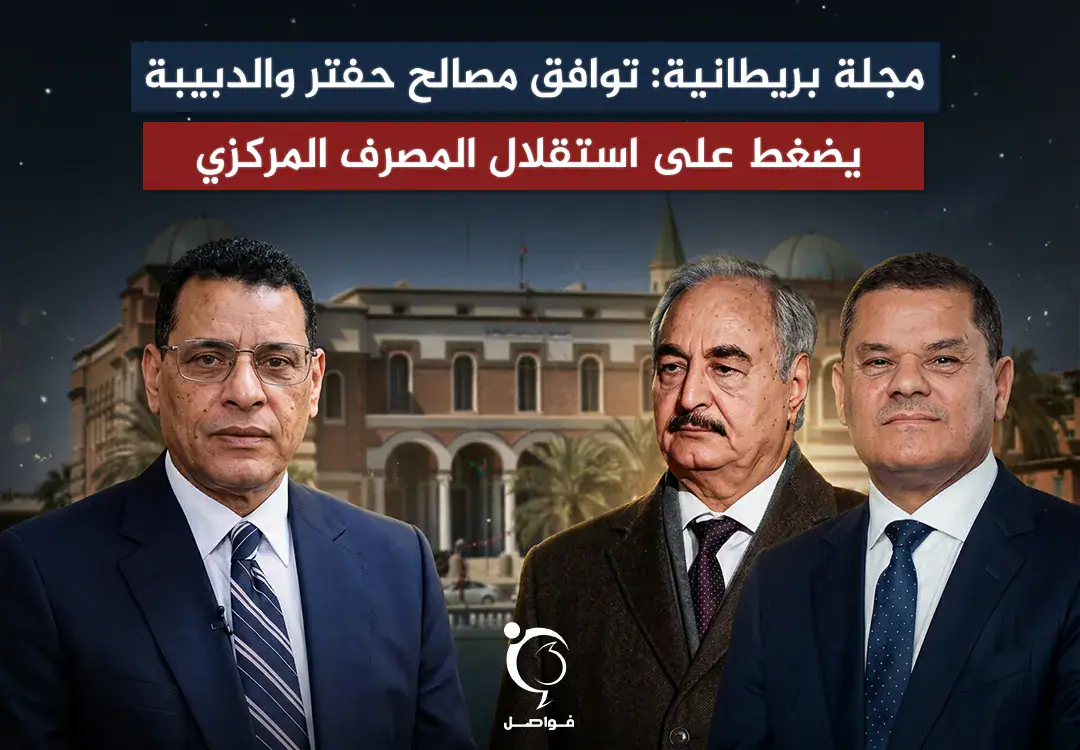
A British magazine has highlighted the potential risks to the independence of Libya's central bank amid an alignment of interests between Khalifa Haftar, the commander of the Libyan National Army, and Abdulhamid Dbeiba, the prime minister of the Government of National Unity. According to Tim Eaton, a senior researcher at the Chatham House think tank, Haftar's camp has direct influence over the House of Representatives in its dealings with Dbeiba's government, despite ongoing disagreements between the two sides.
Eaton, in an analysis published by the Central Banking magazine, noted that both Haftar and Dbeiba consider changing the governor of the Central Bank of Libya a step that serves their interests, as they believe the new governor may allow for expanded public spending. However, Eaton warned that the ousting of the previous governor and the appointment of a replacement set a precedent that threatens the independence of institutions and may encourage political forces to intervene in their leadership.
The researcher emphasized that managing an independent monetary policy is nearly impossible in the absence of a unified budget, multiple financial obligations, and political interference in the regulatory and supervisory functions of the central bank. On the issue of exchange rates, Eaton linked the pressure on the Libyan dinar to the expansion of public spending and speculation on the dollar to profit from price differences, which poses additional challenges to the central bank.
Eaton also mentioned US mediation this year to reach an agreement on the budget and support the central bank. However, he noted that Washington faces a contradiction between its efforts to impose financial discipline and its attempts to reach a political understanding between Haftar and Dbeiba's family, within arrangements aimed at uniting the two sides in a single government. This has limited Washington's ability to exert sufficient economic pressure to ensure compliance with the spending agreement.
The Central Bank of Libya faces significant challenges in maintaining its independence amid the complex political landscape. The bank's ability to manage the country's finances effectively is crucial for stability and economic growth. However, the ongoing interference in its affairs and the lack of a unified budget pose significant risks to its independence and effectiveness.
The situation in Libya highlights the need for international support to strengthen the country's institutions and promote stability. The international community has a critical role to play in encouraging dialogue and cooperation between the various Libyan factions. This includes supporting efforts to establish a unified government and promoting the independence of key institutions such as the central bank.
The future of Libya's central bank and its ability to operate independently remain uncertain. The country's economic stability and growth prospects depend on the bank's ability to manage the country's finances effectively. Therefore, it is essential to address the underlying challenges and promote the bank's independence to ensure the country's long-term economic stability and prosperity.
Key points
- The alignment of interests between Khalifa Haftar and Abdulhamid Dbeiba poses significant risks to the independence of Libya's central bank.
- The absence of a unified budget and multiple financial obligations hinder the central bank's ability to manage an independent monetary policy.
- US mediation efforts to reach an agreement on the budget and support the central bank are ongoing, but face significant challenges.
Reporting sources
- مجلة بريطانية: توافق مصالح حفتر والدبيبة يضغط على استقلال المصرف المركزي · fawaselmedia.com