The British High Court started a two-day hearing on Wednesday to consider an appeal by Huda Ammori, co-founder of Palestine Action, against the UK government's decision to ban the group as a terrorist organization. Ammori's lawyer, Razah Hussain, argued that out of 385 actions taken by the group over the past five years, only three crossed the threshold for terrorist offenses. Hussain described Palestine Action as a direct action movement driven by conscience.
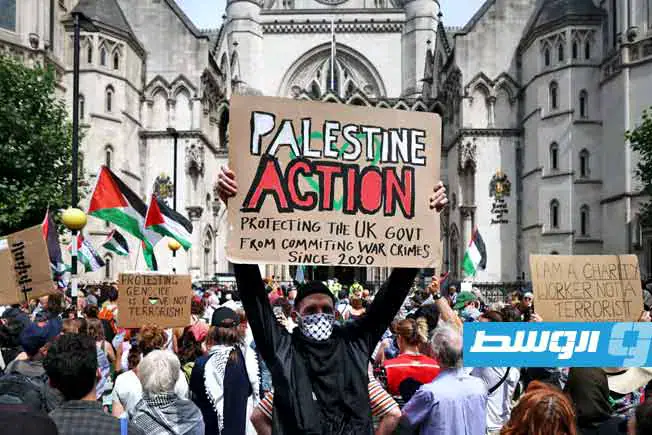
The hearing took place amid a significant police presence, with several protesters supporting Palestine Action detained outside the court. The protesters were displaying banners and slogans in support of the group, which has been banned under the UK's Terrorism Act. The ban, imposed in July last year, makes it a criminal offense to be a member of or support Palestine Action, carrying a potential prison sentence of up to 14 years.
The UK government's decision to ban Palestine Action followed a series of actions attributed to the group, including vandalism at a Royal Air Force base and targeting an Israeli arms company, Elbit Systems, in August 2024. The group's objective, as stated on its website, is to end "global participation in Israel's system of apartheid and genocide." Despite the ban, the group has continued to garner support, with thousands of people attending demonstrations in solidarity.
According to the Defend Our Juries group, which organized the demonstrations, around 4,200 people have been arrested since the ban was imposed. The arrests include a significant number of retirees, such as a cleric, a former financial advisor, and a former soldier, as well as Greta Thunberg, the Swedish climate activist. The broad support for Palestine Action has raised concerns about the effectiveness of the ban in curbing the group's activities.
In February, the High Court in London ruled that the ban on Palestine Action was "disproportionate," in a setback for the government. However, the Court of Appeal overturned the decision in June, concluding that the ban could not be deemed unlawful. The appeal hearing currently underway will determine whether the ban on Palestine Action will be upheld or overturned.
The case has sparked a heated debate about the limits of free speech and assembly in the UK. While the government argues that the ban is necessary to prevent terrorist activities, supporters of Palestine Action claim that it is an attempt to silence dissent and stifle criticism of Israel's policies. The outcome of the appeal hearing is expected to have significant implications for the group's supporters and the broader debate about free speech.
The UK government's designation of Palestine Action as a terrorist organization has been criticized by human rights groups and supporters of the group, who argue that it is an excessive measure that infringes on the right to free speech and assembly. The hearing is set to conclude on Thursday, with a decision expected in the coming weeks.
Key points
- The British High Court is hearing an appeal by Palestine Action's co-founder against the UK government's decision to ban the group as a terrorist organization.
- The ban on Palestine Action has led to over 4,200 arrests, including supporters such as retirees and climate activist Greta Thunberg.
- The appeal hearing will determine whether the ban on Palestine Action will be upheld or overturned, with implications for free speech and assembly in the UK.