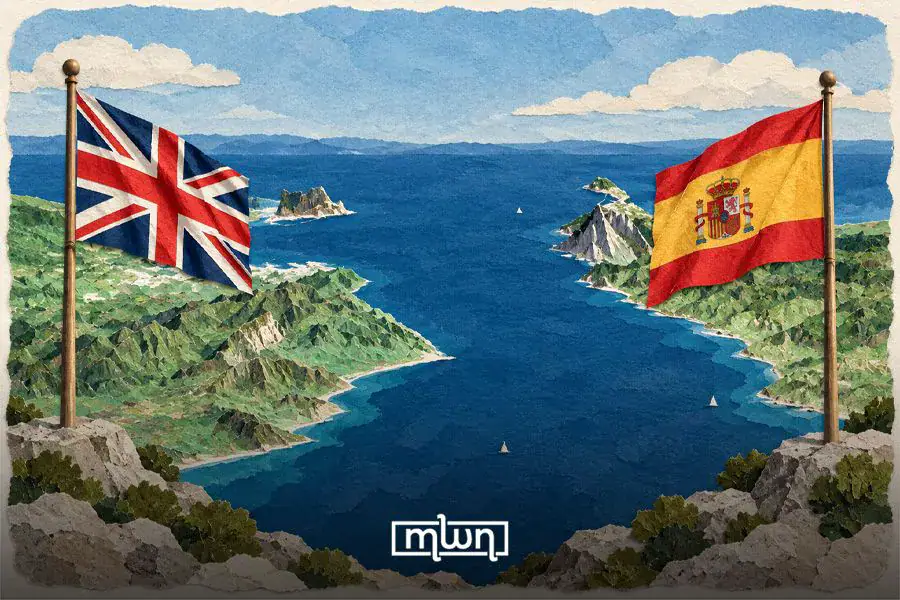
The British Royal Navy's flagship aircraft carrier, HMS Queen Elizabeth, docked in Gibraltar on October 24, sparking interest and questions about the timing and implications of the visit. At 65,000 tonnes, the carrier is a significant military asset, capable of projecting power and extending its strategic reach beyond British territory. Its arrival coincides with fresh tensions between Morocco and Spain over Ceuta, a disputed enclave.
Relations between Morocco and Spain have been strained lately, with Madrid seeking to reassert its sovereignty over Ceuta through a royal visit. Spain's general election is set for November 29, which may further complicate the situation. The presence of HMS Queen Elizabeth in Gibraltar, a territory disputed by Spain and the UK, adds a new layer of complexity to the situation. The carrier's visit was announced in advance, and it is part of an operational readiness program.
A fundamental contradiction in Spanish policy has been highlighted by the visit. Madrid claims sovereignty over Ceuta and Melilla, while contesting British control over Gibraltar. The two situations are not identical, but they reflect similar realities. Territorial disputes remain powerful tools of national politics and markers of sovereignty. The Queen Elizabeth's arrival serves as a reminder to Madrid that the UK has its own interests in the Strait of Gibraltar and the means to defend them.
The visit is not an isolated incident, but rather a scheduled port call. The Royal Navy had announced the visit, explaining that the ship was carrying out an operational readiness program after leaving Belfast on October 12. A public open day was planned in Gibraltar for October 25. These facts suggest that the visit is not a direct response to the current tensions between Morocco and Spain.
However, the presence of an aircraft carrier in Gibraltar carries significant symbolic weight, particularly given the territory's history and the ongoing dispute between London and Madrid. The visit allows the Royal Navy to reaffirm its ties to the local population and demonstrate its military capability and technological prowess. The UK has presented the visit as a way to strengthen its historic bond with Gibraltar.
Spain's upcoming general election adds another dimension to the situation, with questions of sovereignty, security, and national prestige taking on increased importance. The electoral process is underway, and candidate lists are being drawn up. The official campaign starts on November 13, which may further heighten tensions. King Felipe VI's visit to Ceuta has already demonstrated the symbolic importance of these issues in the relationship with Morocco.
Morocco remains an indispensable player in the regional balance, with its Mediterranean coastline, proximity to Europe, and growing maritime capabilities reinforcing its importance in the traffic between the Atlantic and the Mediterranean. The tensions surrounding Moroccan naval patrols and the waters Spain claims must be read in this light. The Queen Elizabeth's presence serves as a reminder that the Strait of Gibraltar cannot be reduced to a face-off between two countries.
Key points
- The visit of HMS Queen Elizabeth to Gibraltar raises questions about British intentions amidst fresh tensions between Morocco and Spain over Ceuta.
- The presence of the aircraft carrier serves as a reminder to Madrid that the UK has its own interests in the Strait of Gibraltar and the means to defend them.
- Morocco remains an indispensable player in the regional balance, with its Mediterranean coastline and growing maritime capabilities reinforcing its importance in the traffic between the Atlantic and the Mediterranean.