Britain's Deputy Permanent Representative to the United Nations, Ambassador Kate Foster, has called on the UN Security Council to unite behind a ceasefire in Sudan, stressing that ending displacement requires addressing the root cause of the conflict. Speaking during a Security Council session on refugees and forced displacement, Foster emphasized that responding to crises should not be limited to managing the situation of displaced persons and refugees after they flee, but should also target the reasons that force them to leave their homes.
Foster added that wars, instability, and repression are among the main drivers of displacement worldwide, highlighting that the Security Council was established to address these threats, but often finds itself dealing with the consequences of displacement rather than preventing its causes. She stressed that in Sudan, this means uniting behind a ceasefire to end the conflict that is driving people to displacement. This statement comes as the conflict in Sudan continues to drive people to flee their homes.
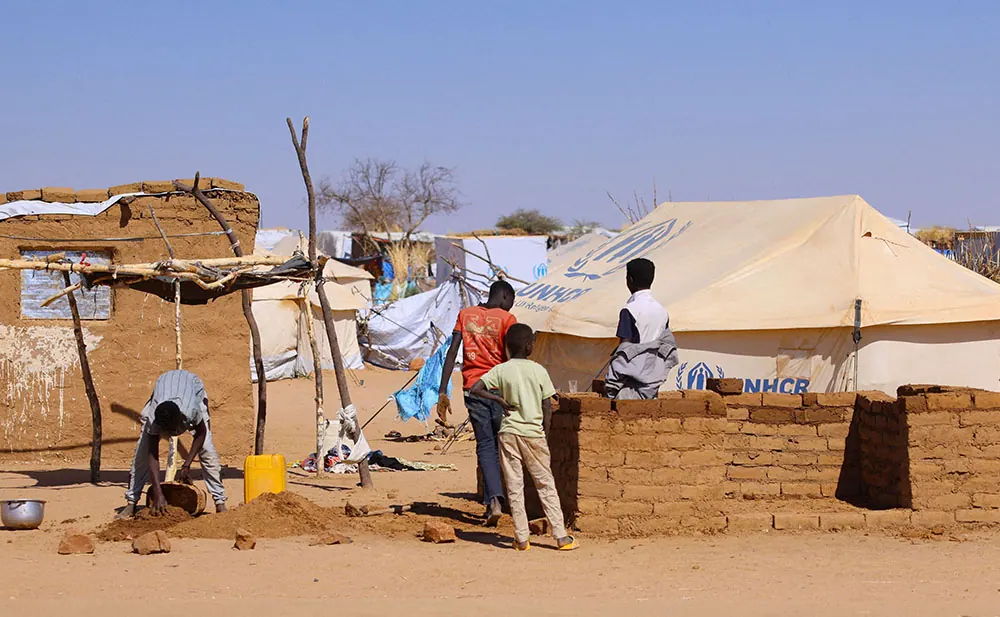
The British position coincides with a new warning from the UN High Commissioner for Refugees about a sharp increase in the flow of refugees from Sudan to Chad, due to the ongoing fighting and deteriorating security and humanitarian situations. According to the UNHCR, more than 55,000 Sudanese have fled to eastern Chad since the beginning of the year, while the number of people crossing the border daily has increased to over 400 in the past week, which is about twenty times the daily average recorded in previous months.
The UNHCR has expressed concern about the rapidly deteriorating situation in Sudan, with thousands of people fleeing their homes every day. The agency has called for increased support to help countries hosting Sudanese refugees, including Chad, to provide them with the necessary assistance. The situation in Sudan remains volatile, with no clear end to the conflict in sight.
The conflict in Sudan has resulted in a significant increase in displacement, both internally and externally. The UN estimates that millions of people have been displaced within Sudan, while hundreds of thousands have fled to neighboring countries, including Chad, Egypt, and Ethiopia. The situation is expected to worsen if the conflict is not brought to an end soon.
Ambassador Foster emphasized that the Security Council has a critical role to play in addressing the root causes of displacement, including conflict, and called on the Council to take concrete steps to support a ceasefire in Sudan. She also stressed the importance of addressing the humanitarian needs of displaced persons and refugees, including providing them with food, shelter, and medical care.
The situation in Sudan remains a major concern for the international community, with many countries calling for an end to the conflict and a return to stability. The UN Security Council is expected to continue discussing the situation in Sudan in the coming days, with a focus on finding a solution to the conflict and addressing the humanitarian crisis it has created.
Key points
- Britain's UN envoy calls for ceasefire in Sudan to end displacement
- Over 55,000 Sudanese have fled to eastern Chad since the beginning of the year
- UNHCR warns of sharp increase in refugee flow from Sudan to Chad