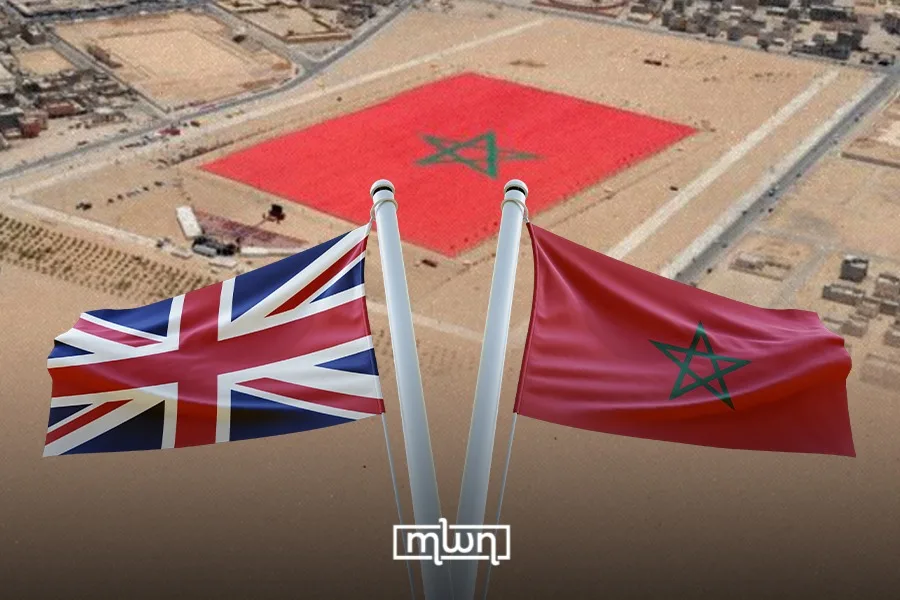
The United Kingdom has rejected a bid to impose sanctions on trade with Morocco's Western Sahara, maintaining its pro-Morocco stance on the disputed territory. In a written answer, Lord Wood of Anfield, the FCDO's Parliamentary Under-Secretary of State for Europe, stated that Britain would continue to engage with all parties to find a "just, lasting and mutually acceptable solution" through the UN-led process. This approach is anchored in the UN Charter, including the principle of respect for self-determination.
The rebuff came in response to a question tabled by Baroness Ruth Deech, who had demanded to know why London withheld sanctions, citing Morocco's "annexation" of Western Sahara. However, the government refused to endorse this characterization, instead reiterating its support for a negotiated solution. This stance is not new, as the UK has consistently maintained that it is for companies to decide whether to do business in Western Sahara.
The UK's position on Western Sahara has hardened since March 2025, when the government stated that it was for companies to take their own decisions on whether to do business in the territory. The UK-Morocco Joint Communiqué on June 1, 2025, recast British policy, declaring Morocco's 2007 Autonomy Plan "the most credible, viable and pragmatic basis for a lasting resolution" of the dispute. This plan was welcomed as a framework for negotiations.
The UK's alignment with Rabat has been reinforced at the international level. On October 31, 2025, the UN Security Council adopted Resolution 2797, which set autonomy under Moroccan sovereignty as the basis for negotiations on the file and renewed the MINURSO mandate through October 2026. This marked a significant shift, as the Council framed Rabat's plan as the core of any settlement.
The change in government in the UK has not disturbed its stance on Western Sahara. Despite Andy Burnham becoming prime minister on July 20, 2026, the UK's position has remained firm, with Lord Wood's refusal to impose sanctions reflecting the settled posture of a permanent Council member. The UK has consistently declined to treat commerce with Western Sahara as illicit.
The sanctions campaign has failed to move the government, with Deech's demand echoing a framing that Britain has serially rejected in favor of a negotiated, autonomy-centered outcome. The UK's rejection of sanctions is neither accidental nor provisional, reflecting a consistent approach to the dispute. The government's stance has been reinforced by successive written answers.
The UK's support for the Autonomy Plan has been a cornerstone of its policy on Western Sahara. Endorsed under Keir Starmer in June 2025 and reaffirmed under Andy Burnham, the plan remains the basis for negotiations on the territory's future. The UK's position is in line with its commitment to a UN-led process and respect for self-determination.
Key points
- The UK has refused to sanction trade with Morocco's Western Sahara, reaffirming its support for the autonomy plan.
- The UK's stance on Western Sahara has been reinforced at the international level, including through UN Security Council Resolution 2797.
- The change in government in the UK has not disturbed its stance on Western Sahara, with the position holding firm across the handover.