The British Ministry of Defense has taken significant steps to enhance its military preparedness in response to growing security threats. According to reports, the ministry has contacted approximately 100,000 reservists, requesting they update their contact information and disclose their current civilian skills. This move is part of a broader effort to strengthen the UK's defense capabilities, particularly in light of increasing tensions along the eastern flank of NATO.
The reservists, who are part of the UK's strategic reserve, were formally invited to participate in NATO exercises, including the upcoming "Defender-Europe" maneuver scheduled for next spring. UK Veterans' Minister Calvin Bailey emphasized that this initiative is not aimed at immediate mobilization but rather to leverage the skills and experience of these veterans as part of the country's deterrent force. A military source noted that the first step is to create an updated database of these individuals, taking into account their current skills and locations.
This development is set against the backdrop of a significantly reduced British army, which has dwindled to around 73,000 active personnel - its lowest level since the Napoleonic Wars. Defense Secretary Grant Shapps has warned that the UK must be prepared for war within a thousand days, while NATO's Article 3 obliges member states to develop individual and collective capacities to resist armed attacks. A recent strategic defense review recommended re-engaging with the strategic reserve and investing in their skills and experience.
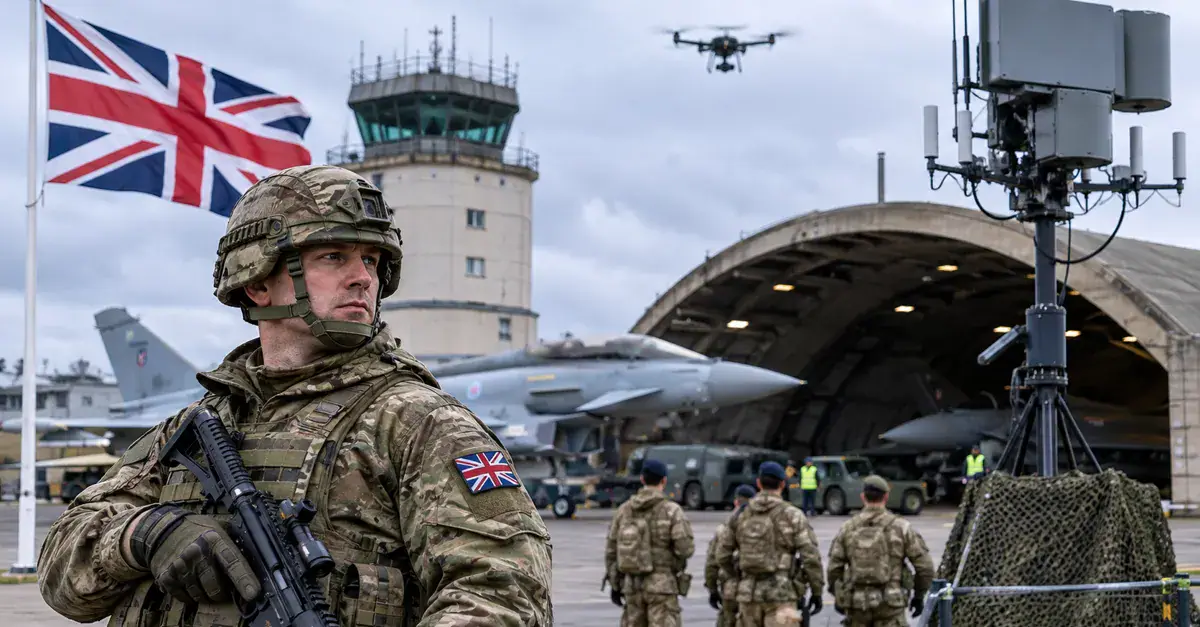
In a related move, the Royal Air Force (RAF) is planning to install anti-drone systems at its airbases, a technology that has seen extensive use in Ukraine against Russian drones. The RAF has also begun relocating aircraft to secure, enclosed shelters during nighttime hours. These measures follow a series of security incidents, including a suspected Iranian plot to target RAF Brize Norton and a breach at RAF Molesworth.
RAF Commander Air Chief Marshal Stuart Evans noted that the air force is dispersing its aircraft across multiple locations in the UK, emphasizing the need for greater security. However, defense experts have cautioned that while anti-drone systems are beneficial, they are not a comprehensive solution. They advocate for renewed investment in hardened shelters, similar to those used during the Cold War.
The UK's defense posture has been subject to scrutiny amid concerns over its military preparedness. With an increasingly complex global security landscape, the British government faces challenges in maintaining a robust defense capability. The recall of reservists and airbase fortifications are seen as steps to bolster the nation's defenses.
As the UK navigates these security challenges, it must balance its military commitments with the need for modernization and strategic planning. The integration of reservists and upgraded airbase security are critical components of this effort, aimed at ensuring the country's military effectiveness in the face of evolving threats.
Key points
- UK Ministry of Defense contacts 100,000 reservists to update contact information and disclose civilian skills
- Royal Air Force to install anti-drone systems at airbases and relocate aircraft to secure shelters
- Britain's defense strategy aims to address growing security threats amid a reduced military presence