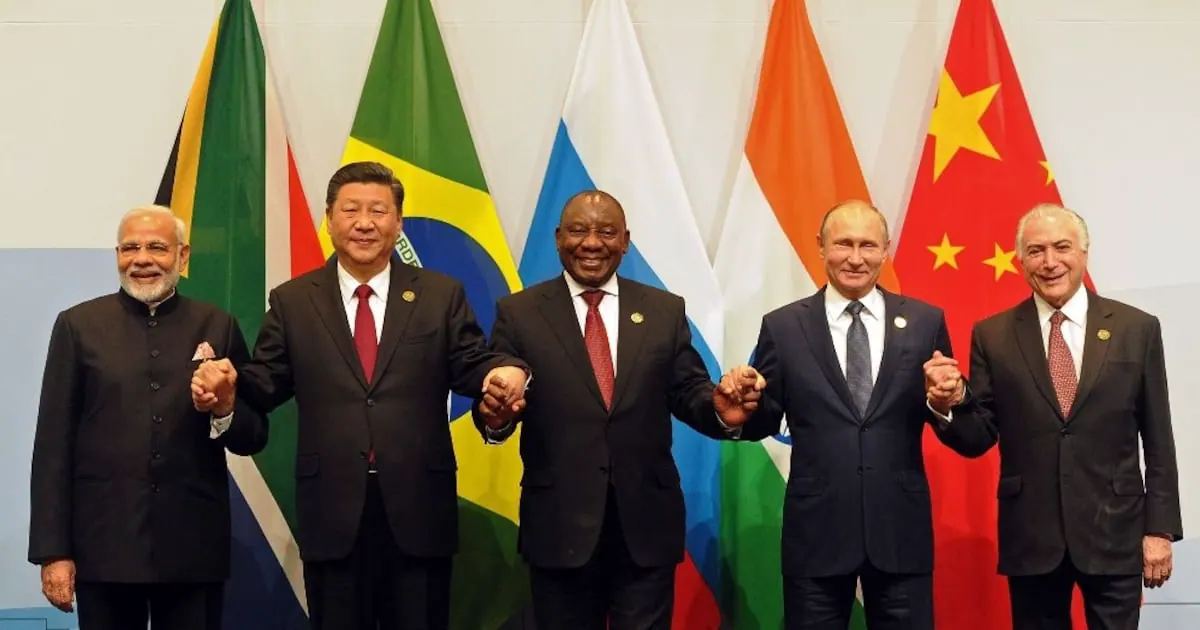
Brics has transformed into a significant economic bloc, growing from five to 11 members, with 10 partner countries, representing about 45% of the world's population and a larger share of global output than the G7. The bloc has built institutions, including the New Development Bank and a $100bn reserve arrangement. This shift has significant implications for South Africa, whose trade with Brics economies reached $62bn in 2025, nearly 29% of all trade.
South Africa's trade relationship with Brics has become increasingly important as Western relationships turn hostile. The US has imposed tariffs on South African exports, including vehicles and steel, and a new 12.5% "forced-labour" duty from July has barred South Africa from the 2026 G20 and placed its African Growth & Opportunity Act eligibility under review for 2027. In contrast, Brics has quietly become the more durable half of South Africa's trade map.
Despite the growing importance of Brics, South Africa is capturing a fraction of the value. The country runs a large and widening deficit with the bloc, importing about $38bn and exporting barely $23bn. Furthermore, close to 58% of what South Africa sells into Brics is unbeneficiated commodities, such as iron ore, chrome, coal, manganese, and diamonds. This has resulted in a classic dependency trap.
To address this issue, South African businesses need to move beyond raw commodities into processed and branded goods. China, Saudi Arabia, and Egypt have recently widened the door for South African agricultural products, offering market access opportunities. The New Development Bank, with its Africa centre in Johannesburg, also lends for infrastructure, including in rand, which sidesteps dollar-rate shocks.
The Brics bloc offers several opportunities for South Africa, including finance, payments, and market access. The New Development Bank's $1bn loan to upgrade water, electricity, and waste services across eight metros is an example of the finance available. Local-currency settlement and the emerging Brics Pay system promise cheaper, faster cross-border transactions and relief from the chronic dollar shortage that throttles trade across the Global South.
South Africa is uniquely placed to seize the opportunity of being a bridge between Brics and the rest of the African continent. The country's ports, rail, logistics, and financial system make it the natural conduit through which Brics capital, goods, and firms reach the rest of Africa and the market the African Continental Free Trade Area is building. Pairing Chinese or Gulf capital and capacity with South African project development, financial services, standards, and continental networks is the most valuable play on the board.
To thrive in the Brics bloc, South African businesses need to develop corporate and business diplomacy skills, engaging with Brics institutions, negotiating market access and partnerships, and keeping Western relationships intact. The benefits of Brics flow to companies that read the bloc as a plural, political system and engage its institutions before they need anything. By learning to read and negotiate the Brics bloc, South African companies can seize the opportunities available and thrive in the new trade landscape.
Key points
- South Africa's trade with Brics economies reached $62bn in 2025, nearly 29% of all trade.
- The country runs a large and widening deficit with Brics, importing about $38bn and exporting barely $23bn.
- South African businesses need to develop corporate and business diplomacy skills to thrive in the Brics bloc.