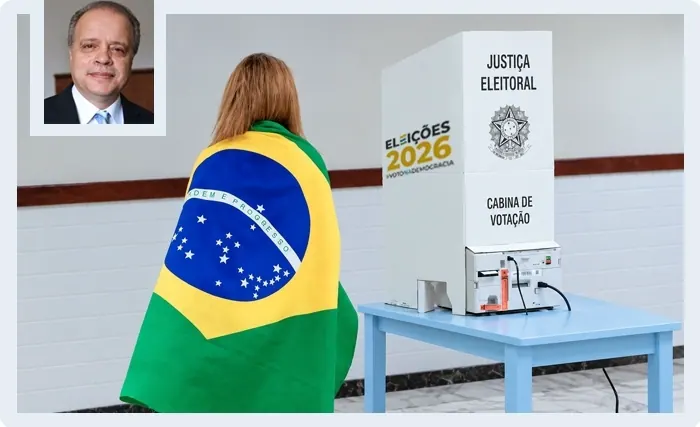
The Brazilian presidential election has reached its final stage, with Flávio Bolsonaro and Luiz Inácio Lula da Silva competing for the top spot. The second round, scheduled for October 25, 2026, will determine not only the country's leadership but also its development model, strategic autonomy, and position in the global balance of power between the US and China. The election has significant implications for Brazil's role in global food, energy, and environmental security.
The first round, held on October 4, saw Flávio Bolsonaro secure 47.03% of the vote, while Lula da Silva garnered 45.16%. Although the margin is relatively small, it masks a significant shift in the country's political landscape, with the right-wing consolidating its presence in Congress and winning several states. This development has far-reaching consequences for Brazil's governance and policy direction.
The election outcome will influence Brazil's relationships with major powers, particularly the US and China. A Flávio Bolsonaro victory could lead to closer ties with the US, potentially aligning with the policies of Donald Trump. Conversely, Lula da Silva's re-election would likely continue Brazil's strategy of diversifying partnerships and maintaining diplomatic autonomy. Brazil's economic structure, with China as its largest trading partner, will limit the scope of any potential realignment with the US.
The election results also highlight significant transformations in Brazilian society, including rising tensions around the country's development model and a crisis of representation. The bolsonarismo movement, led by Flávio Bolsonaro, has demonstrated resilience and a capacity for mobilization, with a structured electoral base, parliamentary support, and territorial networks. This phenomenon is not solely dependent on the popularity of Jair Bolsonaro, but rather represents a deeper societal shift.
The bolsonarismo movement's success can be attributed to its appeal to certain segments of the population, particularly the lower-middle class in urban peripheries. These voters prioritize autonomy, professional freedom, and increased income, which the left-wing has struggled to address. The right-wing has effectively capitalized on concerns around security, crime, and public policy, forcing Lula da Silva's campaign to adapt its discourse.
The role of evangelical communities in structuring social networks and mobilizing voters has also contributed to the bolsonarismo movement's growth. These groups have significant influence in urban peripheries and have helped to galvanize support for Flávio Bolsonaro. The second round of the election remains competitive, but it is clear that bolsonarismo has acquired a level of social and institutional depth that makes its disappearance unlikely in the short term.
As the election approaches, the international community is watching closely, aware of Brazil's importance in the global balance of power. The country's economic and strategic significance, combined with its role in regional and global governance, makes its future trajectory a matter of considerable interest. The outcome will have far-reaching implications for Brazil's development model, global stance, and relationships with major powers.
Key points
- The Brazilian presidential election will determine the country's development model and global stance, with implications for its relationships with major powers, particularly the US and China.
- The bolsonarismo movement has demonstrated resilience and a capacity for mobilization, with a structured electoral base, parliamentary support, and territorial networks.
- Brazil's economic structure, with China as its largest trading partner, will limit the scope of any potential realignment with the US.