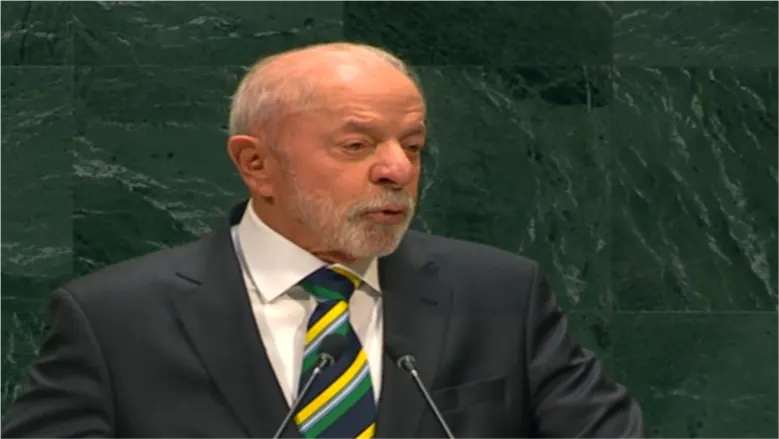
Brazilian President Luiz Inácio Lula da Silva addressed the United Nations General Assembly, stating that the organization's failure to hold powerful nations accountable encourages crimes and impunity. He emphasized that war is not a continuation of politics by other means, but rather a collapse of politics. Da Silva's comments reflect his concerns about the current state of international relations and the effectiveness of the UN.
Da Silva highlighted a fundamental flaw in the UN Charter, which grants major powers a "luxury of indifference." He noted that the organization's credibility has never been lower. The Brazilian President's remarks were reported by Arab media outlets. His statements reflect a growing frustration with the UN's inability to address global issues effectively.
The Brazilian President emphasized that the UN is failing in one of its primary tasks: saving humanity from the devastation of war. Da Silva pointed out that UN Secretary-General António Guterres has witnessed firsthand the overreach of major powers during his tenure. Guterres has been a vocal advocate for reform and has expressed concerns about the changing global landscape.
The 81st session of the UN General Assembly commenced in New York City, with Guterres delivering a speech. He stated that the world is shifting towards a multipolar order, which is irreversible. Guterres emphasized that this transformation presents opportunities and challenges. He called for a more inclusive and equitable international system.
Guterres noted that power dynamics in the modern world are shifting from governments to corporations and individuals. He described this transition as "exceptional," with a small group of private companies and individuals accumulating significant influence. This shift raises questions about accountability and the role of governments in the 21st century.
The UN Secretary-General's comments reflect a growing recognition of the changing global landscape. The rise of non-state actors and the increasing influence of corporations and individuals present both opportunities and challenges. Guterres' statements highlight the need for a more nuanced understanding of power dynamics in the modern world.
The Brazilian President's criticism of the UN Charter and the Secretary-General's comments on the shifting global landscape reflect a growing debate about the effectiveness of the international system. The UN's ability to address global challenges and promote accountability will depend on its capacity to adapt to these changes. The organization must navigate complex power dynamics to remain relevant.
Key points
- Brazilian President Luiz Inácio Lula da Silva criticizes the UN Charter for giving major powers a "luxury of indifference."
- UN Secretary-General António Guterres notes that the world is shifting towards a multipolar order, which is irreversible.
- Guterres highlights the transfer of power from governments to corporations and individuals in the modern world.