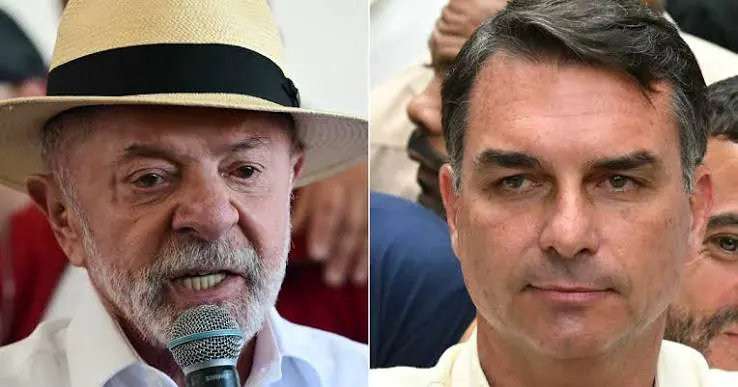
Brazil's presidential race will proceed to a second round of voting after Senator Flavio Bolsonaro, son of former President Jair Bolsonaro, secured 47.1% of the vote, but fell short of the outright majority needed to win the election. With over 99% of votes counted, Bolsonaro will face off against incumbent President Luiz Inacio Lula Da Silva, who garnered 45% of the vote, in a showdown scheduled for October 25.
The election results indicate a strong showing by the far-right, with Bolsonaro's victory likely to be bolstered by the migration of votes from other right-wing candidates. Ronaldo Caiado and Renan Santos, who secured 2.1% and 2.2% of the vote respectively, are among the right-wing candidates whose supporters may shift their allegiance to Bolsonaro in the second round.
The far-right made significant gains in Brazil's congressional and gubernatorial races, with several Bolsonarista politicians winning seats. These include Jair Bolsonaro's second son, Carlos Bolsonaro, and his wife, Michelle Bolsonaro, who both secured senate seats. Additionally, Bolsonaro's youngest son, Jair Renan, was elected to the lower house of congress.
Bolsonaro's former infrastructure minister, Tarcísio de Freitas, was reelected as governor of São Paulo, Brazil's most populous and economically important state. The election results also indicate a shift to the right in the senate, with 34 of the 54 elected senators hailing from the right or far right.
Flavio Bolsonaro addressed supporters in Brasília, stating that the result marked "the end of an era" for Lula's Workers' party. He emphasized his focus on Brazil's future, contrasting it with Lula's concern for maintaining power. Bolsonaro expressed confidence in his ability to lead the country and provide opportunities for Brazilian families.
Lula, meanwhile, remained optimistic about his chances in the second round, stating that the election result was a lesson in Brazilian democracy. He acknowledged that the outcome was unexpected and vowed to launch a new campaign highlighting the differences between his proposals and those of his opponent. Lula also criticized Bolsonaro's "dark past," which he believes will become clearer to voters before the second round.
The second round of voting is set to take place on October 25, and Lula's allies have framed the election as a crucial battle against the far-right movement. The outcome will have significant implications for Brazil's future, with Lula seeking a historic fourth non-consecutive term as president.
Key points
- Flavio Bolsonaro won the first round with 47.1% of the vote.
- The far-right made significant gains in Brazil's congressional and gubernatorial races.
- The second round of voting is scheduled for October 25.