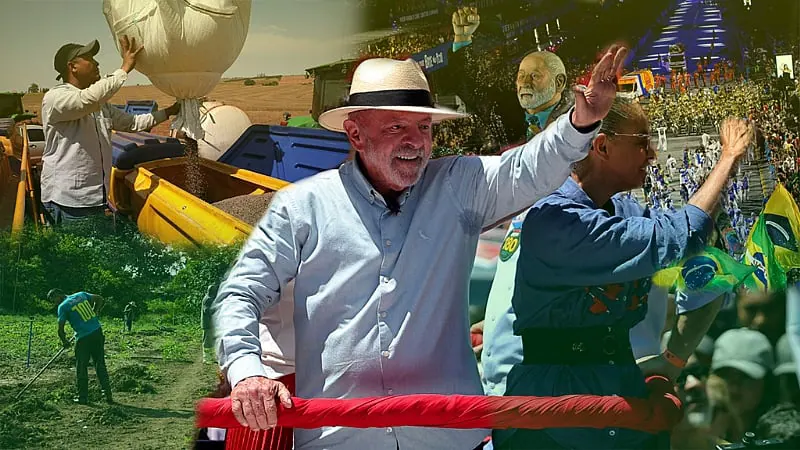
Brazilian politician Luiz Inácio Lula Da Silva is set to make his seventh presidential bid, seeking a fourth term as president of Latin America's largest economy. Lula, who will turn 81 on October 27, has been a dominant figure in Brazilian politics for over four decades. Born in the impoverished northeast of Brazil, Lula has consistently articulated the concerns and aspirations of the working class. His bid for a fourth term comes despite previous promises to step aside after his third tenure.
Lula's decision to run again has been influenced by his concerns about the potential return of far-right politics in Brazil. His main rival appears to be Flavio Bolsonaro, the eldest son of former President Jair Bolsonaro, who is currently serving a 27-year prison sentence for attempting a coup. Recent polls show Lula and Flavio Bolsonaro neck-and-neck in the race. Lula has attempted to reassure voters that his age will not impact his ability to lead, highlighting his good health and exercise routine.
Throughout his campaign, Lula has relied on his previous successful tactic of showing solidarity with Brazil's working class. He has emphasized his humble beginnings, growing up in a poor family in Pernambuco state and working as a shoe-shiner and courier in Sao Paulo. Lula's rise to prominence began with his involvement in the factory workers' labor unions and his role in the large-scale metalworkers strikes in Sao Paulo during the late 1970s.
Lula's connection to the working class has been a key factor in his enduring popularity. According to Marcia Dias, director of the school of political science at Rio de Janeiro's Federal University of the State, Lula has a deep understanding of the daily lives and struggles of ordinary people. His backstory of overcoming adversity has come to symbolize the Brazilian spirit for many.
Lula officially launched his 2026 presidential campaign in the state of Sao Paulo, paying tribute to his mother and speaking about his years as a trade unionist. The event took place at a football stadium in the Vila Euclides neighborhood of Sao Bernardo do Campo district, an area with deep ties to the 1970s labor movement. Lula also referenced his recent treatment for early-stage skin cancer on his scalp, stating that he would risk his health to lead the country.
Lula's lengthy record in politics, which began in 1980 as a founder of the Workers' Party, provides him with a wealth of experience to draw upon. He first stood for the presidency in 1989, then 1994 and 1998, but failed to win. Lula's eventual success in 2002, with over 60 percent of second-round votes, marked a significant turning point in his career. His two terms in office brought economic growth and social policies that transformed the lives of millions of Brazilians.
Despite his achievements, Lula's career has been marred by corruption scandals, including an alleged vote-buying ring in Congress and accusations of money laundering. Lula was found guilty in 2017 and spent 580 days in prison before the ruling was revoked in 2021. The scandals have had a lasting impact on his reputation, but Lula has maintained a significant level of support among the electorate. According to a recent poll, 34 percent of Brazilians believe he has managed the country well, while 40 percent think he has done a bad or very bad job.
Key points
- Lula seeks a fourth term as Brazilian president despite previous promises to step aside.