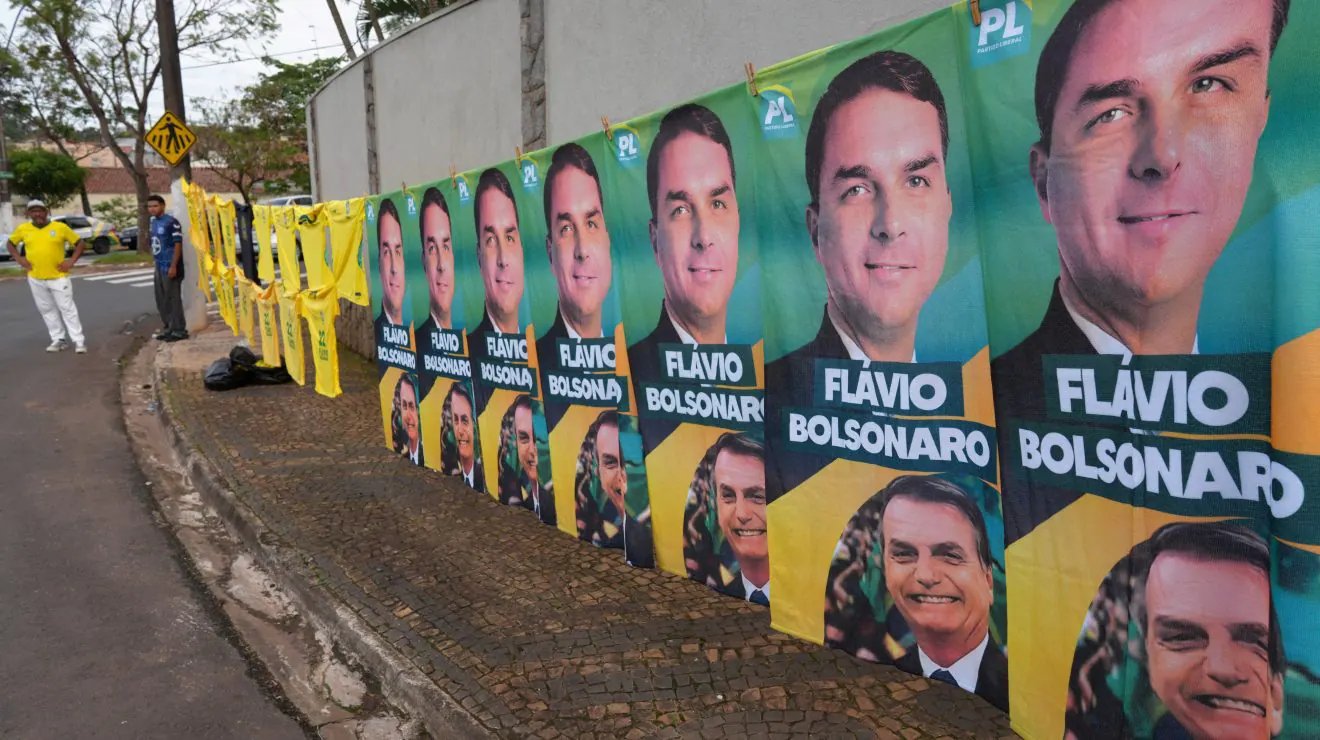
The Brazilian presidential election has concluded with a runoff between right-wing Senator Flavio Bolsonaro and leftist President Luiz Inacio Lula da Silva. Bolsonaro exceeded expectations with 47% of the vote, narrowly surpassing Lula's 45%. This outcome sets the stage for an October 25 showdown between the two candidates. The election centered on pressing issues such as the cost of living, corruption, and insecurity affecting daily life in Brazil.
Bolsonaro's stronger-than-expected performance is anticipated to boost his campaign and may have a positive impact on Brazil's currency and stock market. These markets have seen gains amid the prospect of a business-friendly administration. Prior to the election, private surveys suggested Lula would lead by approximately 3 percentage points. Bolsonaro's campaign has capitalized on concerns over the high cost of living and economic issues.
In the aftermath of the election results, Bolsonaro expressed his satisfaction, stating that Brazil is seeking change. He noted that his campaign marks the end of the era of Lula's Workers' Party. Lula, addressing supporters in Sao Paulo, acknowledged that he had expected to win in the first round. He vowed to highlight his accomplishments as president in the lead-up to the runoff.
Despite growing concerns over Brazil's public finances and sluggish economic growth, the election campaign was characterized by limited policy debate. Both leading candidates opted out of participating in major TV debates. The outcome has been seen as a surprise by some, with pollsters having missed the mark significantly.
Analysts have noted that the runoff polls may underestimate Bolsonaro's support. Some voters expressed a desire for change, with Thaise Lima, a 41-year-old lawyer, stating that her primary goal was to see Lula's Workers' Party out of office. Others, like Fernando Tempel, a 49-year-old management consultant, switched their support to Bolsonaro after initially planning to vote for another candidate.
The election result reflects a broader trend in Latin America, where right-wing parties aligned with US President Donald Trump have secured recent victories. Bolsonaro's campaign has tapped into voter concerns over economic issues and public safety. Lula's Workers' Party has faced challenges in winning over voters grappling with high living costs and household debt.
The runoff election between Bolsonaro and Lula is set for October 25. Both candidates will need to consolidate support and address pressing economic and social issues to win over voters. The outcome will have significant implications for Brazil's future, with voters weighing the merits of change and continuity in the country's leadership.
Key points
- The Brazilian presidential election will go to a runoff between right-wing Senator Flavio Bolsonaro and leftist President Luiz Inacio Lula da Silva on October 25.
- Bolsonaro's stronger-than-expected performance in the first round has boosted his campaign and may positively impact Brazil's currency and stock market.
- The election centered on key issues such as the cost of living, corruption, and insecurity affecting daily life in Brazil.