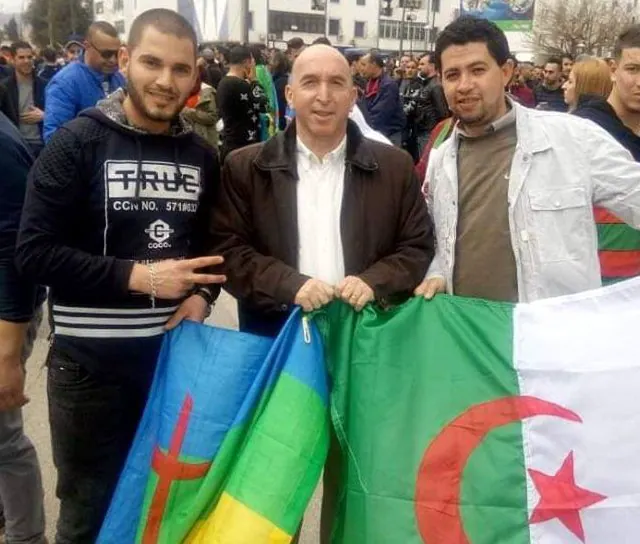
Brahim Tazaghart, a prominent figure in Algeria's Berber movement, has reflected on the significant strides made by the Tamazight language and culture over the past 39 years. As a novelist, short story writer, and poet, Tazaghart has been an advocate for the Berber cause, penning numerous works in Tamazight. In a recent interview with La Dépêche de Kabylie, he shared his insights on the progress made since the Berber Spring of 1980.
Tazaghart described the current state of Tamazight as having made an "extraordinary" advancement, both domestically and internationally. Nationally, the language has transitioned from being virtually non-existent to being recognized as a national and official language. While acknowledging that there are still shortcomings, Tazaghart emphasized that this achievement is not insignificant. However, he noted that the Algerian Constitution also describes the country as "an Arab land," which he considers a "counter-truth."
The activist highlighted several areas where Tamazight still faces challenges. For instance, the language does not have full official status, as the Constitution stipulates that Arabic is the state language. Additionally, Tamazight is not included in the constitutional article that lists the constants that cannot be subject to revision, unlike Arabic and Islam. Despite these limitations, Tazaghart remains optimistic about the progress made.
Internationally, the Berber movement has gained momentum, with discussions about Tamazight and Amazighité taking place in various North African countries, including Morocco, Tunisia, Egypt, and Sudan. Tazaghart noted that efforts are underway to create international structures that bring together countries from Tamazgha and North Africa to promote and coordinate the Amazigh cause.
The creation of the Algerian Academy of the Amazigh Language has been a significant development, according to Tazaghart. Although there have been concerns about the academy's composition and activity, he believes it is an important institution for the Berber cause. A seat has been allocated for the academy, and Tazaghart expressed hope that it will play a vital role in promoting Tamazight.
Tazaghart also addressed the issue of teaching Tamazight, which has yet to be generalized. He urged patience, explaining that the current teaching method is designed for amazighophone students, and a scientific approach is needed to teach the language to non-amazighophones. While this is a significant challenge, Tazaghart is confident that the process has begun and will be implemented.
Looking ahead, Tazaghart emphasized the need for continued vigilance and prudence in promoting Tamazight, given the language's history of marginalization. While progress has been made, he acknowledged that it will take time to make up for lost ground. The interview with La Dépêche de Kabylie was conducted by Aomar Mohellebi.
Key points
- Tamazight has made significant progress, gaining recognition as a national and official language in Algeria.
- Despite this progress, challenges remain, including the language's limited official status and the need for a scientific approach to teaching Tamazight to non-amazighophones.
- The Berber movement has gained international momentum, with discussions about Tamazight and Amazighité taking place in various North African countries.