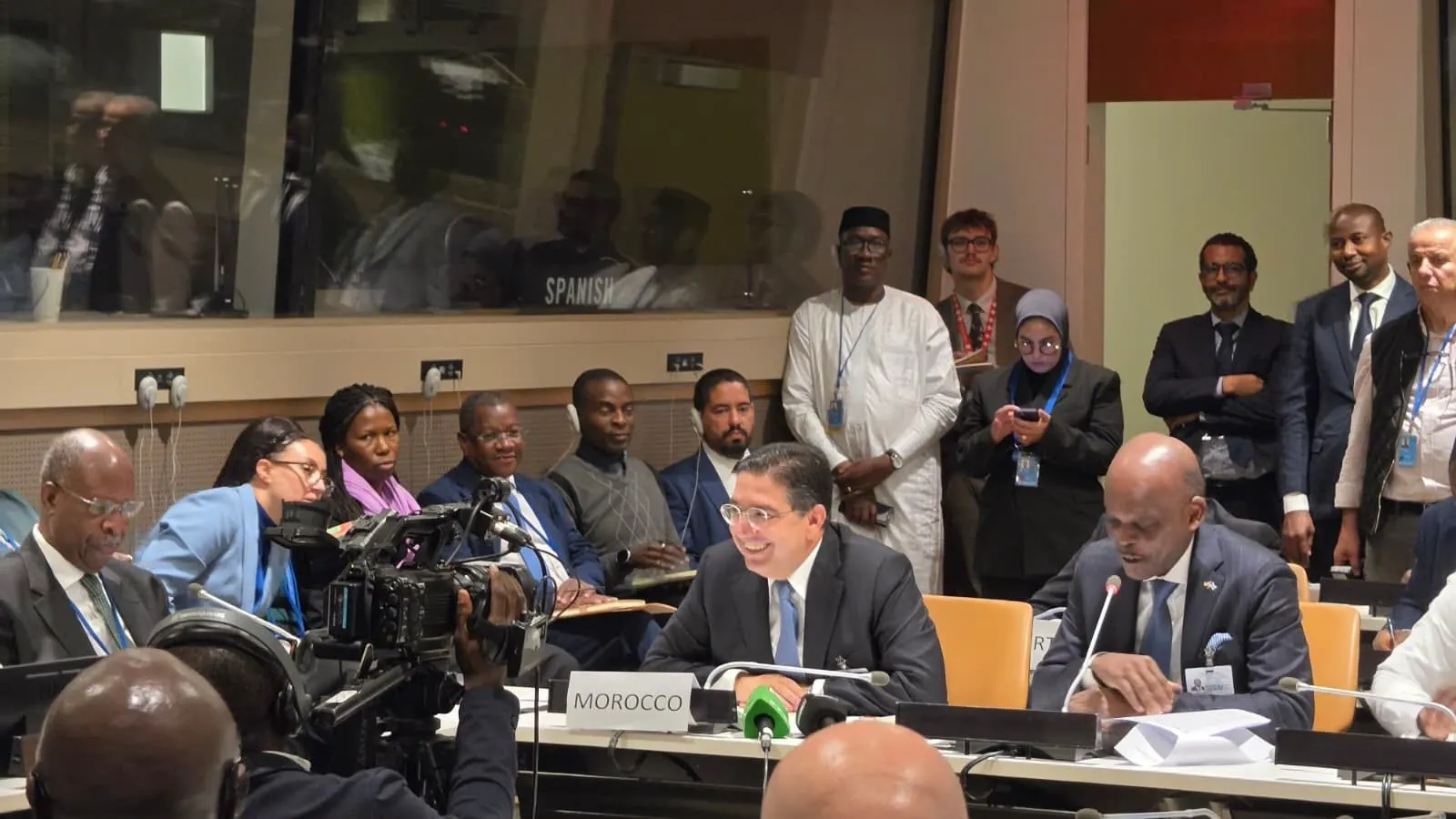
Moroccan Foreign Minister Nasser Bourita recently spoke at a high-level UN event on "Security and Development in the Sahel," highlighting the region's potential for growth and development. Bourita emphasized that the Sahel should not be viewed solely through the lens of its challenges, but rather as a region with a youthful population, abundant natural resources, and opportunities in agriculture, energy, and mining. He noted that the challenge lies in transforming this potential into concrete opportunities for the benefit of the Sahel's populations.
The event was held on the margins of the 81st session of the United Nations General Assembly, where Morocco's diplomatic agenda was dense with various meetings and gatherings. Bourita also chaired an Atlantic ministerial meeting and addressed a separate high-level event on the Sahel. The African Atlantic Initiative, launched by King Mohammed VI, aims to equip the region with tools for economic, infrastructural, and energy empowerment toward harmonious and sustainable development.
During the meeting, Bourita described the African Atlantic Initiative as an effort to turn the African Atlantic seafront into a zone of strategic dialogue and economic integration. He emphasized that the vision rests on a collegial, mobilizing, and pragmatic form of governance meant to make Atlantic Africa an "indispensable actor" in the governance of the Atlantic Basin. The initiative has gained significant consolidation and importance since its launch in June 2022.
The 8th meeting of foreign ministers of the Atlantic African States Process (PEAA) was also held, where Bourita presided over the gathering. The meeting reflected the ownership by regional states of the King's vision, which aims to equip the space with tools for economic, infrastructural, and energy empowerment. The ministers renewed their attachment to the vision and objectives of the process as laid out in the Rabat Ministerial Declaration of June 8, 2022.
In his address, Bourita called for collective action to meet the multiple challenges facing the African Atlantic space and to take advantage of its enormous opportunities for cooperation. He emphasized that the involvement of various ministerial departments remained crucial given the scope of the partnership. The ministers also welcomed progress but called for accelerating implementation on the basis of consultation, coordination, and complementarity of national actions.
The Sahel region has historical ties with Morocco through routes crossing the Western Sahara, trade, and a shared human and spiritual heritage. Bourita reaffirmed Morocco's commitment to the Sahel in a spirit of solidarity, non-interference, and respect for sovereignty and national choices. He noted that Morocco's engagement was not merely a partnership but one "deeply rooted in history, nourished by bonds of fraternity and turned toward a shared future."
The ministers of the Confederation of Sahel States – Mali, Burkina Faso, and Niger – paid tribute to King Mohammed VI for the audience the sovereign granted them in April 2025. They welcomed the monarch's initiative to facilitate the Sahel countries' access to the Atlantic Ocean. The event highlighted the strong and long-standing relations between Morocco and the three countries of the Alliance of Sahel States (AES).
Key points
- Moroccan Foreign Minister Nasser Bourita emphasizes the Sahel's potential for growth and development.
- The African Atlantic Initiative aims to equip the region with tools for economic, infrastructural, and energy empowerment.
- Morocco reaffirms its commitment to the Sahel in a spirit of solidarity, non-interference, and respect for sovereignty and national choices.