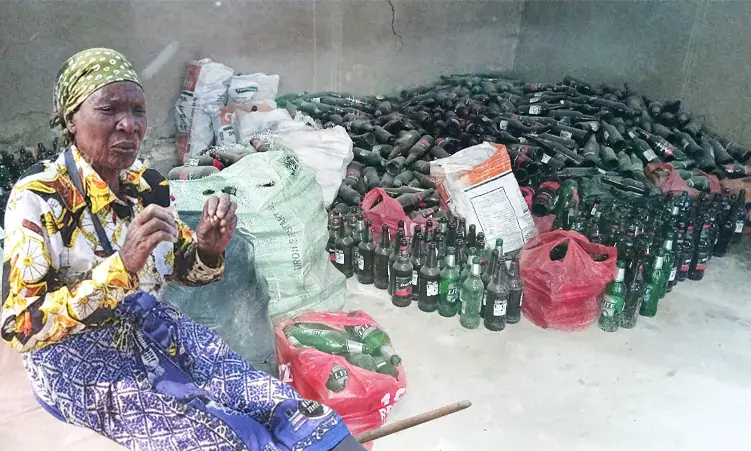
In Katima Mulilo, Namibia, a 70-year-old pensioner, Judith Ndabeni, has been collecting empty beer bottles for over a decade to supplement her government old-age pension. She earns around N$2,300 per month from selling these bottles, which helps her feed her family. However, with Metro Katima Mulilo's recent decision to stop buying from informal vendors, Ndabeni and others like her are facing financial difficulties. Ndabeni expressed her concerns, stating that her old-age pension grant is not enough to feed her nine family members.
Ndabeni is not alone in her struggles. Another bottle vendor, Mary Samutuma, a single mother, also relies on selling empty bottles to feed her children. She used to earn a steady income from selling these bottles, which helped her pay for her daughter's nursing school fees. However, for the past seven months, her finances have been struggling due to Metro's ban. Samutuma emphasized the need for assistance from regional leaders, as selling bottles is her only source of income.
The Native Small Traders Association (Nasta) chairperson, Simasiku Mulijani, expressed concerns about the impact of Metro's decision on informal bottle vendors. He stated that unemployment is high in the region, and people sell bottles to put food on their table. Mulijani called on Carling Black Label producers to set up a satellite office to assist these vendors. He also emphasized that these vendors play a crucial role in cleaning the town by collecting empty bottles.
According to Metro Katima Mulilo's branch manager, Lukas Ulenga, the decision to stop buying from unregistered liquor traders was made due to an overflow of empty bottles. Ulenga explained that when registered liquor traders buy from them, they exchange empty bottles for crates, which the traders use in their businesses. However, with informal traders, the bottles pile up with no use.
The ban has left many informal bottle vendors struggling to make ends meet. Ndabeni and Samutuma urged Metro to reconsider their decision, as it has severely affected their livelihoods. They emphasized that they need assistance to find alternative sources of income.
Mulijani's suggestion for Carling Black Label producers to set up a satellite office in the region could provide a potential solution. This would enable vendors to sell their bottles to a registered entity, providing them with a steady income stream. However, it remains to be seen whether this proposal will be considered.
The situation highlights the challenges faced by informal vendors in Namibia and the need for sustainable solutions to support their livelihoods. The impact of Metro's decision on these vendors and their families will continue to be monitored, as they seek assistance from regional leaders and the manufacturers of Carling Black Label.
Key points
- Informal bottle vendors in Katima Mulilo face financial struggles after Metro stopped buying empty Carling Black Label bottles from them.
- The ban has affected the livelihoods of many vendors, including a 70-year-old pensioner and a single mother.
- A proposal for Carling Black Label producers to set up a satellite office in the region could provide a potential solution for the vendors.