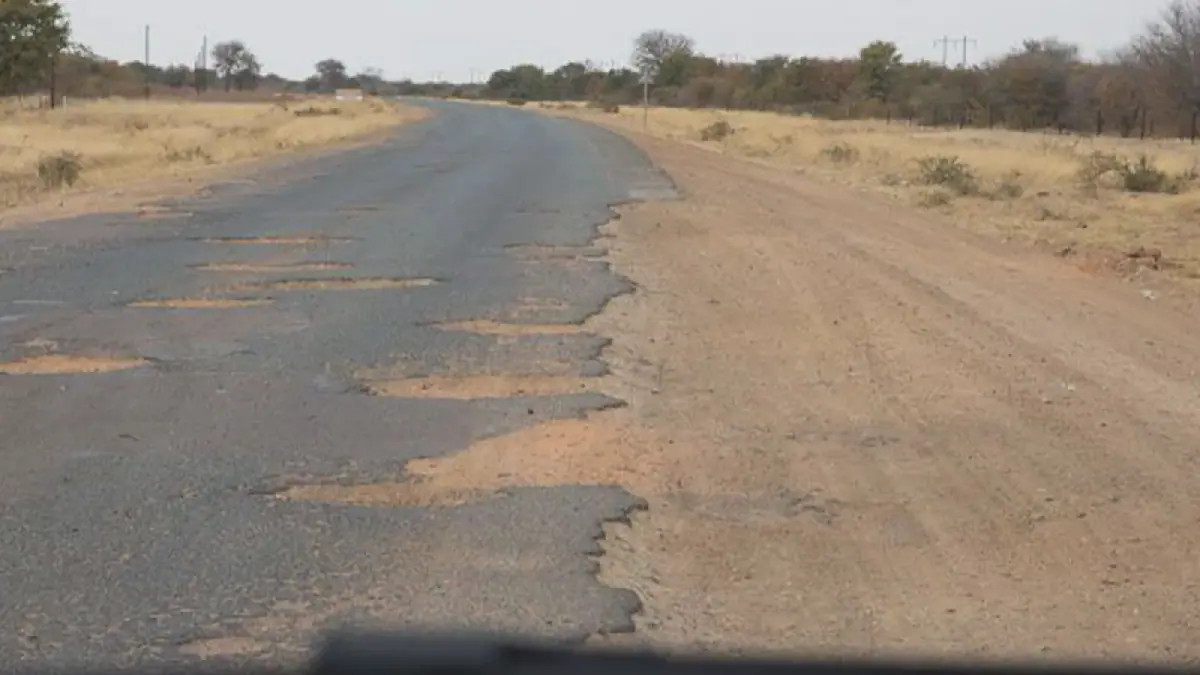
Botswana is experiencing recurring heat waves with temperatures exceeding 40 degrees Celsius, raising concerns about road safety. The government reports that between January and September 2026, crashes killed 189 people and seriously injured 448. The assistant minister of transport and infrastructure, Letlhogonolo Barongwang, identified speeding, drunk driving, distraction, and failure to obey traffic rules as major contributors to these crashes.
Research suggests that heat can hasten tire deterioration, especially when vehicles are overloaded or poorly maintained. A tire can have enough tread to look serviceable and still be deteriorating inside. Repeated flexing generates heat, while age and exposure gradually weaken the rubber that holds the tire together. This hidden damage can become consequential on a heavily loaded vehicle making a long highway journey.
The mechanics of tire failure raise a road-safety question in Botswana, where heat waves are a recurring phenomenon. Safety authorities warn that hot weather adds stress to tires that are old, underinflated, or overloaded. However, there is no evidence establishing that rising temperatures are causing more tire-related deaths in Botswana. The relationship between heat and road safety is complex and may extend beyond mechanical defects.
A 2015 study in Environmental Health Perspectives found that crash risk was 2.9 percent higher on heat-wave days in Catalonia, Spain. The association was stronger for crashes involving factors such as distraction, driver error, fatigue, or sleepiness. While this study does not provide direct evidence for Botswana, it illustrates the need to investigate several possible pathways by which heat may affect drivers, vehicles, and roads.
To assess the impact of heat on tire deterioration and road safety in Botswana, a meaningful investigation would need to examine the actual tire model, age, load and speed ratings, inflation requirements, repairs, and condition. This would require crash records linked to local weather observations and forensic examination of the tires. Records should identify the vehicle category, tire specifications, loading, maintenance history, and whether failure occurred before the driver lost control.
Botswana's October 2024 updated national climate pledge describes persistent heat waves exceeding 40 degrees Celsius and identifies the country's infrastructure as vulnerable to climate change. An International Monetary Fund analysis published in 2025 projects median warming of about 1.5 to 2.2 degrees Celsius by 2050 across the scenarios it examines, relative to a 1985–2014 baseline.
The issue of tire deterioration and road safety in Botswana highlights the need for further research and investigation. Key factors to consider include the condition and maintenance of vehicles, particularly buses, shared taxis, and freight trucks, which are often used for long-distance travel. Understanding the relationship between heat and road safety will be crucial in developing effective strategies to mitigate the risks associated with tire failure and road crashes.
Key points
- Heat waves in Botswana may be exacerbating tire deterioration and road crashes.
- There is no conclusive evidence establishing that rising temperatures are causing more tire-related deaths in Botswana.
- Further research and investigation are needed to understand the relationship between heat and road safety in Botswana.
Reporting sources
- As Botswana gets hotter, a hidden road risk comes into focus · weekendpost.co.bw