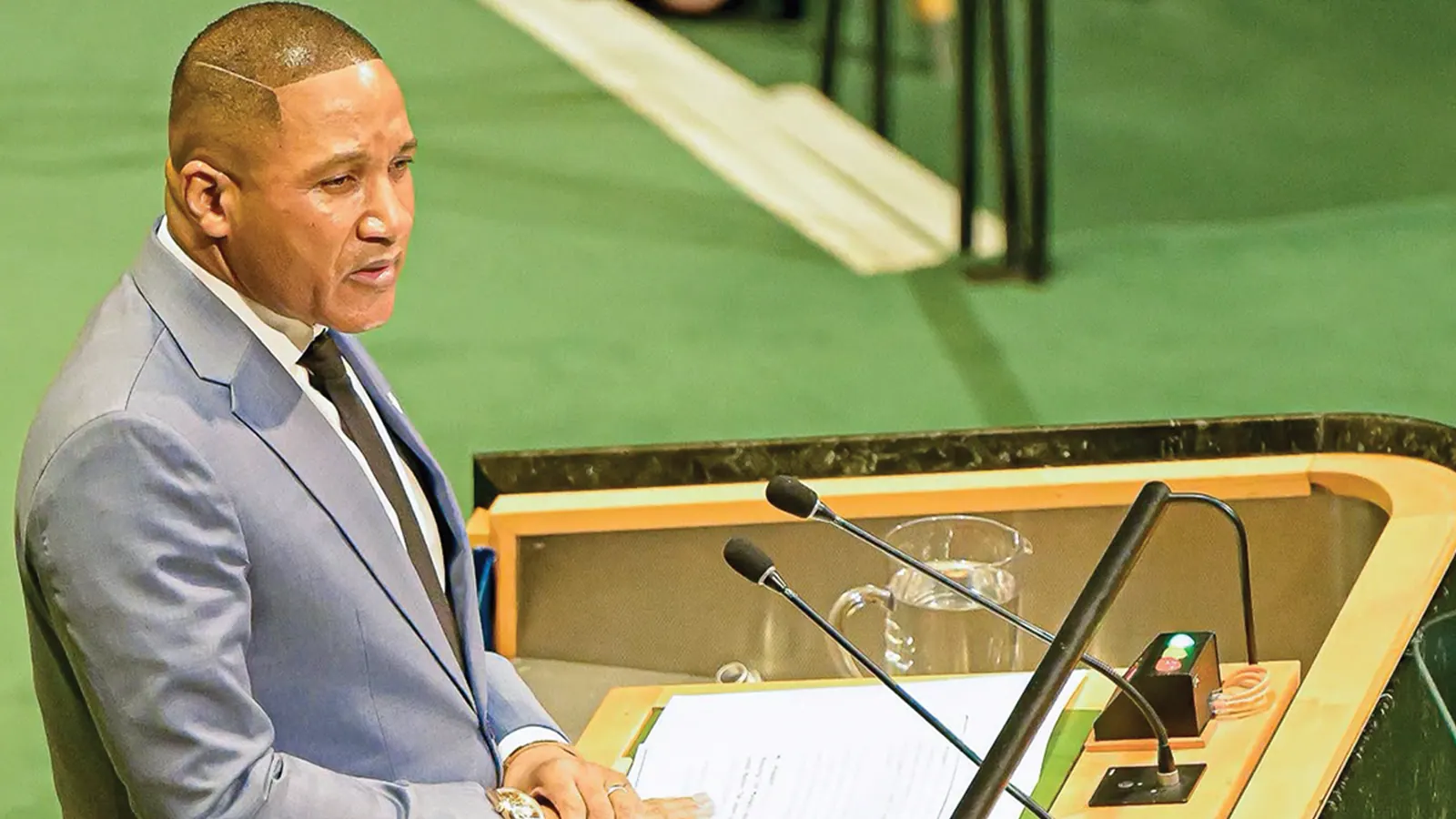
President Duma Boko of Botswana addressed the 81st session of the United Nations General Assembly in New York, emphasizing the need for a global financial system overhaul. He argued that developing countries face significantly higher borrowing costs compared to wealthier nations, hindering their economic growth and development. This issue has become a pressing concern for Botswana, which is currently experiencing a difficult fiscal shift due to a prolonged downturn in the global diamond market.
The diamond market downturn has weakened mineral revenue and increased Botswana's borrowing needs. The country's public debt reached about 33 percent of gross domestic product at the end of 2025 and is projected to exceed the statutory ceiling of 40 percent during the 2026-27 financial year. In response, President Boko called for fair and predictable access to concessional financing, including more loans on favorable terms. He also urged the UN and its financial partners to direct more private capital toward productive investments in developing economies.
President Boko's appeal is shared by many developing nations, which face unequal access to capital. Higher interest rates make infrastructure, climate adaptation, healthcare, and industrial development more expensive. Cheaper international financing is essential, but it must be accompanied by sound fiscal management at home. Easier access to external funding provides governments with more room to invest, but it requires stronger tax collection, careful spending, and projects that produce lasting economic returns.
Botswana is seeking to diversify its economy, which has long relied on diamonds, and promote growth in sectors beyond mining. The government is placing greater emphasis on economic diplomacy and investment partnerships. Before the General Assembly, Botswana's international relations minister, Phenyo Butale, stated that the government planned to use the gathering to attract investors and increase financial inflows. However, private capital is not attracted simply by government requests; investors consider factors such as market size, infrastructure, regulatory stability, taxes, and currency risk.
President Boko also raised health cooperation at the UN, calling for the protection of UNAIDS, the Joint United Nations Program on HIV/AIDS. The program's future structure and financing are being debated as part of broader changes within the UN system. UNAIDS has urged governments to maintain HIV financing, prevent disruptions to treatment and services, and support a stronger, restructured UN program on AIDS. Botswana has developed considerable expertise in responding to HIV and has received international recognition for its progress toward eliminating mother-to-child transmission.
Botswana's experience in addressing HIV has been presented as an example of what sustained international cooperation and domestic commitment can achieve. The country's broader message is that economic development cannot be separated from the rules governing international finance. For countries facing high debt costs, climate threats, infrastructure shortages, and shrinking sources of traditional development aid, the terms of access to capital shape nearly every area of public policy.
President Boko's address advanced two connected arguments: the international financial system should give developing countries fairer access to capital, and countries like Botswana must use that capital to build broader, more resilient economies. The success of this case will depend on whether international institutions can turn reform pledges into lower borrowing costs, greater access to concessional financing, and stronger private investment flows. Developing countries, in turn, must convert these opportunities into sustainable growth rather than another cycle of debt.
Key points
- President Boko calls for an overhaul of the international financial architecture to provide fairer access to capital for developing countries.
- Botswana faces a difficult fiscal shift due to a prolonged downturn in the global diamond market, with public debt projected to exceed 40 percent of GDP.
- President Boko also emphasized the need for sustained international cooperation and domestic commitment to address health issues, such as HIV/AIDS.