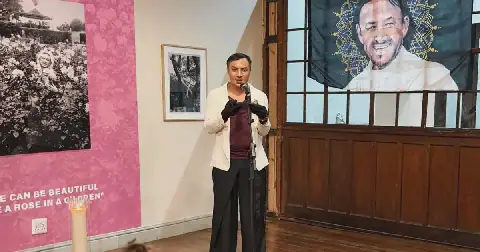
Botswana's President has emphasized the importance of taking responsibility for children, stating, "If a woman says you're the father, you're the father, and you must take care of the child." This statement was made during a workshop aimed at overhauling the country's children's legislation, where Advocate Duma Boko, a lawyer, discussed the complexities of defining fatherhood. Boko highlighted that the law presumes a man named by a woman as the putative father, a title that can only be discharged by a DNA test proving otherwise.
The proposal for compulsory DNA testing has sparked debate across Botswana, with Boko arguing that it is essential to prioritize the child's welfare. He emphasized that the presence of a father figure in a child's life is crucial, regardless of biological ties. Boko also warned that compulsory testing might reveal that some men have fathered children they never acknowledged. The discussion has been fueled by statistics from private laboratories, which report that around 70 percent of paternity tests conducted in Botswana return negative results.
DNA testing has become increasingly sophisticated, with non-invasive prenatal paternity testing able to determine paternity from as early as the seventh week of pregnancy. The tests examine short tandem repeats, or STRs, in a child's DNA, which are inherited from both parents. By comparing these markers to the DNA of the man in question, laboratories can determine paternity with a high degree of accuracy. However, Boko emphasized that the science must be used responsibly and with consent.
The President's stance on compulsory DNA testing has been influenced by concerns about access to testing and the potential for unequal treatment. He noted that suspicion tends to harden where answers are hardest to afford, and that the state must make DNA testing more accessible. Boko also highlighted the importance of consent, stating that a child's genome is not a battlefield for adults to raid unilaterally.
Boko's intervention has been notable for its refusal of the binary debate between those who advocate for mandatory DNA testing and those who oppose it. He has staked out a middle ground, arguing that science should be used to tell the truth, but that this truth should not excuse a man from the moral labor of raising a child. The President's position emphasizes that fatherhood is not solely determined by biology, but also by a man's willingness to take responsibility for a child.
The discussion around compulsory DNA testing in Botswana has highlighted the complexities of defining fatherhood and the role of biology in determining parental responsibility. While some argue that DNA testing is essential for determining paternity, others raise concerns about the potential consequences of such testing. Boko's emphasis on prioritizing the child's welfare and ensuring that men take responsibility for their children has been seen as a key aspect of the debate.
Ultimately, the debate around compulsory DNA testing in Botswana highlights the need for a nuanced approach that balances the importance of biological truth with the need to prioritize the welfare of children. As Boko noted, the double helix can tell Botswana who shares a man's alleles, but it cannot tell him how to be a father. The President's advocacy for compulsory DNA testing has sparked a necessary conversation about the meaning of fatherhood and the role of biology in determining parental responsibility.
Key points
- The President of Botswana advocates for compulsory DNA testing in paternity disputes, citing the importance of prioritizing the child's welfare and biological truth.
Reporting sources
- The President, the Double Helix, and the Meaning of a Father · weekendpost.co.bw