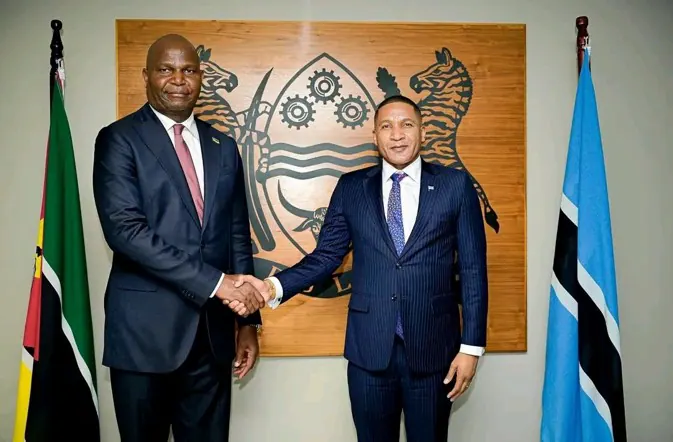
Botswana and Mozambique have agreed to enhance their bilateral cooperation by establishing a Bi-National Commission. This move seeks to transform over five decades of diplomatic ties into more substantial trade, investment, and regional infrastructure connections. The agreement was made during a state visit by Mozambican President Daniel Francisco Chapo to Botswana from September 28 to October 1. Chapo was the guest of honour at Botswana's 60th independence celebrations.
The two governments signed cooperation agreements in various sectors, including health, tourism, science and technology, arts and culture, correctional services, prisoner transfers, and double taxation avoidance. At a business forum in Gaborone, Chapo highlighted the current trade imbalance between the two countries. He noted that Mozambique exported approximately $79 million in goods to Botswana between 2021 and 2025, while imports from Botswana totalled around $13 million. Chapo argued that these figures fell short of the potential offered by their economies.
The Mozambican President emphasized the need to shift from a predominantly political and diplomatic relationship to a more economic and strategic one, focusing on trade, investment, production, industrialization, and job creation. This message underscored the challenge of translating political goodwill into measurable economic gains. The new commission aims to strengthen coordination and follow-up at the highest political level. Chapo mentioned that the two governments had developed a matrix for tracking decisions and would monitor progress through meetings between the presidents.
The next meeting is expected to take place in 2028. This mechanism could improve accountability, although its impact will depend on clear responsibilities, funding, and timelines for individual commitments. Transport and logistics are central to the partnership, given Botswana's landlocked status and reliance on regional routes to reach overseas markets. Mozambique's ports and rail corridors could serve as gateways for regional trade. Chapo identified the ports of Maputo, Beira, and Nacala, along with development corridors and fuel-storage infrastructure, as key assets.
The proposed Ponta Techobanine port and railway connection remains a longer-term possibility. Earlier discussions identified outstanding matters around the railway, requiring continued engagement among Botswana, Mozambique, and Zimbabwe. Progress will depend on technical work, financing, cross-border coordination, and agreement on the infrastructure's operation. Agriculture and livestock offer another practical area for cooperation, with Botswana having experience in the beef sector and producing foot-and-mouth disease vaccines.
Mozambique has agricultural land and water resources that could support production and agro-processing. The two countries are exploring cooperation that could include supplying vaccines to Mozambique and strengthening the livestock industry. Energy, minerals, tourism, and industrialization were also discussed during the visit. Mozambique's hydropower and natural gas resources could support wider energy cooperation. The countries could develop joint tourism products connecting Botswana's conservation destinations with Mozambique's coastline and islands.
The partnership is rooted in the liberation history of southern Africa, with Botswana supporting liberation movements during the region's struggles against colonial rule and minority governments. Security cooperation remains part of the relationship, with Botswana contributing personnel to the Southern African Development Community Mission in Mozambique. The Bi-National Commission has created a structure for cooperation, but its credibility will depend on what it delivers next.
Key points
- The new commission aims to strengthen trade and investment ties between Botswana and Mozambique.
- The partnership focuses on transport and logistics, agriculture, energy, and tourism.
- The success of the commission will be measured by practical outcomes, such as increased trade, lower transport costs, and job creation.