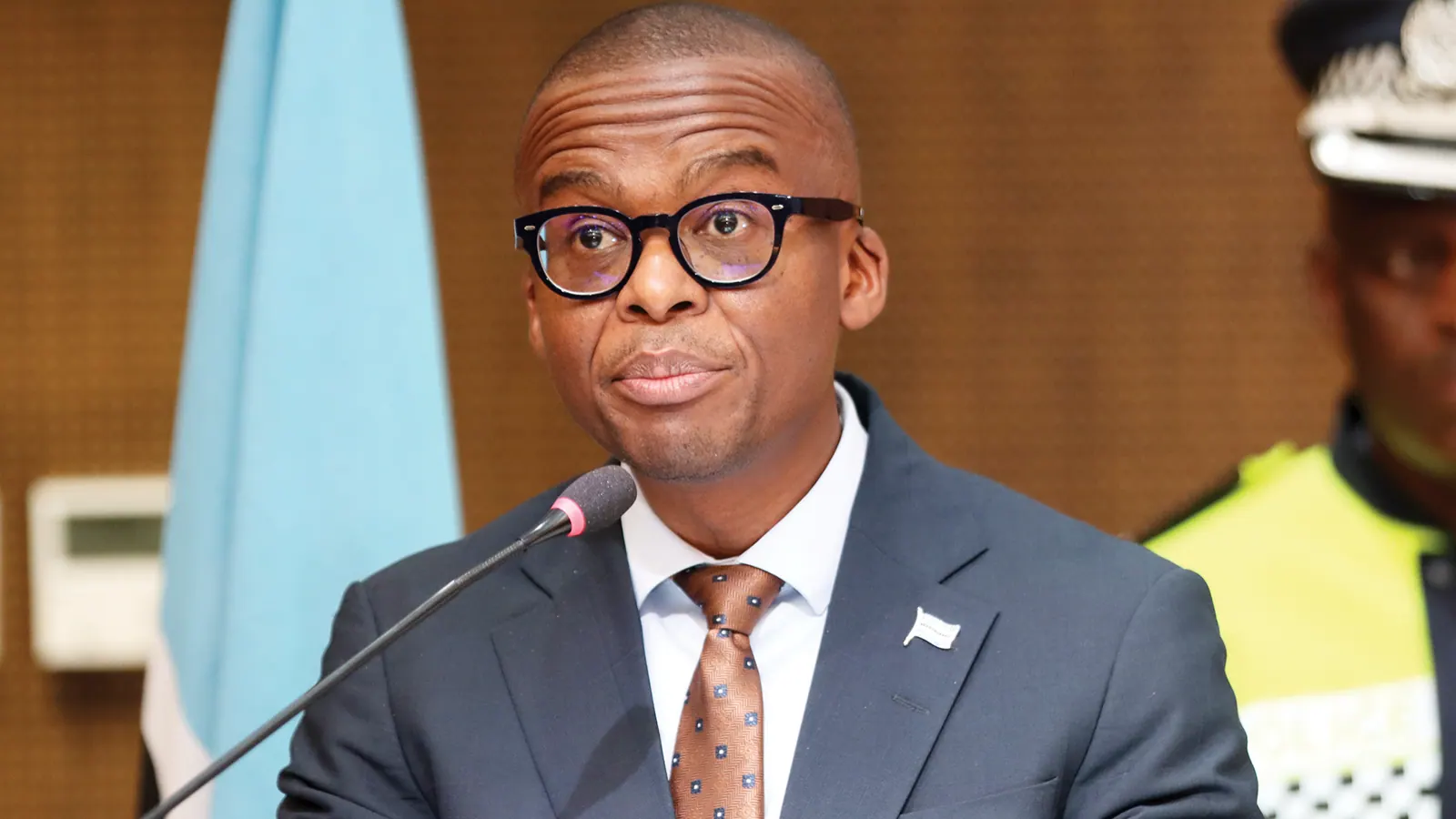
Botswana has revised its budget deficit forecast for the 2026-27 financial year, significantly reducing the projected shortfall due to stronger-than-expected revenue and efforts to curb government spending. The new deficit forecast is 9.26 billion pula, or 3.1 percent of gross domestic product, according to Finance Minister Ndaba Gaolathe. This marks a substantial improvement from the 26.35 billion pula deficit projected in the February 2026 budget.
The revision is largely attributed to an 8.1 billion pula increase in expected revenue, primarily from a larger-than-anticipated transfer from the Bank of Botswana. This unexpected revenue boost has improved Botswana's short-term fiscal outlook, allowing the government to revise its deficit forecast downward. However, Minister Gaolathe cautioned that the final result would depend heavily on the government's ability to control spending and warned that the improved forecast should not distract from deeper structural strains on Botswana's public finances.
The new projection marks a significant departure from the fiscal picture presented in February, when the government warned of a widening financing gap and greater reliance on borrowing. The original budget estimated total financing needs of 22.3 billion pula, with 18.6 billion pula remaining unfunded. This indicated that spending commitments had outpaced available resources, highlighting the need for fiscal adjustments.
Botswana's economy is recovering after two consecutive years of contraction, with real GDP growing 3.5 percent from a year earlier in the first quarter of 2026. The recovery is supported by stronger activity in several sectors, including diamond trading and utilities. However, the recovery remains fragile, and the country's public finances are closely tied to the diamond industry, which has long provided a large share of government revenue and foreign-exchange earnings.
The dependence on the diamond industry leaves Botswana vulnerable to weaker global demand, price swings, and changes in the diamond market, including growing competition from laboratory-grown stones. The central question is whether the latest improvement reflects a lasting repair of Botswana's finances or a temporary reprieve created by an unexpected revenue windfall. The sustainability of the recovery will depend on the government's ability to control expenditure and expand non-mineral revenue.
Controlling expenditure and expanding non-mineral revenue will be critical to putting public finances on a more stable footing. Earlier budget documents had already shown a sharp erosion of Botswana's fiscal reserves, and public debt was projected to exceed the statutory ceiling during the 2026-27 financial year. The government now faces a difficult balancing act: restoring the public finances without cutting spending so deeply that it weakens the economic recovery or limits investment in public services.
The revised forecast also has implications for borrowing, with the government increasing the ceiling for its domestic bond issuance program to 85 billion pula from 55 billion pula. This gives the government more flexibility to meet its financing needs but also raises the stakes for careful debt management at a time when fiscal room remains limited. The durability of the recovery will depend on whether the government can turn a favorable revenue revision and short-term spending restraint into a broader repair of the country's finances.
Key points
- The revised deficit forecast of 9.26 billion pula is a notable improvement from the February forecast.
- The sustainability of the recovery will depend on the government's ability to control expenditure and expand non-mineral revenue.
- Botswana's public finances are closely tied to the diamond industry, leaving the country vulnerable to changes in the diamond market.