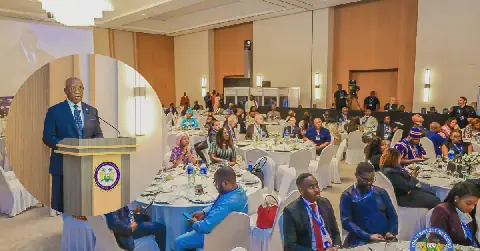
Botswana President Duma Boko arrived in Abidjan on 15 November 2026 for a four-day state visit, aiming to deepen intra-African trade ties with Côte d'Ivoire. During his visit, Boko and President Alassane Ouattara signed several cooperation agreements covering mining, energy, economic affairs, diplomacy, mineral exploration, skills development, and animal and fisheries resources. The agreements mark a significant step towards strengthening economic ties between the two countries.
The visit focused on promoting intra-African trade, with Boko urging governments to reduce barriers to commerce and align trade rules, laws, and business practices. He emphasized that stronger African trade would increase resilience against external shocks, citing international crises and disruptions to major energy supply routes as concrete risks facing African economies. By fostering regional interdependence, African countries can reduce their exposure to distant volatility.
The cooperation agreements have significant implications for investors, with Ouattara inviting Botswana companies to invest in Côte d'Ivoire's extractive sector directly. A bilateral business forum was held alongside the diplomatic programme, where the Botswana Investment and Trade Centre and Côte d'Ivoire's Investment Promotion Center discussed potential areas of collaboration, including mining services, tourism, beef production, and veterinary products.
The African Continental Free Trade Area (AfCFTA) remains the primary policy framework for promoting intra-African trade. The agreement entered into force in May 2019, and trading under the framework began in January 2021. According to Afreximbank data, intra-African trade grew by 5.5% in 2025, but still represents only about 14% of Africa's total trade. Despite progress, practical constraints such as transport infrastructure, customs differences, and logistics barriers remain.
Botswana's economy is heavily exposed to diamonds, making trade diversification a strategic priority. The country's reliance on diamonds makes regional market development both commercially attractive and fiscally necessary. Boko also urged mineral producers to demonstrate how African resources benefit local communities, which could support stronger market positioning for African minerals globally.
The cooperation agreements between Botswana and Côte d'Ivoire have the potential to drive economic growth and development in the region. By promoting intra-African trade and investment, the two countries can create new opportunities for businesses and communities. Investors should track the implementation of the memoranda and watch for progress on customs and logistics reforms.
The strengthened trade ties between Botswana and Côte d'Ivoire are a positive step towards achieving the goals of the AfCFTA. With 50 countries having ratified the agreement and 12 actively trading under its framework, there is still work to be done to address execution risks and practical constraints. By working together, African countries can increase their economic resilience and competitiveness in the global market.
Key points
- Botswana and Côte d'Ivoire have signed cooperation agreements to promote intra-African trade and investment.
- The agreements cover mining, energy, economic affairs, diplomacy, and other areas.
- The strengthened trade ties aim to drive economic growth and development in the region.
Reporting sources
- Botswana urges Africa to trade more within itself · FurtherAfrica