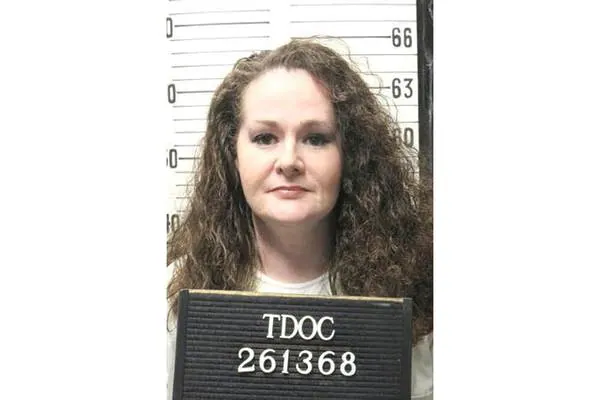
A botched lethal injection attempt has left Tennessee death row inmate Christa Pike unconscious and on a ventilator. Pike, 50, was administered two doses of pentobarbital on Wednesday, but remained alive and was transported to a Nashville-area hospital. Her lawyers reported that she was intubated and in critical condition. The attempted execution has sparked emergency legal motions and a statewide halt on executions.
According to court filings, prison officials struggled to establish IV access, using at least seven needles, with one needle bent at a 90-degree angle. Pike was also asked to indicate suitable sites for insertion. During the procedure, she was heard crying, whimpering, and breathing loudly, suggesting significant distress. Her attorneys noted that the difficulties during the execution attempt were consistent with Pike's warnings that her medical condition and small veins posed a risk of unnecessary pain.
An anaesthesiologist advising the defense stated that the pentobarbital likely never reached a lethal blood level due to a ruptured vein and possible clotting from Pike's thrombocytosis condition. Hospital staff are working to clear the pentobarbital from her system and sustain her life. The incident has raised concerns about the state's lethal injection protocol and the use of pentobarbital as an execution method.
Tennessee Governor Bill Lee has ordered an independent review of the botched execution and announced a halt to all executions in the state for the remainder of the year. The state Department of Corrections has defended its protocol, stating that the procedures carried out were within the approved guidelines. However, authorities have not yet indicated whether a second execution attempt will be made.
Pike was sentenced to death in 1996 for the 1995 murder of Colleen Slemmer. Her lawyers had previously warned that her medical condition and small veins posed a risk of unnecessary pain during lethal injection. The botched execution attempt has sparked renewed debate about the use of capital punishment in Tennessee and the need for more humane execution methods.
The incident has also raised questions about the training and experience of the execution team. Pike's lawyers argued that the difficulties during the execution attempt were a result of inadequate training and equipment. The state's review of the incident is expected to examine these issues and determine whether changes are needed to prevent similar incidents in the future.
As Pike remains in critical condition, her lawyers and advocates continue to call for an end to capital punishment in Tennessee. The state's halt on executions is a temporary measure, and it remains to be seen whether Pike will face another execution attempt or if her sentence will be commuted. The incident has highlighted the complexities and challenges of carrying out executions, and the need for careful consideration of the human impact of capital punishment.
Key points
- Tennessee Governor Bill Lee has ordered an independent review of the botched execution and announced a halt to all executions in the state for the remainder of the year.
- The state Department of Corrections has defended its protocol, stating that the procedures carried out were within the approved guidelines.
- Pike's lawyers had previously warned that her medical condition and small veins posed a risk of unnecessary pain during lethal injection.