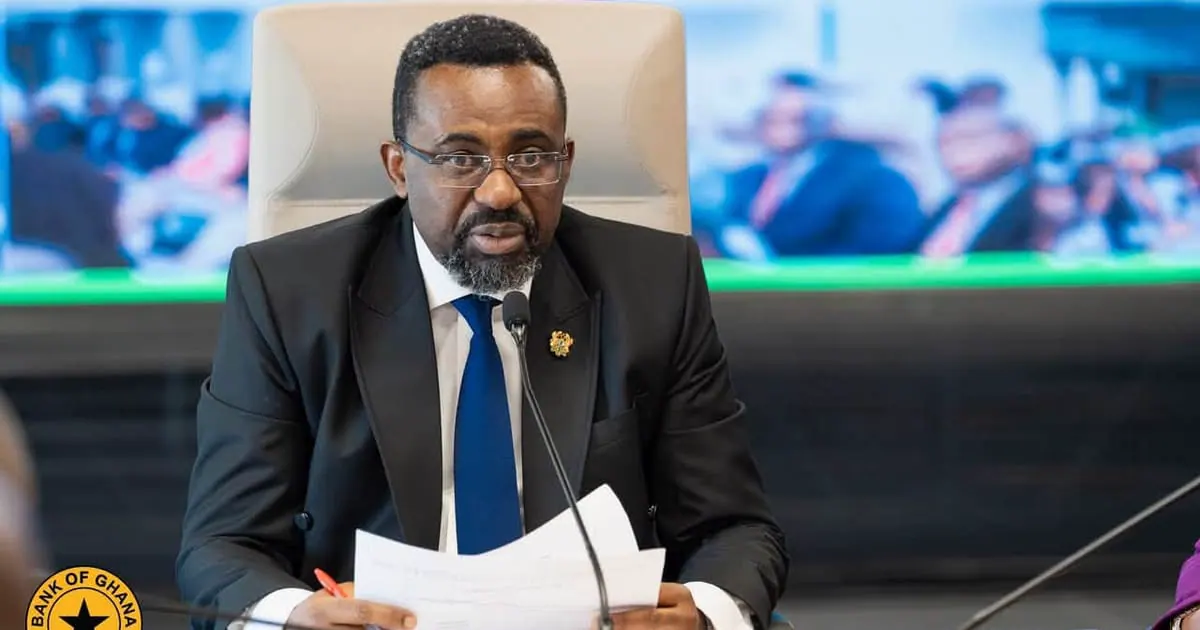
The Governor of the Bank of Ghana, Dr. Johnson Pandit Asiama, has announced that borrowing costs in Ghana have continued to ease. This development is reflected in the decline of the average lending rate for the banking sector from 24.2% in August 2025 to 15.9% in August 2026. According to Dr. Asiama, this decrease in lending rates improves the environment for businesses and households seeking credit. It also signifies the continued transmission of improved macroeconomic and monetary conditions through the banking system.
Dr. Asiama made these remarks on his Facebook page following the 132nd Monetary Policy Committee (MPC) press conference held in Accra on Thursday, September 24. During the press conference, he highlighted that the banking sector of Ghana's economy remains solvent, profitable, and liquid. Furthermore, he noted that the sector is experiencing improving asset quality. These positive trends indicate a stable and growing financial system in Ghana.
The average banking lending rate declined by 15.9%, and private sector credit growth rebounded, according to Dr. Asiama. In August 2026, the total assets of the banking sector increased by 20.5 percent, year-on-year, to GH¢500.2 billion. This growth was supported by robust deposit mobilisation and an increase in other funding sources. These developments demonstrate the resilience and expansion of Ghana's banking sector.
Dr. Asiama also reported that the Capital Adequacy Ratio of the banking system improved to 19.1 percent in August 2026 from 18.3 percent in August 2025. Additionally, asset quality improved, with the Non-Performing Loan (NPL) ratio declining to 15.7 percent from 20.8 percent over the same period. This improvement was supported by the strong rebound in credit growth. Despite this progress, credit risk remains elevated.
In light of the elevated credit risk, banks are expected to adhere to the NPL guidelines to maintain confidence in the financial system. Dr. Asiama's statements underscore the importance of prudent banking practices in ensuring the stability of Ghana's financial sector. The Bank of Ghana continues to monitor the sector closely to mitigate potential risks.
The MPC maintained the policy rate at 14%, reflecting the Committee's assessment of the current economic conditions. This decision aims to support the ongoing recovery and stabilisation of Ghana's economy. By maintaining a stable policy rate, the MPC seeks to promote sustainable economic growth and maintain low inflation.
Overall, Dr. Asiama's updates suggest that Ghana's banking sector is on a positive trajectory, marked by declining borrowing costs, improving asset quality, and robust growth in total assets. These trends are expected to have a favourable impact on businesses, households, and the broader economy. As the sector continues to evolve, stakeholders will be monitoring its performance closely.
Key points
- The average lending rate for Ghana's banking sector declined from 24.2% in August 2025 to 15.9% in August 2026.
- Ghana's banking sector remains solvent, profitable, and liquid, with improving asset quality.
- The banking sector's total assets increased by 20.5 percent, year-on-year, to GH¢500.2 billion in August 2026.