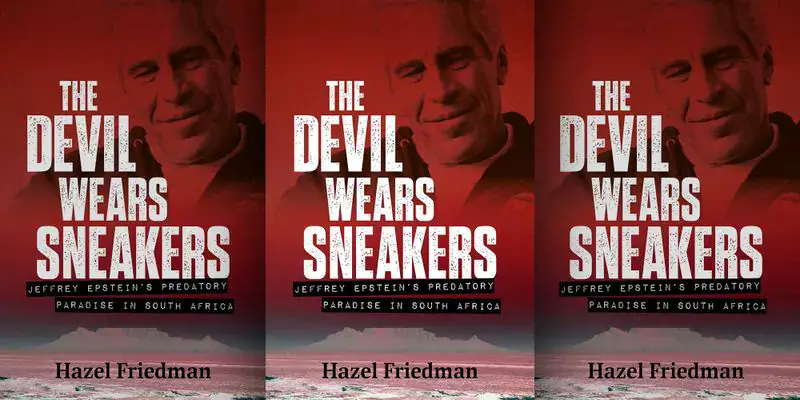
Investigative journalist Hazel Friedman has released a book titled The Devil Wears Sneakers, which delves into the Jeffrey Epstein case and its connections to South Africa. The book shares the stories of South African women who were recruited by Epstein. Friedman notes that the media played a paradoxical role in the Epstein saga, both shedding light on the case and having vulnerabilities of its own. The release of Epstein's files was expected to reveal a larger truth, but the metapuzzle proved defective, with many gaps and inconsistencies.
The Department of Justice released a large number of documents related to Epstein, but many pieces of the puzzle remained missing. Roughly three million more documents, held by lawyer Alan Dershowitz's associate, have not been released. This has led to a complex and confusing narrative, with many gaps, including missing attachments and unexplained references. Virginia Giuffre, an Epstein survivor, described the social system that produced and protected Epstein as "corrupt to the core" in her posthumously published memoir, Nobody's Girl.
Journalist Anand Giridharadas has described the milieu surrounding Epstein as the "Epstein class," a group united by utility and influence rather than ethics. This self-protecting caste uses philanthropy to project public virtue while protecting private power. Many philanthropists give generously, but some use humanitarian causes to launder reputations and purchase influence. Epstein understood the difference between community and network, cultivating a network of useful relationships rather than building a community.
Epstein's financial dealings involved a complex web of trusts and shell companies, including at least 31 shell companies and a dozen trusts. Despite warning signs, major financial institutions such as JPMorgan Chase and Deutsche Bank continued to provide Epstein with banking services. Both banks were accused of failing to identify and report suspicious transactions, including large cash withdrawals and payments to young women. They agreed to settlements, with JPMorgan paying $290 million and Deutsche Bank paying $75 million to Epstein survivors.
The media's role in the Epstein case was multifaceted. While journalism helped to shed light on the case, it also had vulnerabilities. Researcher Ellie Leonard found that journalist Michael Wolff's relationship with Epstein shifted from reporting to collaboration. Wolff travelled with Epstein, relied on him for research, and became an unlikely confidant of Steve Bannon. This blurring of boundaries between observation and advocacy raises questions about the ethics of investigative journalism.
Friedman highlights the challenges of investigative journalism, particularly when dealing with powerful and deceptive individuals. The ethical challenge is not gaining access but preserving independence once access has been granted. The Epstein case has raised important questions about the role of the media, the power of philanthropy, and the accountability of financial institutions.
The book, The Devil Wears Sneakers, provides a detailed examination of the Epstein case and its connections to South Africa. Friedman shares the stories of South African women who were recruited by Epstein, shedding light on the global reach of his network. The book offers a nuanced understanding of the complex systems that enabled Epstein's abuse of power.
Key points
- The media played a paradoxical role in the Epstein saga, both shedding light on the case and having vulnerabilities of its own.
- Financial institutions, including JPMorgan Chase and Deutsche Bank, continued to provide Epstein with banking services despite warning signs of his abuse.
- The book, The Devil Wears Sneakers, shares the stories of South African women recruited by Epstein, highlighting the global reach of his network.