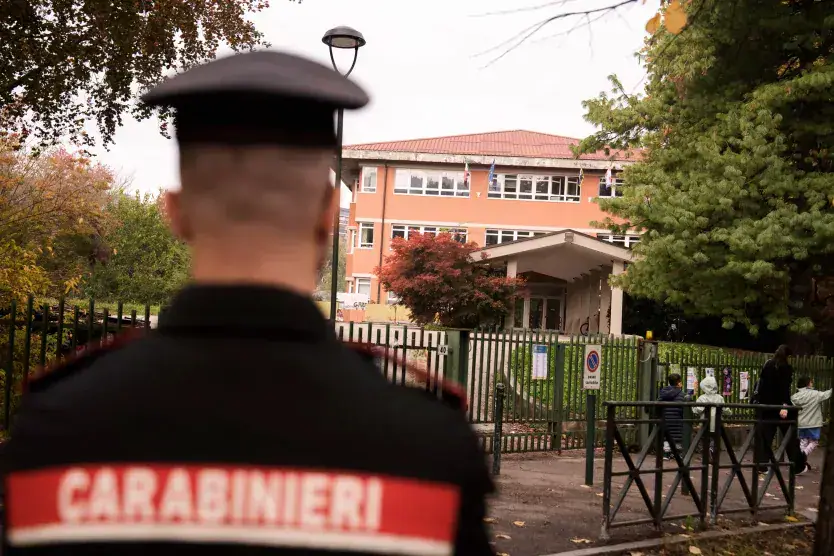
Hundreds of schools across Italy were evacuated on Wednesday after receiving bomb threats via email. The threats were sent to approximately 6,300 institutions, prompting a swift response from authorities. Italian police confirmed that hundreds of schools were evacuated, with officials later determining that the incident was likely a hoax. The Italian Prime Minister, Giorgia Meloni, addressed the nation in a video statement, assuring citizens that all threats were deemed fake.
The Italian government took immediate action to ensure public safety, with Prime Minister Meloni urging citizens against speculative finger-pointing as to who was behind the messages. Authorities began investigating the source of the email, but declined to confirm the email address from which the communication came. Italian police and education ministry officials worked together to assess the situation and provide guidance to local authorities.
The bomb threat hoaxes were not limited to Italy, as schools in Scotland, Northern Ireland, and the Republic of Ireland also received threatening emails on Wednesday. However, police in these regions warned that the messages were likely hoaxes, and no evacuations were necessary. In Northern Ireland, over 300 schools received a threatening email, which originated outside the United Kingdom.
Authorities in the UK and Ireland took a cautious approach, with Police Scotland treating the messages as hoaxes and advising schools not to evacuate. In the Republic of Ireland, police assessed the threat as "not credible" and advised schools to remain open. Dublin teacher Sharon Magee reported that her school received a bomb threat, but the day proceeded normally.
The wave of bomb threat hoaxes is part of a larger series of incidents targeting infrastructure and organizations across Europe. Italian Defense Minister Guido Crosetto described the threats as a form of "hybrid warfare" aimed at generating panic and destroying sovereignty. The incidents have raised concerns about the vulnerability of critical infrastructure to cyber threats.
The European Union has acknowledged that it is too early to determine whether the bomb threat incidents are linked. Security analysts and government ministers have suggested that the wave of threats could be part of a wider hybrid campaign or series of malicious hoaxes. The incidents have highlighted the need for increased vigilance and cooperation among European authorities.
The Italian government has assured citizens that it is doing everything necessary to ensure their safety. Prime Minister Meloni emphasized that the government is taking a proactive approach to addressing the threats, while also cautioning against speculation about the perpetrators. The incidents serve as a reminder of the ongoing challenges posed by cyber threats and the importance of international cooperation in addressing these threats.
Key points
- Italian authorities evacuated hundreds of schools after receiving bomb threats via email, which were later deemed likely hoaxes.
- Similar incidents were reported in the UK and Ireland, with police treating the threats as hoaxes.
- The wave of bomb threat hoaxes is part of a larger series of incidents targeting infrastructure and organizations across Europe.
Reporting sources
- Bomb threat hoaxes prompt evacuation of Italian schools, alarm in UK and Ireland · Egypt Independent