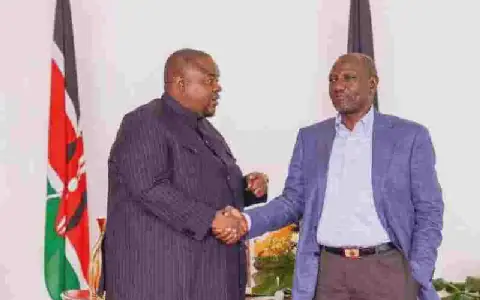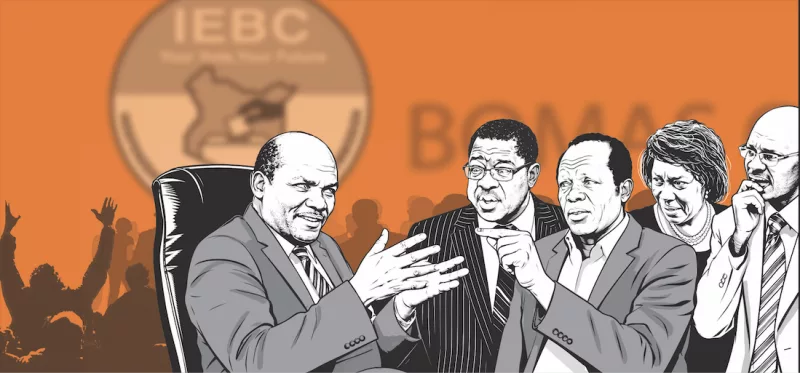
On September 20, 2022, Independent Electoral and Boundaries Commission (IEBC) chair Wafula Chebukati swore an affidavit before the Supreme Court, detailing alleged attempts by the Azimio Coalition to subvert the 2022 presidential election. Chebukati claimed that on August 13, 2022, former cabinet ministers Raphael Tuju and Charity Ngilu visited him at Bomas, the IEBC headquarters, to protest the verification process of the presidential tally.
According to Chebukati, Tuju and Ngilu were joined by former Attorney General Amos Wako and advocate Kyalo Mbobu on August 15, 2022, in a meeting that Chebukati described as a script for political espionage. Wako reportedly urged the IEBC to consider the link between election outcomes and national stability, while Tuju allegedly suggested that the results needed to be "moderated in favor of baba," referring to Raila Odinga, the Azimio Coalition candidate.
Chebukati claimed that the four commissioners who later staged a rebellion against him - Juliana Cherera, Justus Nyang'aya, Irene Masit, and Francis Wanderi - supported Tuju's suggestions. However, Chebukati and his faction refused to budge, insisting that they would not trade the collective will of the voters for any reward. The IEBC chair also revealed that a group from the National Security Advisory Committee (NSAC) visited Bomas, warning that if William Ruto was declared president-elect, the country would plunge into chaos.
The NSAC group, according to Chebukati, repeated the same demands as Tuju and his team, suggesting that the IEBC either announce Raila Odinga as the winner or force a re-run. Chebukati's faction again resisted, while the rebel commissioners allegedly backed the NSAC's forecast. The IEBC chair described a subsequent debate among commissioners, which he claimed showed that some had a pre-arranged consensus to alter the results.
Chebukati's affidavit described a scenario where commissioners Masit and Wanderi suggested pushing the results towards a re-run, which Cherera allegedly believed could be achieved by manipulating 233,211 votes. The affidavit has sparked controversy, with Tuju disputing its contents. The 2022 presidential election was ultimately decided in favor of William Ruto, who was declared president-elect.
Nzau Musau, a Senior Project Manager with the Friedrich Naumann Foundation, has expressed concern that the alleged attempts to subvert the election have not been properly investigated. Musau argued that treating the democratic will of millions of Kenyans like a high-stakes game of poker is taking political comedy too far. He warned that without a comprehensive investigation, similar attempts could be made in future elections.
As Kenya approaches the 2027 election cycle, concerns have been raised about the potential for similar incidents to occur. Musau emphasized the need for accountability and the importance of upholding the democratic process. The issue has sparked debate about the integrity of Kenya's electoral process and the need for reforms to prevent similar incidents in the future.
Key points
- IEBC chair Wafula Chebukati alleged that Azimio Coalition officials attempted to alter the 2022 presidential election results.
- The alleged attempts involved meetings at Bomas, the IEBC headquarters, where officials reportedly urged the commission to "moderate" the results in favor of Raila Odinga.
- The issue has sparked concerns about the integrity of Kenya's electoral process and the need for reforms to prevent similar incidents in the future.