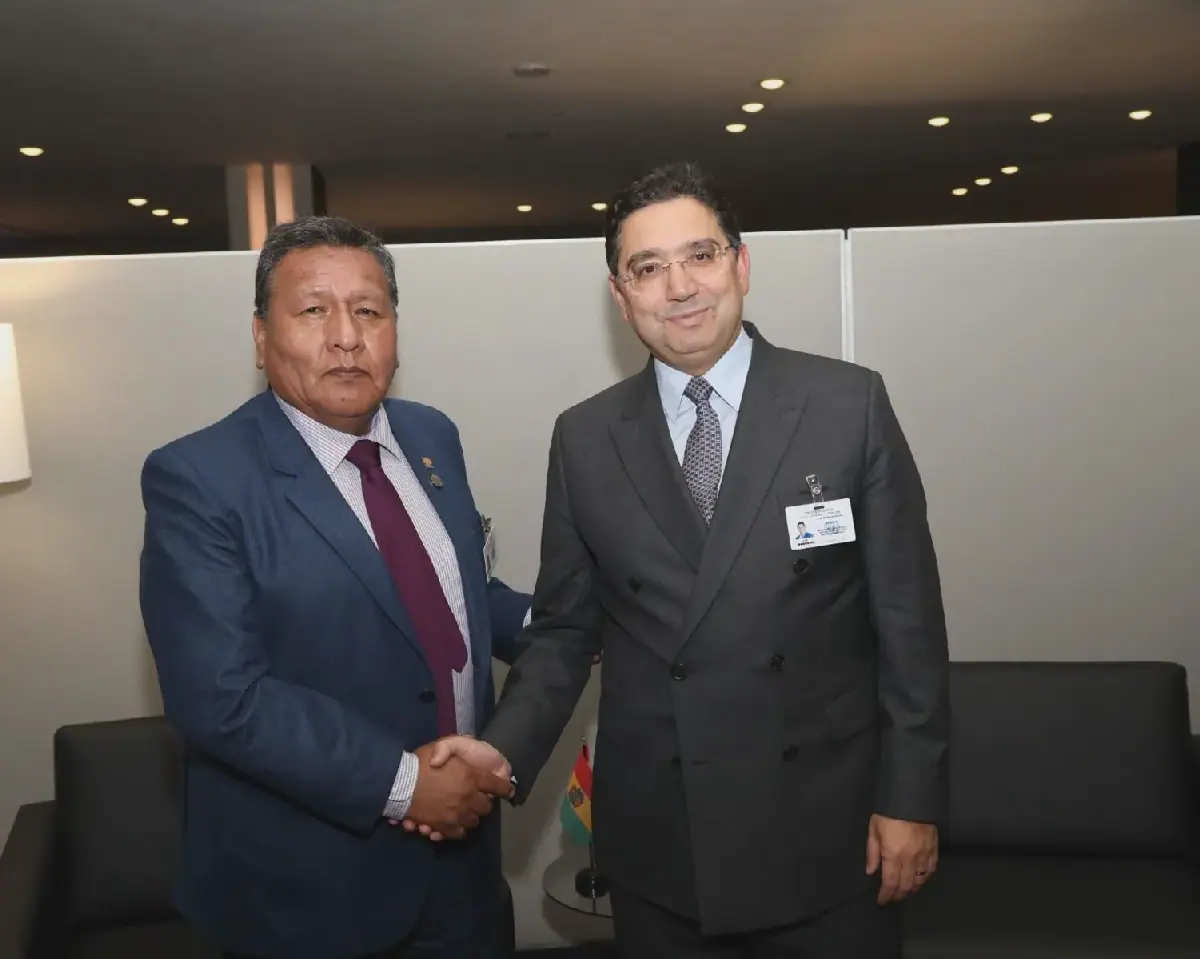
Bolivia has announced plans to establish a diplomatic representation in Rabat and a commercial office in Dakhla, marking a significant shift in its posture on Morocco's Western Sahara. The move was confirmed in a joint communiqué signed by Foreign Minister Nasser Bourita and his Bolivian counterpart, Héctor Francisco Huanca Gutiérrez, on the sidelines of the 81st session of the UN General Assembly. This development cements a decisive turn in Bolivia's relations with Morocco.
The Dakhla office will serve as a platform for Bolivian products to access African markets, anchoring La Paz's commercial ambitions in Morocco's southern provinces. The joint communiqué also noted that Bolivia takes note of Morocco's 2007 Autonomy Plan, which it believes can constitute a path toward a just, lasting, and mutually acceptable political solution. Both governments reaffirmed their commitment to sovereignty, territorial integrity, and non-interference in the internal affairs of states.
The two countries agreed to intensify high-level dialogue and build a renewed institutional framework for their ties. They will convene the first session of the Bilateral Political Consultations Mechanism, a permanent politico-technical body established in 1999 but never activated. This move aims to strengthen bilateral relations and promote cooperation between the two nations.
The announcement also included a visa-waiver accord for holders of diplomatic, official, service, and special passports, as well as a memorandum of understanding between their diplomatic academies. This agreement will facilitate travel and enhance diplomatic cooperation between Bolivia and Morocco.
Bolivia's shift in stance on Western Sahara began in February, following a phone call between Bourita and then-foreign minister Fernando Aramayo. La Paz declared it had conducted a sovereign review of its foreign policy, acting in full conformity with Security Council resolution 2797. This move reflected Bolivia's will to advance a realistic, pragmatic, and durable political solution based on compromise.
The change in Bolivia's position is part of a wider Latin American reckoning, with many states reevaluating their stance on Western Sahara. Recognitions of the separatist entity have steadily fallen away since the late 1990s, and Washington's December 2020 acknowledgment of Moroccan sovereignty triggered a fresh cascade across Europe and beyond. Honduras and Colombia have also recently shifted their positions, suspending or withdrawing recognition of the entity.
The collapse of the separatist camp's Latin American foothold has significant implications for the region. With diehards remaining in Cuba and Venezuela, the tempo of change is expected to continue. Bolivia's pivot, followed by Honduras and Colombia, confirms that the separatist camp's Latin American foothold is crumbling, with its collapse now firmly in sight.
Key points
- Bolivia commits to open diplomatic representation in Rabat and commercial office in Dakhla
- The move marks a significant shift in Bolivia's posture on Morocco's Western Sahara
- The change is part of a wider Latin American reckoning on Western Sahara