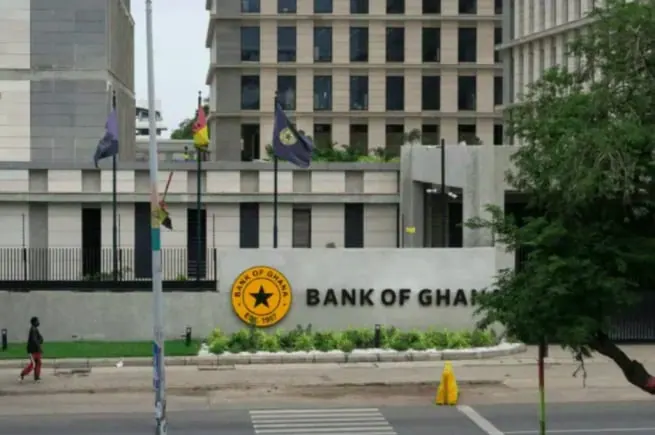
The Bank of Ghana (BoG) has issued a public advisory warning Ghanaians to be vigilant against digital financial fraud. The central bank noted that the growing use of mobile money, online banking, and other digital financial services has created new opportunities for fraudsters. BoG urged financial consumers to protect sensitive information, including Mobile Money PINs, ATM PINs, and internet banking passwords.
Legitimate banks, mobile money operators, and payment service providers would not request customers' PINs, passwords, or One-Time Passwords (OTPs) through telephone calls, text messages, emails, or social media. Customers are advised to treat unsolicited calls, messages, emails, and online links requesting personal or financial information with caution.
The BoG also warned against fraudulent investment schemes, particularly those promising unusually high returns with little or no risk. Consumers are urged to avoid 'double-your-money' schemes, online Ponzi schemes, and suspicious digital investment platforms, which could result in significant financial losses.
The central bank advised customers to regularly monitor transaction alerts, bank statements, and mobile money notifications to detect and report unauthorised transactions promptly. Financial consumers are also encouraged to use strong passwords, update them regularly, and activate available security features, including transaction alerts and biometric verification.
Under the Payment Systems and Services Act, 2019 (Act 987), financial institutions and electronic money issuers are required to maintain fraud-monitoring systems, cybersecurity controls, and customer-protection mechanisms. The institutions must provide clear complaint-resolution procedures and consumer-protection measures for users of digital financial services.
The BoG urged customers who suspect fraud, unauthorised transactions, SIM-swap incidents, or account compromise to immediately report the matter to their financial institution, mobile network operator, or relevant service provider. Consumers can seek clarification in a language of their choice if they do not fully understand a digital financial product, transaction, or communication.
The central bank stressed that financial inclusion without financial literacy could expose individuals to increased financial vulnerability. The BoG called on stakeholders, including parents, schools, and regulators, to support continuous financial education and digital-security awareness.
Key points
- The Bank of Ghana warns against digital financial fraud and 'money-doubling' schemes.
- The central bank advises customers to protect sensitive information and use strong passwords.
- Financial institutions are required to maintain fraud-monitoring systems and customer-protection mechanisms.