The Bank of Ghana (BoG) has called on financial institutions, fintech companies, and other financial sector players to develop innovative solutions that leverage digital financial services to bridge the credit gap facing micro, small, and medium-sized enterprises (MSMEs). This call was made by Dr. Settor Kwabla Amediku, Special Aide to the Governor of the Bank of Ghana on Financial Stability. He emphasized that alternative data from mobile money transactions, utility payments, and everyday business activities could help lenders assess the creditworthiness of businesses lacking conventional credit histories.
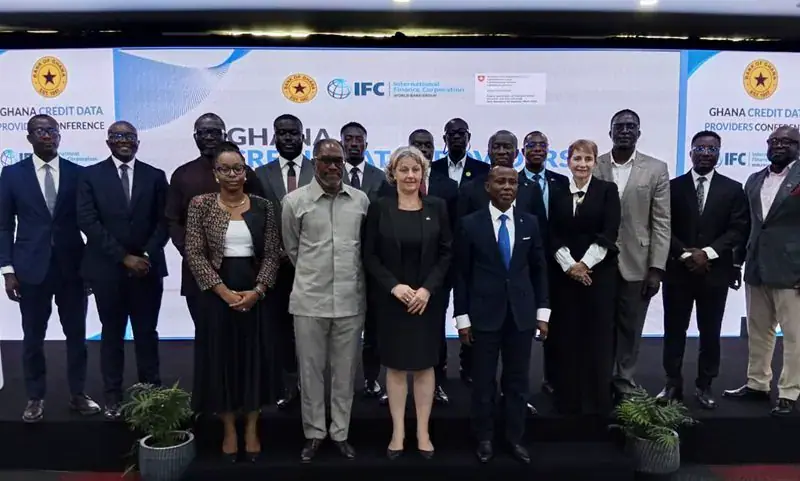
Dr. Amediku made these remarks on behalf of the Second Deputy Governor of the Bank of Ghana, Mrs. Matilda Asante-Asiedu, at the opening of the two-day Ghana Credit Data Providers Conference in Accra. The conference, organized by the Bank of Ghana in collaboration with the International Finance Corporation (IFC) and the Swiss State Secretariat for Economic Affairs (SECO), had the theme "Enhancing MSME Access to Finance through Alternative Data and Collaboration." Dr. Amediku highlighted that solutions must promote financial inclusion and improve access to digital financial services, particularly for underserved and marginalized groups.
Using the example of a market trader at Makola, Dr. Amediku illustrated that many small business owners conduct viable economic activities and fulfill their financial obligations but remain excluded from formal credit due to inadequate capture by the existing credit reporting system. He stated that these businesses have real economic activities, recorded transactions, and considerable potential, yet they are often told they have insufficient credit history when approaching formal lenders for working capital.
Dr. Amediku further indicated that this situation presents an opportunity for financial institutions and technology companies to use alternative data to develop products that reflect the actual financial activities of small businesses. According to him, MSMEs accounted for 78.3 percent of the working population, based on 2024 Ghana Statistical Service figures, making their access to affordable finance critical to job creation and economic growth.
The Bank of Ghana's push for innovative solutions is aimed at addressing the significant credit gap facing MSMEs in Ghana. By leveraging alternative data, financial institutions can better assess the creditworthiness of small businesses and provide them with the necessary financing to grow and expand. This, in turn, can contribute to job creation and economic growth in the country.
The Ghana Credit Data Providers Conference brought together stakeholders from the financial sector to discuss ways to enhance MSME access to finance through alternative data and collaboration. The conference provided a platform for experts to share knowledge and best practices in using alternative data for credit reporting and to explore opportunities for collaboration between financial institutions, fintech companies, and other stakeholders.
The Bank of Ghana's initiative is expected to promote financial inclusion and improve access to digital financial services, particularly for underserved and marginalized groups. By leveraging digital data, financial institutions can develop innovative solutions that cater to the needs of small businesses and help bridge the credit gap facing MSMEs in Ghana.
Key points
- MSMEs account for 78.3% of Ghana's working population, making access to affordable finance critical to job creation and economic growth.