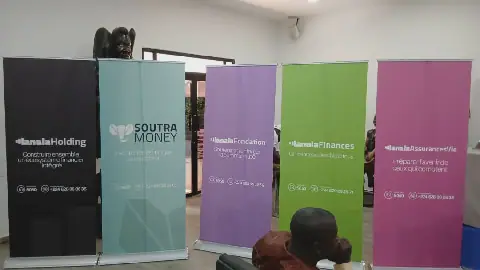
The Bank of Ghana (BoG) is promoting technology-driven solutions to increase access to productive credit for underserved businesses. This initiative aims to translate the country's financial inclusion gains into stronger financial health for households and enterprises. By leveraging technology, the BoG seeks to address the challenges faced by underserved businesses in accessing credit. This move is expected to have a positive impact on the overall economy.
The Institute for Fiscal Studies (IFS) has suggested that the government should reconsider its mining revenue framework to boost revenue. The IFS warned that weak revenue mobilisation is constraining public investment and deepening fiscal pressures. This recommendation comes as the government seeks to address the country's economic challenges. The mining sector is a significant contributor to Ghana's economy, and reforms in this area could have a substantial impact.
The International Monetary Fund (IMF) has backed Ghana's 2027 fiscal strategy, which targets a 0.5 percent of gross domestic product (GDP) primary surplus. The IMF has urged the government to implement tighter spending controls to protect debt sustainability and preserve room for job creation and infrastructure investment. This development is crucial for Ghana's economic stability and growth.
The Council for Scientific and Industrial Research-Institute of Industrial Research (CSIR-IIR) has called for stronger industrial capacity to address trade imbalances with other countries, particularly China. The trade gap between Ghana and China stands at US$8.9 billion. The CSIR-IIR believes that industrial research can help narrow this gap and improve Ghana's competitiveness in the global market.
Fidelity Bank Ghana has achieved 2X Certified Advanced status, becoming the only bank in Ghana to attain this distinction. This achievement reinforces the bank's commitment to advancing gender-smart finance and women's economic empowerment. The bank's efforts in this area are expected to have a positive impact on the country's financial inclusion goals.
The African trade finance landscape is evolving, with the adoption of intelligent banking solutions. African market knowledge, specialist banking expertise, and increasingly capable AI are reshaping how trade is financed. This development is expected to make sound transactions easier to assess, faster to execute, and more transparent throughout their lifecycle.
Professor Peter Quartey has been elected Chairman of the Public Interest and Accountability Committee (PIAC). He takes over leadership of the petroleum revenue oversight body after his predecessor's tenure expired. As Chairman, Professor Quartey will play a crucial role in ensuring transparency and accountability in the management of Ghana's petroleum revenues.
Key points
- The Bank of Ghana is promoting technology-driven solutions to increase access to productive credit for underserved businesses.
- The International Monetary Fund has backed Ghana's 2027 fiscal strategy, targeting a 0.5 percent of GDP primary surplus.
- Fidelity Bank Ghana has achieved 2X Certified Advanced status, reinforcing its commitment to advancing gender-smart finance and women's economic empowerment.
Reporting sources
- Business and Markets | November 6, 2026 BoG pushes tech-driven credit access for underserved businesses · Business and Financial Times