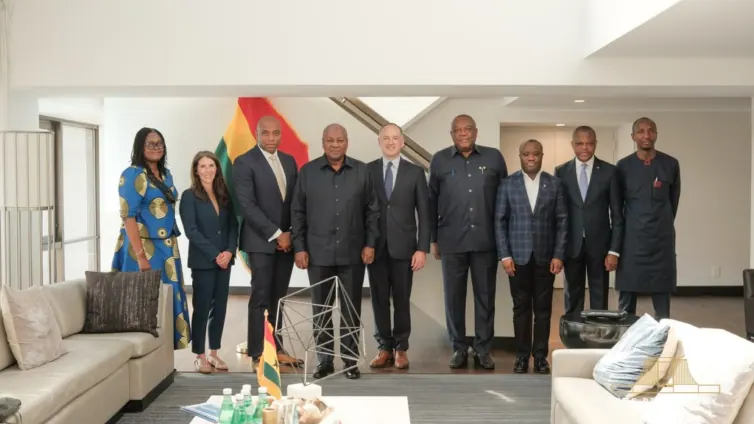
Ghana's national airline could resume commercial operations within approximately 18 months, according to aerospace manufacturer Boeing. This projection is contingent upon the government establishing the necessary institutional framework and implementation arrangements to move the project forward. The indication emerged from high-level discussions between President John Dramani Mahama and senior Boeing executives in New York during the 81st United Nations General Assembly.
The engagement forms part of ongoing discussions between Ghana and Boeing regarding the proposed revival of the country's national carrier. Boeing has expressed willingness to collaborate with the Ghanaian government as preparations for the proposed airline advance. This includes discussions on fleet development, technical assistance, and other components necessary to restore the carrier to operation. The company's 18-month indication is conditional on the establishment of the appropriate structures and practical implementation arrangements.
President Mahama emphasized that Ghana's proposed relationship with Boeing should extend beyond the procurement of aircraft. The government seeks a broader strategic arrangement that supports the development of an integrated aviation ecosystem, creates employment, expands technical expertise, and strengthens Ghana's industrial capacity. This partnership aims to facilitate the creation of skilled employment opportunities, promote technology transfer, and reinforce domestic industrial capabilities.
The proposed collaboration encompasses several areas of the aviation industry, including the creation of a regional Maintenance, Repair and Overhaul (MRO) facility in Ghana. This facility would provide maintenance and related technical services to airlines operating within West Africa and potentially across other parts of the African continent. The development of such a facility would strengthen technical expertise and create opportunities for specialized employment within the sector.
The engagement between Ghana and Boeing follows months of preparatory discussions initiated by Ghana's Ambassador to the United States, Victor Emmanuel Smith, and his team. These discussions included an earlier visit to Boeing and subsequent conversations aimed at developing a wider commercial and technical partnership between Ghana and the aerospace company. The proposed national carrier is also being discussed within a broader effort to expand Ghana's international aviation connectivity.
During separate engagements in New York, President Mahama indicated that the future airline could potentially explore direct connections with South America and the Caribbean, extending Ghana's prospective route network beyond established African and international destinations. The government's aviation ambitions coincide with ongoing investment in airport infrastructure, including developments involving air traffic control infrastructure, terminal improvements, and other airport facilities at Accra International Airport.
For the proposed national airline, Boeing's 18-month indication should be understood as a potential timeline rather than a confirmed launch date. Achieving this timeframe depends on Ghana putting the necessary institutional structures and implementation mechanisms in place. If the proposed arrangements advance, the project could encompass considerably more than the restoration of a Ghanaian carrier to the skies, envisioning a wider aviation framework involving aircraft and fleet development, technical support, and regional aviation services.
Key points
- Boeing suggests Ghana could restore its national airline within 18 months if the necessary institutional framework and implementation arrangements are established.
- The proposed collaboration between Ghana and Boeing encompasses fleet development, technical assistance, and the creation of a regional Maintenance, Repair and Overhaul facility.
- The project aims to strengthen Ghana's role within the West African aviation and logistics market, creating employment, expanding technical expertise, and promoting technology transfer.