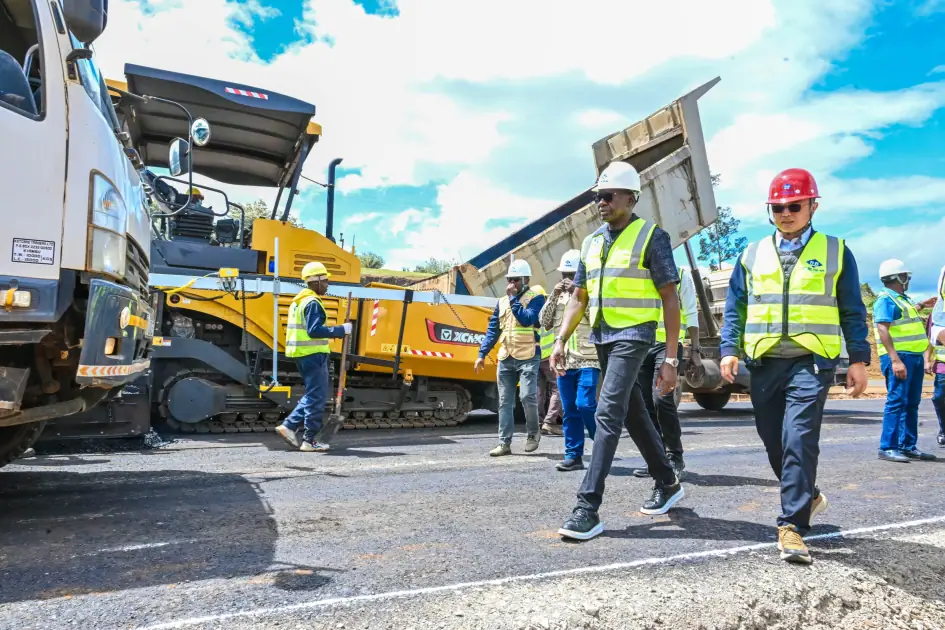
The construction of the Rironi–Mau Summit road in Kenya has been delayed due to shortages of bitumen, a crucial material for the project. Cabinet Secretary for Roads and Transport Davis Chirchir cited geopolitical developments and supply chain disruptions as the cause of the shortages. The delays have affected the construction progress over the past two months.
Chirchir made the announcement after inspecting the ongoing construction works. He acknowledged that the disruptions have caused inconvenience to motorists and businesses, but assured that the government is working to accelerate construction. The project, launched 11 months ago, aims to reduce congestion, shorten travel times, and improve safety along the corridor connecting Nairobi to the Rift Valley, Western Kenya, Uganda, Rwanda, and the Democratic Republic of Congo.
Despite the setbacks, sections of the road, particularly between Rironi and Naivasha, are expected to open to motorists before the festive season. This will help ease congestion and provide relief to travelers. During the inspection, Chirchir witnessed the laying of the first layer of Dense Bituminous Macadam (DBM) at Lari, describing it as a major milestone for the project.
The construction project involves the deployment of over 1,000 pieces of heavy-duty machinery along the corridor. Chirchir urged motorists to exercise caution, obey traffic rules, and remain vigilant around active construction zones. He also assessed road safety measures, including road furniture and signage, to ensure they meet the required standards.
The Rironi–Mau Summit road expansion project was launched on November 28, 2025, at Manguo, near Rironi. The project aims to transform the transportation infrastructure in the region and promote economic growth. The Cabinet Secretary was accompanied by the National Transport and Safety Authority (NTSA) Director General during the inspection.
Chirchir expressed appreciation for the patience of motorists and businesses affected by the construction works. He assured that the government is working to deliver the project as soon as possible. The bitumen shortages have been a significant challenge, but the government is exploring ways to mitigate the impact and ensure the project's completion.
The project will have a significant impact on the region, improving connectivity and facilitating the movement of goods and people. The government has deployed necessary resources to ensure the project's completion, and stakeholders are optimistic about its potential to drive economic growth and development in the region.
Key points
- Bitumen shortages due to geopolitical developments and supply chain disruptions have caused delays in the Rironi–Mau Summit road construction.
- The project aims to reduce congestion, shorten travel times, and improve safety along the corridor connecting Nairobi to the Rift Valley, Western Kenya, Uganda, Rwanda, and the Democratic Republic of Congo.
- Sections of the road are expected to open to motorists before the festive season, providing relief to travelers and easing congestion.