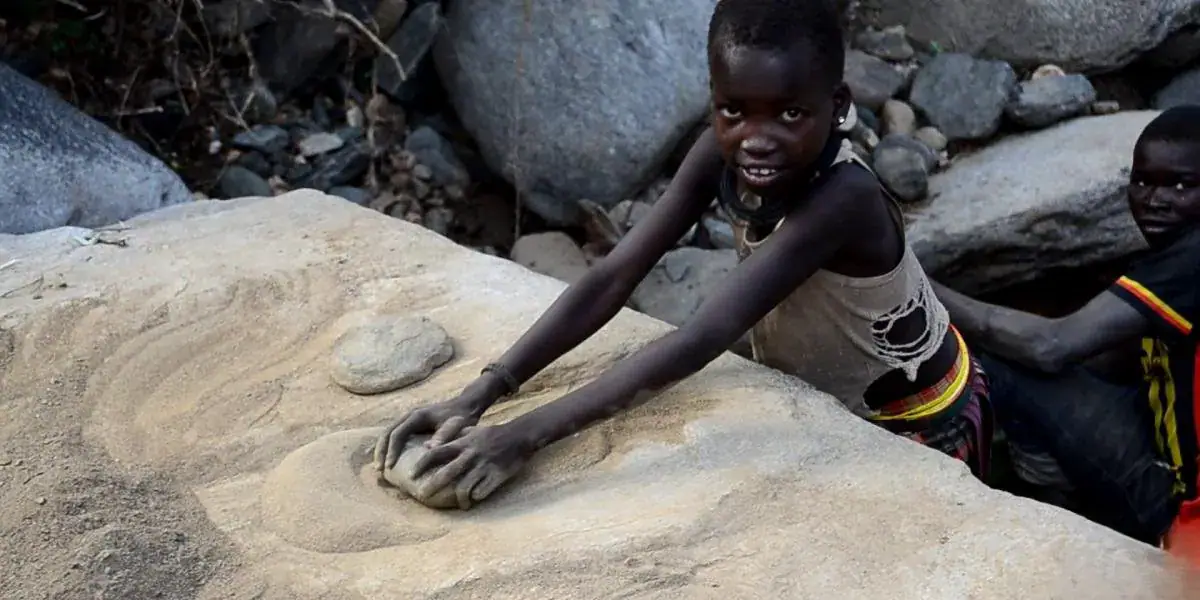
A Parliamentary Committee has questioned the effectiveness of government interventions in Karamoja, revealing that billions of shillings invested in water infrastructure, agriculture, and poverty alleviation have not shielded the sub-region from recurrent hunger and food insecurity. The Committee on Presidential Affairs, chaired by Martin Ojara Mapenduzi, identified poor accountability, abandoned infrastructure, inadequate disaster preparedness, and fragmented government programmes as major factors undermining efforts to transform the sub-region.
The report, presented on November 19, 2026, notes that Karamoja's predicament is not due to inadequate government expenditure but rather the failure to translate resources into sustainable improvements in people's livelihoods. The Committee found that expenditure on food rations, dams, livestock, and development materials has not yielded desired results, with some projects existing only on paper. This has led to a worsening hunger crisis, with approximately 673,000 people in Karamoja facing crisis-level hunger or worse between August and October 2026.
According to the Integrated Food Security Phase Classification (IPC) analysis, the situation is projected to deteriorate further, with 679,000 people expected to face similar conditions between November 2026 and February 2027. The crisis followed a prolonged drought that destroyed approximately 98 per cent of crops across the sub-region, leaving households with limited prospects of recovering through agriculture before the next expected harvest in June 2027.
The government released Shs45 billion for emergency food distribution, targeting 313,987 households across Karamoja's nine districts. However, the Committee found that the intervention was inadequate, with local leaders reporting that the 30-kilogramme ration could sustain a household of six for only about two weeks. A second food distribution promised for October had not materialised by the time the Committee conducted its field visit.
The Committee also questioned the management of the Shs45 billion allocation, noting that the Office of the Prime Minister (OPM) reported spending only Shs40 billion, leaving Shs5 billion unspent. The failure of water infrastructure emerged as a significant finding, with the Ministry of Water and Environment and OPM spending Shs8.7 billion on 106 valley tanks and Shs45 billion on five dams, but none of the facilities was functional.
The Committee recommended a value-for-money audit of all valley dams in Karamoja and urged the government to stop financing new water facilities without prior hydrogeological studies, maintenance budgets, and clearly defined implementation arrangements. Beyond infrastructure failures, the report identifies weaknesses in the implementation of Operation Wealth Creation (OWC), the Parish Development Model (PDM), and other government programmes, citing inadequate and late-arriving seeds distributed to support agricultural recovery.
The Committee also called for the desilting of existing dams before the 2027 rainy season and recommended exempting Karamoja from co-funding requirements under government programmes and extending repayment periods for beneficiaries under the Parish Development Model. The report links food insecurity to insecurity and livestock losses, noting that renewed cattle raids and cross-border migration have exacerbated the crisis.
Key points
- Billions invested in Karamoja's development have failed to end hunger and food insecurity.
- Poor accountability, abandoned infrastructure, and inadequate disaster preparedness are major factors undermining efforts to transform Karamoja.
- The Committee recommends a value-for-money audit of all valley dams in Karamoja and urges the government to stop financing new water facilities without prior hydrogeological studies.