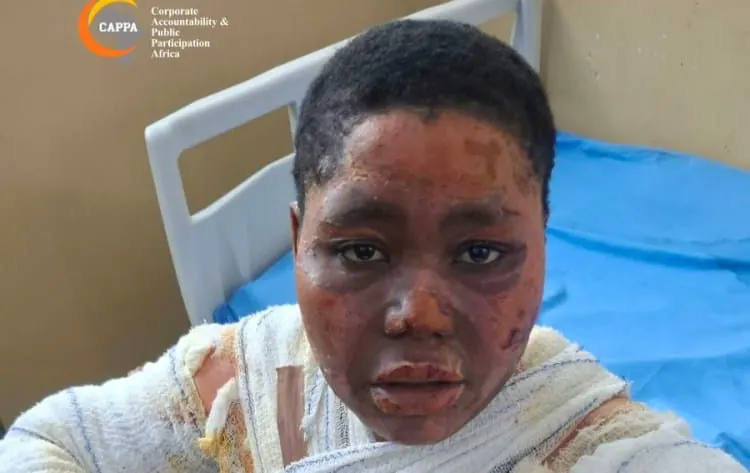
A gas explosion in Bille, Rivers State, Nigeria, has claimed its first life. Ms. Joy Amos, a 29-year-old resident, died on September 22, 2026, after sustaining severe burns in an explosion that occurred on September 3, 2026, in her room. The blast, which also set part of the building ablaze and shattered its windows, left her with extensive burns. She initially received treatment at a private clinic in Bille before being transferred to Port Harcourt for further treatment.
The Corporate Accountability and Public Participation Africa (CAPPA) has expressed deep regret and concern over Amos' death, describing it as a grave consequence of the continuing environmental and public health emergency in Bille Kingdom, Degema Local Government Area of Rivers State. CAPPA warned that further deaths and injuries could occur unless state authorities immediately contain the gas emissions affecting the community. The organisation recalled that the explosion occurred at about 8 a.m. in the room occupied by Ms. Amos at No. 18, Opu Ibiila Community.
According to CAPPA, Amos' room where the explosion occurred has continued to produce an apparent gas-bubbling sound beneath the cemented floor, accompanied by a noticeable gas-like odour. The incident forms part of a wider emergency documented across Bille since October 2025. During a field visit on July 6, CAPPA observed gas emissions from wells, boreholes, residential compounds, waterways, and school grounds. Government investigations have reportedly detected elevated levels of methane, hydrogen sulphide, and carbon dioxide, alongside groundwater contamination and poor air quality.
Despite these findings, CAPPA said residents had not received a comprehensive public explanation of the source of the emissions, a clear emergency response plan, or adequate protection from further exposure. The organisation situated the crisis within the wider environment of oil and gas extraction in the Niger Delta, which has sustained Nigeria's petroleum industry and generated enormous revenues for the government and corporations. However, many host communities continue to endure polluted environments, unsafe water, inadequate healthcare, energy poverty, and declining livelihoods.
CAPPA argued that the unequal distribution of the benefits and burdens of petroleum extraction remains one of the most enduring injustices in the Niger Delta. The organisation expressed concern about several health and fire incidents recently reported in the community, including the collapse of a resident, Mrs. Tamunosiepribo Igani, and a teacher, Ms. Deborah Adokiye Orlando. Two separate household fires were also reported in August and September, with one incident occurring while a woman was attempting to light a mosquito coil.
The organisation raised the alarm over reports that some residents were collecting the emerging gas and using it to power generators, while others were digging around their homes in search of gas outlets that could be channelled for domestic energy use. CAPPA warned that this latest development could expose residents to explosions, poisoning, and other serious hazards, reflecting the depth of energy poverty in the Niger Delta. The organisation called on the authorities to establish a coordinated emergency response involving independent experts in environmental science, medicine, public health, and emergency safety.
Key points
- The gas explosion in Bille, Rivers State, has claimed its first life, with Ms. Joy Amos dying from injuries sustained in the blast.
- CAPPA warned that further deaths and injuries could occur unless state authorities immediately contain the gas emissions affecting the community.
- The organisation called for a coordinated emergency response involving independent experts in environmental science, medicine, public health, and emergency safety.