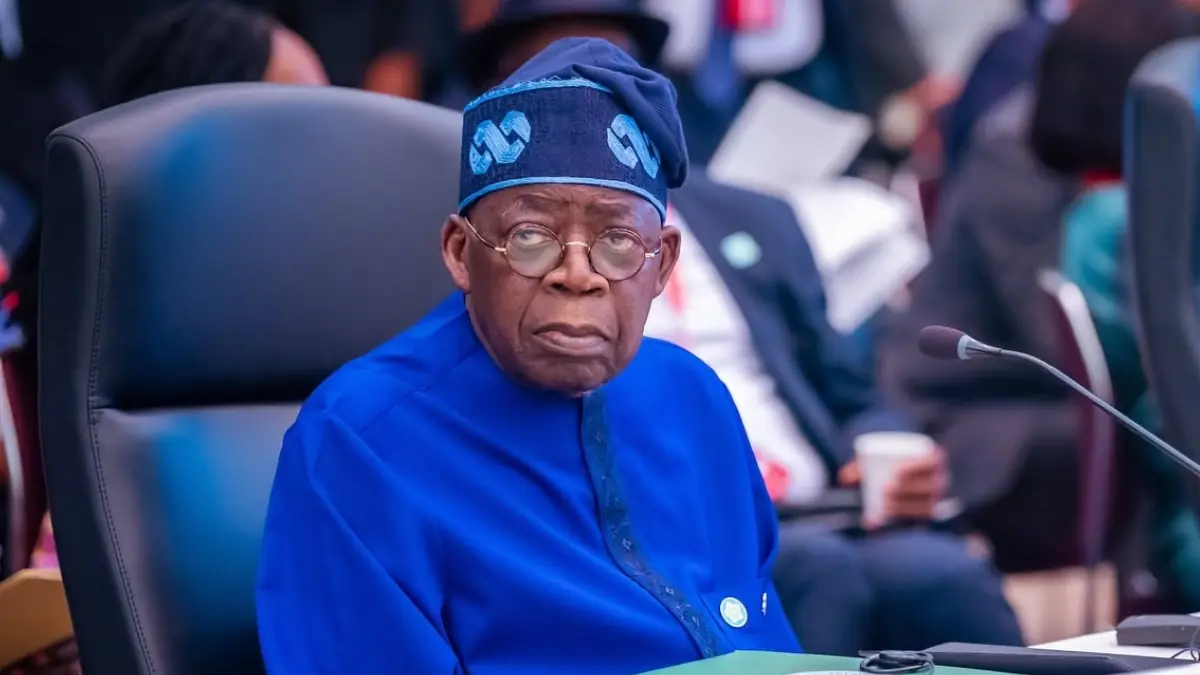
President Bola Tinubu's stewardship has been subject to evaluation, with some foreign publications, notably The Economist, claiming that Nigerians dislike their President. However, this claim has been disputed as it is riddled with inconsistencies and appears to be based on a superficial understanding of the country's complex situation. To fairly assess President Tinubu's administration, it is essential to consider the catastrophic baseline from which it began exercising its mandate in May 2023.
President Tinubu inherited a broken economic ecosystem on the precipice of total sovereign bankruptcy. The opaque fuel subsidy regime, which operated as a monumental financial leak, had been feeding the insatiable greed of a parasitic portfolio oil mafia while mortgaging the future of generations. The Nigerian economy groaned under multiple, distorted foreign exchange windows that bred corruption and choked legitimate enterprise. Debt service-to-revenue ratios hovered near a staggering 95%, leaving the treasury virtually empty.
Decades of underinvestment had left critical national assets, security architecture, energy grids, and infrastructural arteries severely fractured. To suggest that these structural cancers could be excised overnight without transitional pain is economically illiterate. However, President Tinubu summoned the political courage to confront these structural contradictions head-on. Far from presiding over stagnation, the Tinubu administration has systematically dismantled decades of economic distortion through a series of hard-core, visionary policies.
The administration's policies have fundamentally altered Nigeria's trajectory. By decisively terminating the burdensome fuel subsidy on Day One, the administration stopped the bleeding of national resources, saving the federation trillions of Naira and redirecting funds toward productive capital development and fiscal sustainability. The rationalisation of the forex market removed systemic arbitrage, boosted foreign portfolio investments, and saw trade surpluses and external reserves rebound robustly.
The implementation of the Nigerian Education Loan Fund (NELFUND) has transformed the academic landscape, with hundreds of thousands of indigent students now pursuing higher education without the burden of tuition. The administration has also championed and secured financial autonomy for local governments, bringing governance directly to the grassroots and ensuring allocations reach local communities without state-level bottlenecks.
The upward review of the national minimum wage to a dignified floor, alongside targeted palliatives and the deployment of mass-transit Compressed Natural Gas (CNG) buses to cut commuter costs, has cushioned millions against inflationary pressures. Additionally, the administration has laid the foundation for genuine national food sovereignty and rural economic revitalisation through massive fertiliser distributions, agro-loans, and the deployment of modern farming equipment.
The notion that millions of Nigerians harbour blind hatred for President Tinubu collapses when you meet everyday reality. Citizens recognise a leader doing the heavy, foundational lifting—someone cleaning up decades of accumulated governance debris. They know that the current reforms are the bitter medicine required to cure a chronic national ailment. President Bola Ahmed Tinubu remains a master strategist whose bold, unyielding policy posture has put the nation on an irreversible path toward sustainable growth, fiscal independence, and enduring prosperity.
Key points
- President Tinubu's administration has made significant progress in addressing Nigeria's economic challenges.