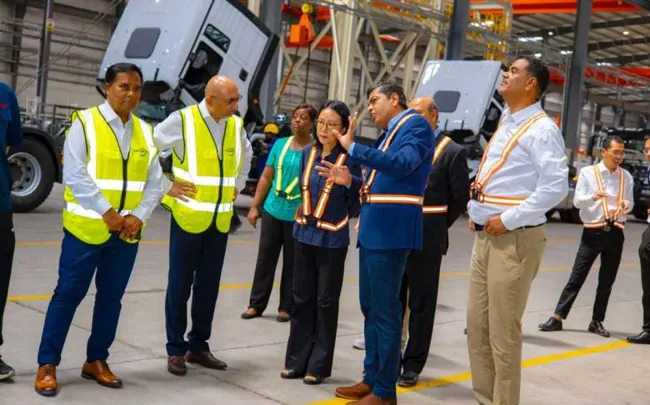
Tanzania is pushing to build its local productive capacity and create jobs through partnerships with Chinese investors. At Kwala Industrial Park in the Coast Region, seven of 12 first-phase factories were operating by July 2025, producing goods such as textiles, roofing materials, and solar panels. The factories have already employed 311 people and are expected to create over 2,000 direct jobs when the first phase is complete.
The trade relationship between Tanzania and China has grown dramatically, with China–Tanzania trade reaching about $11.28 billion in 2025. However, Tanzanian business stakeholders have expressed concerns about the imbalance in the trade relationship, with roughly $10 of goods imported from China for every $1 exported. They have called for Chinese companies to manufacture locally, form Tanzanian-Chinese joint ventures, and increase value addition.
The Tanzania Chamber of Commerce, Industry and Agriculture (TCCIA) has been advocating for partnerships between Tanzanian and Chinese investors. In April 2025, TCCIA Executive Director Oscar Kissanga hosted a Chinese industrial delegation, discussing infrastructure materials, healthcare equipment, agriculture, and consumer products. The focus has shifted from trade to production, with an emphasis on industrial and trade cooperation.
Research by the South African Institute of International Affairs found that Chinese manufacturing and agricultural investments in Tanzania have generated local supply networks, training, technological cooperation, and financial links with Tanzanian firms. However, many of these connections remain dependent on personal relationships rather than consistent, coordinated systems.
Kwala Industrial Park provides an example of local economic growth, with resident Hadija Suleiman obtaining temporary work after previously having no job, and carpenter Ramadan Fikiri receiving furniture orders for his workshop. Industrialization is not measured only inside factory gates; it also depends on the ecosystem of businesses and services that develop around the factories.
Agriculture and energy are key sectors where Chinese investment can make a significant impact. Tanzania needs irrigation pumps, grain dryers, and other equipment to capture more value from its agricultural products. Chinese companies can contribute technology, but the goal should be to create sustainable productivity solutions, including financing, installation, and maintenance services.
The pharmaceutical sector is another area where Tanzania is seeking investors, with a Chinese company expressing interest in producing generic medicines in Tanzania. Planning and Investment Minister Kitila Mkumbo has urged Chinese companies to bring expertise and modern technological systems, specifically identifying areas such as industrial clusters, technology exchange, and value addition.
Key points
- Tanzania seeks to leverage Chinese investment to build local productive capacity and create jobs.
- The trade relationship between Tanzania and China has grown dramatically, but the imbalance in trade has raised concerns.
- Chinese investment can help Tanzanian companies become more productive, train technicians, and develop suppliers.