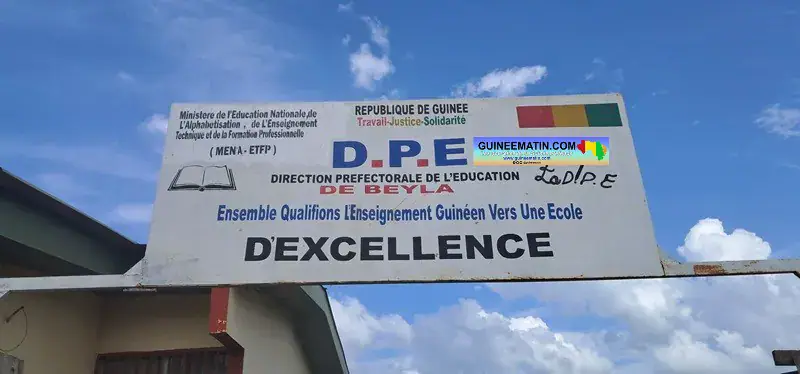
The prefecture of Beyla in Guinea's Nzérékoré region is grappling with a severe shortage of teachers in its primary and secondary schools. According to Fodé Condé, the prefectural director of education, the area is facing a deficit of over 650 teachers. This shortage is attributed to various factors, including the reluctance of teachers to be posted to Beyla, frequent transfers, deaths, illnesses, and abandonment of posts.
Beyla's location and working conditions make it challenging to attract and retain qualified teachers. Condé explained that the prefecture is not a preferred posting destination for many teachers, who often seek transfers to other areas. The creation of new pedagogical groups and the introduction of preschool classes for five-year-olds have further increased the demand for teachers. The director expressed concern that the situation remains dire, with many classes lacking adequate teaching staff.
The shortage of teachers is particularly acute in certain subjects, including physics, mathematics, French, and chemistry. Condé estimated that the primary sector needs around 450 teachers, while the secondary sector requires over 200 teachers, especially in physics and mathematics. The lack of qualified teachers in these subjects hampers the quality of education in Beyla.
The franco-Arab education system, which is popular in Beyla, also faces challenges. Condé noted that some communities have a limited understanding of the pedagogical organization of franco-Arab schools, which can hinder their effectiveness. Despite the large number of students enrolled in franco-Arab schools, the completion rate for this type of education remains low.
To address these challenges, Condé emphasized the need for better community sensitization and enhanced pedagogical support for franco-Arab schools. He also called on the government to take responsibility for recruiting community-based contract teachers, whose salaries are currently largely funded by local populations.
Condé is optimistic that Beyla's recent designation as a new administrative region will help alleviate some of the educational challenges. He believes that this new status will enable the prefecture to recruit and monitor teachers more effectively. The director also urged the government and partners to support the recruitment of contract teachers to ease the burden on local communities.
The situation in Beyla highlights the need for sustained investment in education infrastructure and teacher recruitment. While the area has seen an increase in student enrollment, the lack of qualified teachers and inadequate infrastructure threatens to undermine progress. Addressing these challenges will require a concerted effort from the government, partners, and local communities to ensure that students in Beyla have access to quality education.
Key points
- Beyla faces a critical shortage of over 650 teachers in primary and secondary schools.
- The shortage is particularly severe in subjects like physics, mathematics, French, and chemistry.
- The director of education hopes that Beyla's new status as a region will help improve teacher recruitment and education quality.