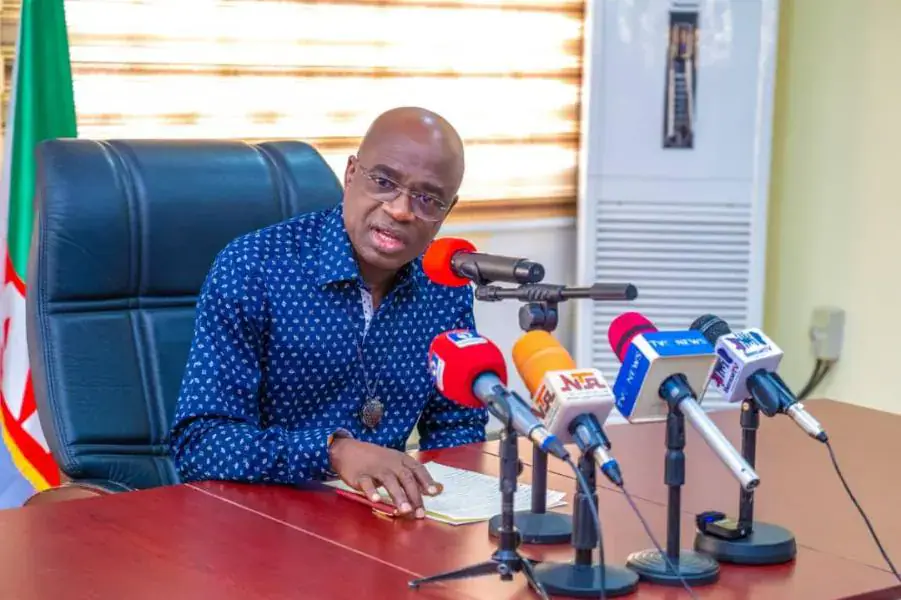
Governor Hyacinth Alia's administration has brought significant attention to Benue State, with supporters crediting his reform-driven leadership for the development. They argue that Alia has introduced a new approach to governance, prioritizing infrastructure projects, agricultural revival, education, healthcare, and workers' welfare. This approach is seen as a departure from the traditional politics of godfatherism. The governor's supporters claim that his commitment to these areas has distinguished his administration from previous governments.
Some of the notable projects and programs implemented by the governor's administration include the revival of abandoned agricultural and industrial facilities, road construction and rehabilitation, and bridge construction. Additionally, there have been improvements in healthcare infrastructure, the introduction of free education from Junior Secondary School One to Three, and the payment of salaries and gratuities. These initiatives have been cited as evidence of the governor's dedication to improving the lives of Benue residents.
The governor's supporters also point to recent visits by prominent personalities, including President Bola Ahmed Tinubu and First Lady Senator Oluremi Tinubu, as indications of the increasing attention being paid to the state. During her visit, Senator Oluremi Tinubu extended support to women and farmers, including those in internally displaced persons' camps affected by the Wadata flood disaster in 2025. This engagement reinforced the need for sustained interventions to improve the welfare of women and children in the state.
Following the First Lady's visit, Governor Alia approved the establishment of a coordinating office for her activities in the state. However, the governor reportedly stipulated that the office must operate within clearly defined administrative guidelines, with sensitive programs requiring approval from his office. The head of the office was designated as a coordinating officer rather than the First Lady of Benue State, ensuring that activities relating to women and children were properly coordinated.
The governor's supporters have urged residents to resist attempts to create divisions between Alia and the people of Benue State, warning that the state cannot afford to return to years of stagnation and poor governance. They argue that the current administration has provided residents with an opportunity to reassess the state's political direction and demand leadership anchored on clear development objectives. Previous officeholders should allow the people of Benue to assess the performance of the incumbent governor independently.
The supporters also called for an electoral process driven by ideas, accountability, development programs, and the long-term interests of residents. They insisted that political godfatherism, vote-buying, and the distribution of short-term material inducements should not determine the state's political future. Instead, the electorate's collective decision at the ballot box must take precedence over the interests of individual political figures.
Despite the progress made, insecurity remains a major concern in Benue State. The governor's supporters described his development agenda as an attempt to move Benue away from outdated political practices towards a system that prioritizes infrastructure, agriculture, education, healthcare, and economic opportunities. They concluded that Benue indigenes at home and in the diaspora must remain politically vigilant and reject manipulation of the electorate through godfatherism, vote-buying, and unsustainable handouts.
Key points
- Governor Alia's administration prioritizes infrastructure, agriculture, education, and healthcare, challenging traditional politics in Benue State.
- The governor's supporters argue that his leadership has brought significant development to the state, distinguishing his administration from previous governments.
- The administration's focus on empowering women, particularly farmers, is seen as a key aspect of its development agenda, with the potential to strengthen food production and contribute to national economic development.
Reporting sources
- Benue 2027: Between Alia’s leadership and godfatherism · Blueprint Newspaper